How long can you freeze cheese?
Most cheese freezes safely for up to 6 months, but hard and semi-hard types like cheddar and mozzarella hold their texture far better than soft, fresh cheeses. Here's how long each type lasts frozen, how to freeze it right, and what changes once it thaws.
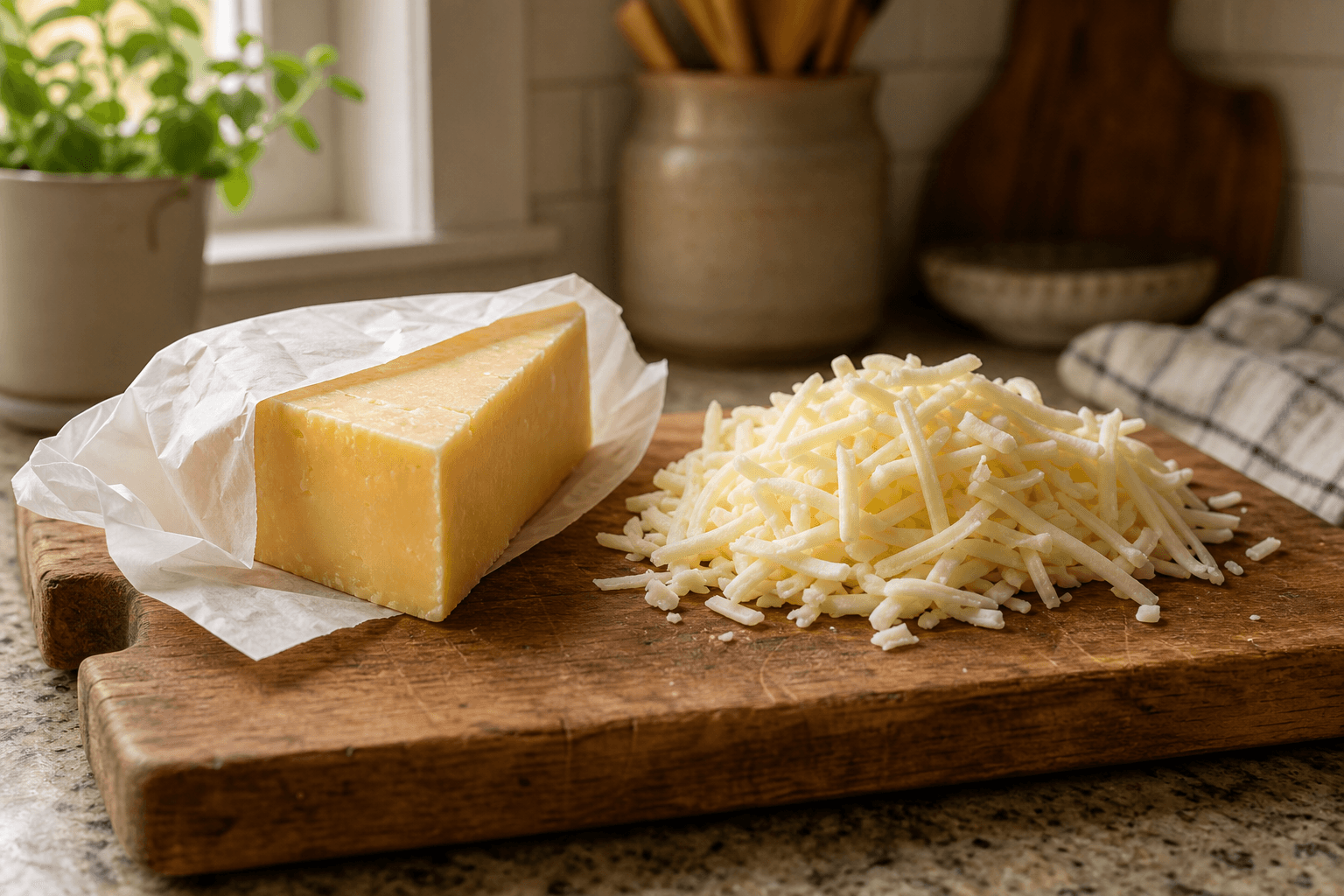
Yes, most cheese freezes safely for up to 6 months, but how well it holds up depends on the type. Hard and semi-hard cheeses like cheddar, Swiss, mozzarella, and Parmesan freeze reasonably well, while soft, high-moisture cheeses like ricotta, cottage cheese, and cream cheese turn watery and grainy and are better left in the refrigerator.
How long can you freeze cheese?
According to the USDA's FoodKeeper guide, hard and semi-hard cheeses can be frozen for about 6 months and still taste good. Soft and fresh cheeses can technically go in the freezer too, but the USDA's food safety team (FSIS) notes that cottage cheese, ricotta, and cream cheese do not freeze well, since their high moisture content breaks down into a grainy, watery mess once thawed.
None of this is a safety limit. Cheese kept continuously at 0 degrees Fahrenheit or below stays safe to eat indefinitely. The 6-month window is about quality, not risk. Past that point, freezer burn and dried-out edges make cheese less pleasant to eat, not dangerous.
| Cheese type | Best used within (frozen) | How it fares |
|---|---|---|
| Hard and aged (cheddar, Swiss, Parmesan, Gouda) | 6 months | Freezes reasonably well; gets crumblier |
| Semi-hard, shredded (mozzarella, Colby, Monterey Jack) | 3 to 4 months | Holds up well pre-shredded; slightly drier |
| Blue cheese | 6 months | Crumbly texture after thawing; flavor stays strong |
| Soft (brie, goat cheese) | 6 months | Freezes per USDA guidance, but turns soft and crumbly; best used in cooking |
| Fresh, high-moisture (fresh mozzarella, cream cheese, cottage cheese, ricotta) | Not recommended | Separates, grainy, watery once thawed |
If you want the fuller picture on which foods handle freezing well in general, our guide to freezing food covers the basics that apply beyond just cheese.
How to freeze cheese
- Cut hard or semi-hard cheese into blocks of about 1 to 1.5 pounds, or shred it first. Smaller, pre-shredded portions thaw faster and skip the crumbly-slicing problem later.
- Wrap the cheese tightly in plastic wrap or foil so as little air as possible touches the surface.
- Slide the wrapped cheese into a freezer bag or airtight container and press out the excess air before sealing.
- Label the bag with the cheese type and the date.
- Freeze at 0 degrees Fahrenheit or below, and try to use it within the times in the table above for the best texture and flavor.
How long cheese keeps frozen and how to thaw it
Hard and semi-hard cheese holds its best quality for about 6 months frozen; pre-shredded cheese is closer to 3 to 4 months before texture starts to suffer, according to the USDA FoodKeeper. Beyond those windows the cheese is still safe, it just gets drier and blander.
Thaw cheese in the refrigerator, not on the counter, the same rule that applies to any perishable food. Give a small block a day or so; larger pieces may need two. Once thawed, treat it like fresh cheese and use it within about a week. Do not refreeze cheese that has already been thawed.
Cream freezes with its own quirks too. Our guide on freezing heavy cream covers what happens when cream goes in the freezer, since it separates in a similar way to soft cheese.
What changes (texture and quality) and what to use cheese for after
Freezing ruptures the moisture and fat structure inside cheese, which is why thawed cheese often comes out crumbly and a little dry, sometimes mealy, instead of smooth and sliceable. The flavor mostly survives the trip, but the texture does not, so frozen cheese rarely looks or feels like it did going in. For cheesy pasta leftovers, see using up leftover mac and cheese.
That makes thawed cheese a better fit for cooking than for eating on its own. Grate or crumble it into:
- Sauces, soups, and casseroles, where it melts in anyway
- Mac and cheese, mashed potatoes, or scrambled eggs
- Pizza topping, since it will melt and hide the crumbly texture
- Omelets, quesadillas, and grilled cheese
Save fresh, unfrozen cheese for a cheese board or a caprese salad, anywhere you want a clean slice instead of crumbles. Cream cheese, cottage cheese, and ricotta are especially poor candidates for the freezer; our guide to freezing cream cheese walks through why and what to do instead.
Keeping track of cheese before it's close to its use-by date, instead of scrambling to make a last-minute freeze-or-toss call, is exactly what a food expiration tracking app is for. Well Stockd logs what's in your fridge and flags items before they slip past their window, so you can decide to freeze cheese on purpose instead of doing it in a panic.
Frequently asked questions
Can you freeze shredded cheese? Yes, and it often does better than a block because you skip the crumbly-slicing problem after thawing. Pre-shredded cheese is best used within about 3 to 4 months for the best texture, per the USDA FoodKeeper.
Can you freeze cream cheese? You can, but the USDA's food safety team advises against it for everyday use, since cream cheese separates and turns watery and grainy once thawed. It still works baked into a cheesecake, just not spread cold on a bagel.
Does freezing cheese make it unsafe to eat? No. Cheese held continuously at 0 degrees Fahrenheit or below stays safe indefinitely, per USDA FoodKeeper guidance. Freezing affects quality, not safety. When in doubt about thawed cheese that smells off, feels slimy, or shows unexpected mold on a soft cheese, throw it out.
Sources: USDA FoodKeeper app, FoodSafety.gov, FSIS: How long can you keep dairy products like yogurt, milk, and cheese in the refrigerator?, National Center for Home Food Preservation: Freezing Cheese.
Track it in Well Stockd
Add what you have, see what you can cook tonight, and get a reminder before anything goes off.
