Can you freeze ricotta cheese?
Yes, you can freeze ricotta cheese, though it turns grainy once thawed. Here's how to freeze it right, how long it keeps, and what to cook with it afterward.
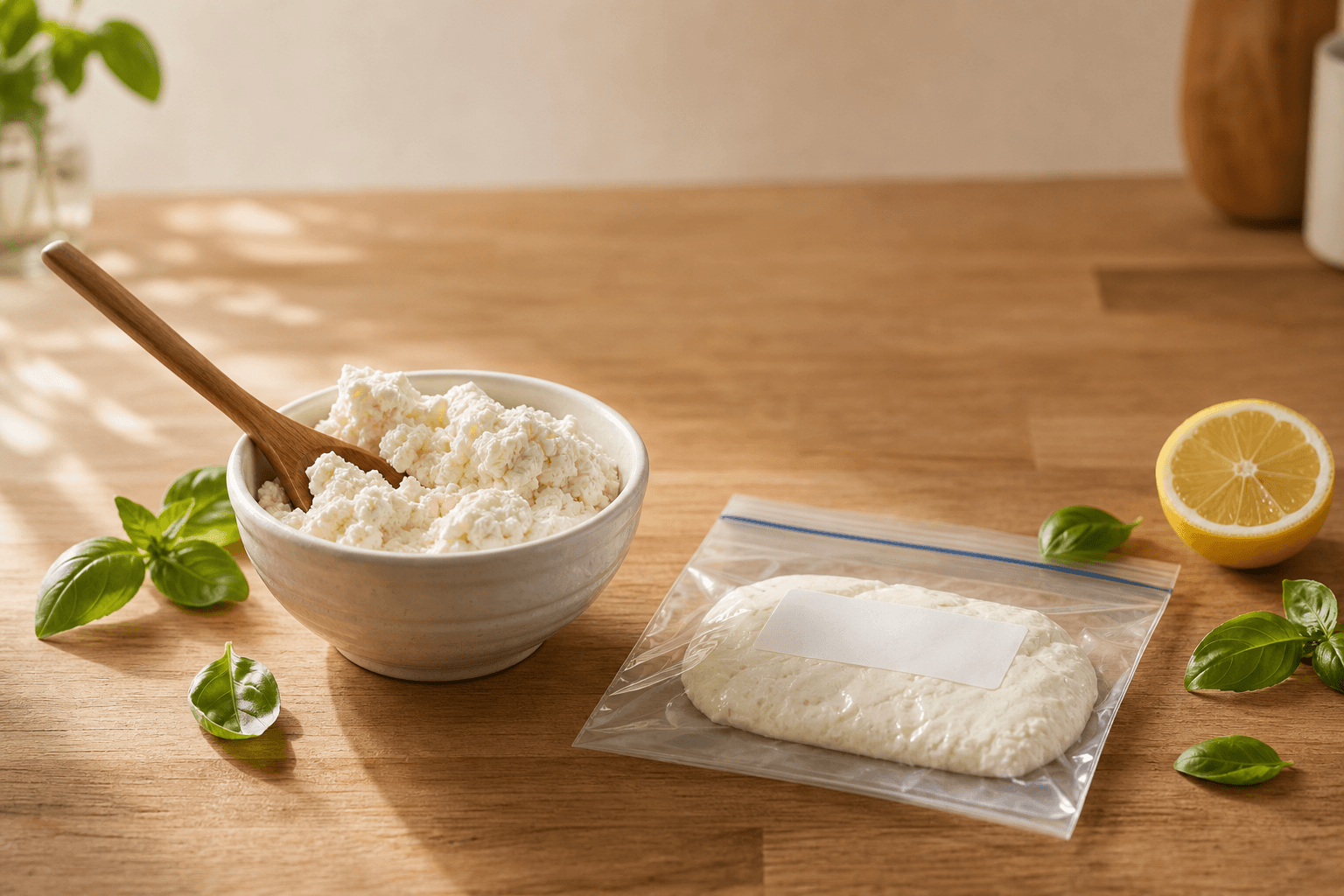
Yes, you can freeze ricotta cheese, but it comes with a real trade-off: freezing ruptures the curd structure, so thawed ricotta turns grainy and watery instead of smooth. It stays safe to eat indefinitely if kept frozen solid at 0°F, but for the best texture, plan to use it soon and stick to cooked dishes.
Can you freeze ricotta cheese?
You can, and it will not make you sick. The USDA's Food Safety and Inspection Service groups ricotta with other soft cheeses like cottage cheese and brie, and its guidance is blunt: soft cheeses such as cottage cheese, ricotta or Brie can be refrigerated one week but they don't freeze well. That is a quality warning, not a safety one: food stored constantly at 0°F will always be safe, and only the texture suffers. Freezing does not kill bacteria, it just stops them from growing, so the cheese has to be fresh when it goes in.
The reason ricotta struggles in the freezer comes down to water. Fresh ricotta is roughly three quarters water, held in a soft, loose curd. When that water freezes, it forms ice crystals that tear through the curd structure. Thaw it out, and the water separates from the milk solids. What's left is a grainy, watery cheese instead of the smooth spread you started with.
Maybe you bought a big tub for one recipe and only used half. Maybe you made a batch of homemade ricotta that's more than you'll eat fresh, or a container is creeping toward its use-by date and you know you won't get to it in time. Either way, freezing beats tossing it. You just need to freeze it the right way and plan to use it in dishes where a little graininess won't matter.
How to freeze ricotta cheese
- Only freeze ricotta that's still fresh. It should smell clean and show no mold, discoloration, or off odor. If you're not sure how long it's been open, throw it out rather than freeze a cheese that was already going bad.
- Portion it before freezing. Divide the ricotta into amounts you'll actually use in one go, such as half-cup or one-cup portions, so you thaw only what a recipe calls for instead of a whole tub at once.
- Press out as much air as you can. Spoon each portion into a freezer bag or airtight container, flatten it, and squeeze out the air before sealing. Less air means fewer ice crystals and less freezer burn.
- Label the bag with the date. It's easy to lose track of something buried in the freezer, and a label saves you from guessing later.
- Freeze it fast, in the coldest part of the freezer. Aim for a spot that holds a steady 0°F (-18°C) or below, rather than the door, where the temperature swings every time it opens.
How long ricotta cheese keeps frozen and how to thaw it
| Storage method | How long it keeps |
|---|---|
| Refrigerator, opened | About 1 week |
| Refrigerator, unopened | Up to 2 weeks |
| Freezer, for best quality | Use soon; USDA says it does not freeze well |
| Freezer, held at 0°F or below | Safe indefinitely, but texture keeps declining |
To thaw, move a portion of ricotta from the freezer to the refrigerator and let it sit overnight, or up to 24 hours for a larger amount. Never thaw it on the counter at room temperature, since that lets the outside sit in the danger zone while the center is still frozen. Once it's thawed, stir it well and pour off any liquid that has pooled on top; a fine mesh strainer or a layer of cheesecloth over a bowl works well if it's especially watery. Use thawed ricotta within a day or two, and do not refreeze it once it's been thawed.
What changes (texture and quality) and what to use ricotta cheese for after
Expect a noticeably different texture. Fresh ricotta is soft, moist, and a little fluffy. After freezing and thawing, it turns crumbly and grainy, and sometimes watery too, because the ice crystals broke apart the delicate curd. Stirring in a splash of milk or heavy cream can smooth it back out somewhat, but it won't fully return to its original state. This is the same reason cream cheese loses its silky texture when frozen plain: both are soft, high-moisture cheeses that don't hold up well in the freezer.
Save thawed ricotta for dishes where it gets mixed, baked, or blended rather than served on its own. It's still great in lasagna, stuffed shells, baked ziti, manicotti, ravioli filling, meatballs, or a baked dip. It also works fine stirred into pancake or muffin batter. Skip it for anything that shows off the cheese's texture, like spreading it plain on toast, dolloping it cold over a finished pizza, or using it in a no-bake cheesecake, since that's where the graininess will stand out.
If freezing dairy leaves you wondering what else holds up in the freezer and what doesn't, the full guide to freezing food covers the basics for other categories too. And if cheese keeps sneaking past its date before you get to it, an app like Well Stockd can track when you opened that ricotta and nudge you to use or freeze it before it's too late.
Frequently asked questions
Can you freeze ricotta cheese in the tub it came in? It's better not to. Most ricotta tubs are not designed for the freezer and can crack as the contents expand. Move the cheese to a freezer bag or a container rated for freezer use, and leave a little room at the top for expansion.
Does ricotta cheese freeze well for lasagna? Yes, this is the best use for frozen ricotta. Once it's mixed with egg, seasoning, and other cheeses and baked into a casserole, the grainy texture disappears into the dish.
Can you freeze ricotta cheese twice? It's not a food safety problem if the first thaw happened in the refrigerator and the cheese never sat out at room temperature, but it's still a bad idea. Each freeze-thaw cycle breaks the curd down further, so a second round leaves you with an even grainier, wetter cheese. Use thawed ricotta within a day or two instead of refreezing it.
Sources: USDA FSIS, dairy storage times; USDA FSIS, Freezing and Food Safety; National Center for Home Food Preservation.
Quick planning number: see the Ricotta Cheese fridge shelf-life reference.
Track it in Well Stockd
Add what you have, see what you can cook tonight, and get a reminder before anything goes off.
