Can you freeze cream cheese?
Yes, you can freeze cream cheese safely, but USDA's own FoodKeeper flags it as a food that does not freeze well. Here is how to freeze it, thaw it, and which recipes hide the texture change.
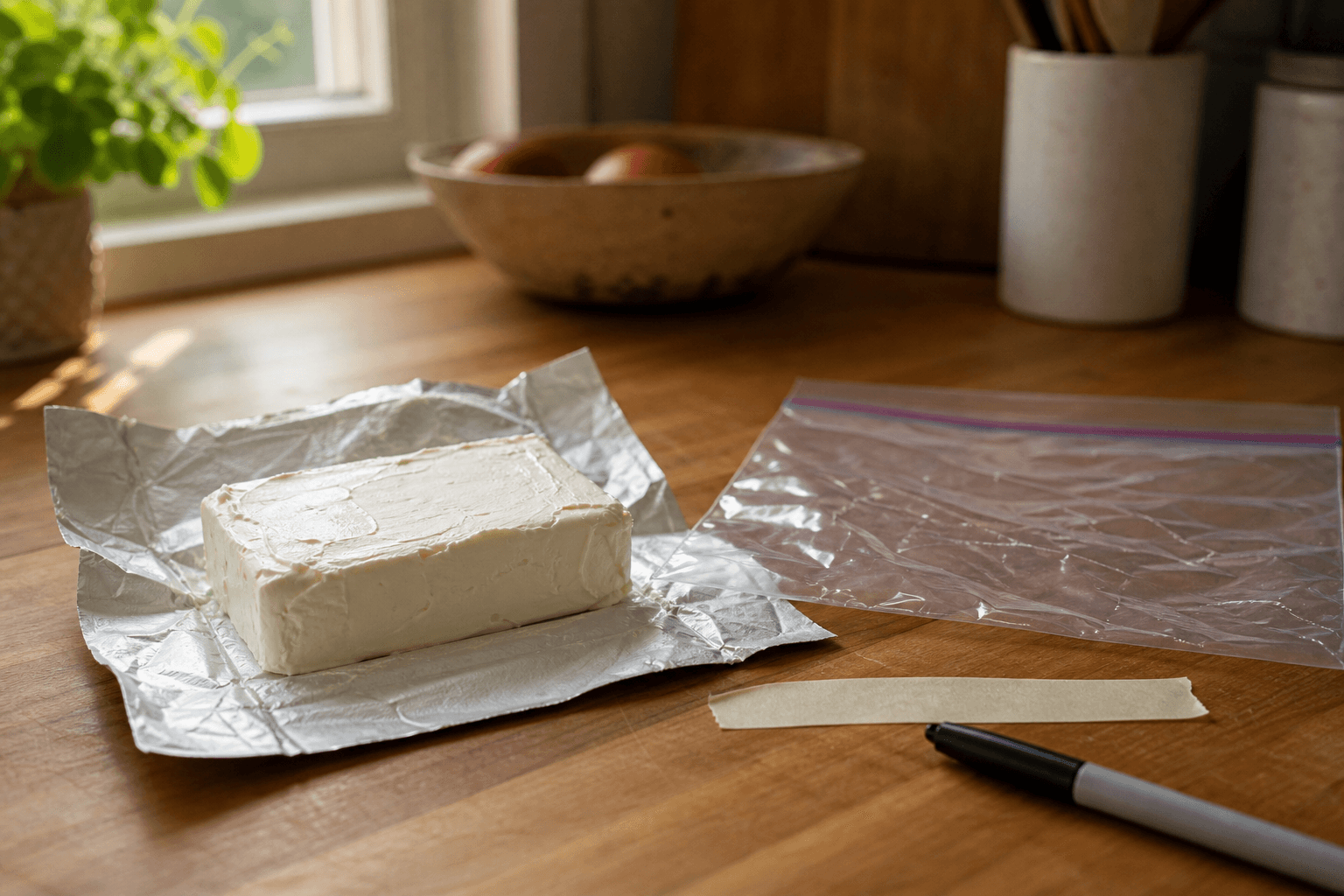
Yes, you can freeze cream cheese, but USDA's FoodKeeper flags it as a food that does not freeze well: freezing breaks its smooth texture into something grainy and crumbly once thawed, so it works best in cooked or baked dishes rather than spread straight on a bagel.
Can you freeze cream cheese?
Technically, yes. Freezing cream cheese is completely safe as long as it stays at a constant 0 degrees Fahrenheit or colder, the temperature USDA's Food Safety and Inspection Service says keeps food safe indefinitely by stopping microbial growth in its tracks. The catch is quality, not safety. USDA's own FoodKeeper database lists cream cheese as a product that "does not freeze well," the same note it gives cottage cheese and ricotta. Unlike butter, which gets a solid 6 to 9 month freezer window, or hard cheeses like cheddar, which hold up for about 6 months frozen, cream cheese does not get a recommended freezer time at all in the FoodKeeper chart. That is USDA's way of saying the texture hit is significant enough that it is not worth a countdown.
Here is how cream cheese compares to other dairy staples in USDA's FoodKeeper chart:
| Dairy product | Refrigerator | Freezer |
|---|---|---|
| Cream cheese | 2 weeks | Does not freeze well |
| Butter | 1 to 2 months | 6 to 9 months |
| Hard cheese (cheddar, swiss, parmesan) | Unopened 6 months, opened 3 to 4 weeks | 6 months |
| Cottage cheese or ricotta | Unopened 2 weeks, opened 1 week | Does not freeze well |
| Sour cream | 7 to 21 days | Does not freeze well |
So should you still do it? If you have half a block left over from a recipe with no plan to use it in the next couple of weeks, freezing beats letting it go to waste. Just plan to use it cooked, baked, or blended into something, not spread cold on toast.
How to freeze cream cheese
- Freeze it unopened when you can. An unopened block in its original foil wrapper is already well protected from air, so it can go straight into the freezer.
- If it is already open, portion it first. Cut the block into the sizes you actually use for recipes, so you only thaw what you need at a time.
- Wrap each portion tightly in plastic wrap, then slide it into a freezer bag or airtight container and press out as much air as possible. Airtight wrapping is what keeps freezer burn from dulling the flavor and texture even further. For more on that, see how to prevent freezer burn.
- Label the bag with the date. Since USDA does not give cream cheese its own quality window, treat the first month or so as your best shot at decent texture, and rely on your nose and eyes after that. If it smells sour, looks discolored, or has any fuzz on it, throw it out.
- Keep the freezer at 0 degrees Fahrenheit or below for the whole storage period.
How long cream cheese keeps frozen and how to thaw it
Frozen cream cheese stays safe to eat indefinitely as long as your freezer holds a steady 0 degrees Fahrenheit, per USDA guidance. Storage times you see on charts are about quality, not safety, which is exactly why FoodKeeper skips a number for cream cheese: it is telling you the quality clock starts ticking fast. For the best texture, plan to use frozen cream cheese within a month or two rather than letting it sit for the long haul that other dairy like butter can handle.
To thaw it, move it to the refrigerator and let it defrost slowly, usually several hours up to a full day for a standard 8 ounce block depending on how solidly it froze. Do not thaw it on the counter. USDA guidance is clear that perishable food should not sit in the danger zone between 40 and 140 degrees Fahrenheit for more than 2 hours, so a slow fridge thaw is both the safest option and the one that limits extra texture damage.
What changes and what to use cream cheese for after
Cream cheese is an emulsion, tiny droplets of fat and water held together with milk proteins into one smooth spread. Freezing forms ice crystals that rupture that structure, and when it thaws, the water weeps out instead of blending back in. The result is grainy and crumbly, sometimes a little watery too, nothing like the silky spread you started with.
That texture change rules out anything where cream cheese needs to stay smooth on its own, like a bagel schmear, an unbaked cheesecake filling, or a dip you are serving cold and unmixed. It works fine, though, in recipes where it gets cooked, whipped, or blended with other ingredients, since heat and mixing help mask the separation. Good after-freezer uses include baked cheesecake, cream cheese frosting beaten well with a mixer, stuffed chicken or peppers, casseroles, soups, and dips that get stirred and heated through. Beating the thawed cream cheese hard with a hand mixer before you use it also helps re-blend some of that separated liquid back in.
If you are trying to freeze food before it turns instead of after you notice it has gone off, our guide on freezing food in general covers the basics that apply across your fridge, and the same freeze-well question comes up for heavy cream and milk too. Keeping track of open dates on dairy like this is exactly what an expiration tracking app is for, so you freeze cream cheese while it is still fresh instead of after it has already turned.
Frequently asked questions
Can you freeze cream cheese frosting? Yes. Cream cheese frosting freezes reasonably well for up to a couple of months in an airtight container, since the sugar and butter in the mix help stabilize it. Thaw it in the refrigerator, then rewhip with a mixer before spreading, since it will separate slightly just like plain cream cheese does.
Is thawed cream cheese still safe to eat? Yes, as long as it stayed frozen at 0 degrees Fahrenheit or below the whole time and was thawed in the refrigerator, not on the counter. Freezing does not make food unsafe. It only affects texture. If the cream cheese sat out of the fridge for more than 2 hours before you froze it, or it smells off after thawing, throw it out rather than risk it.
Does whipped or tub cream cheese freeze the same as a block? Not quite. Whipped tub cream cheese already has extra air beaten in, so it tends to separate even more after freezing than a solid block does. It is still safe to freeze, but save it for cooked or baked recipes rather than spreading it straight from the tub.
Sources: USDA FoodKeeper data, Food Safety and Inspection Service, Freezing and Food Safety, USDA FSIS, Cold Food Storage Chart, FoodSafety.gov
Quick planning number: see the Cream Cheese fridge shelf-life reference.
Track it in Well Stockd
Add what you have, see what you can cook tonight, and get a reminder before anything goes off.
