Can you freeze eggs? Yes, here's how to do it safely
Yes, you can freeze eggs for up to a year once they're out of the shell. Freeze whole eggs, whites, or yolks in an airtight container, thaw overnight in the fridge, and cook them thoroughly before eating.
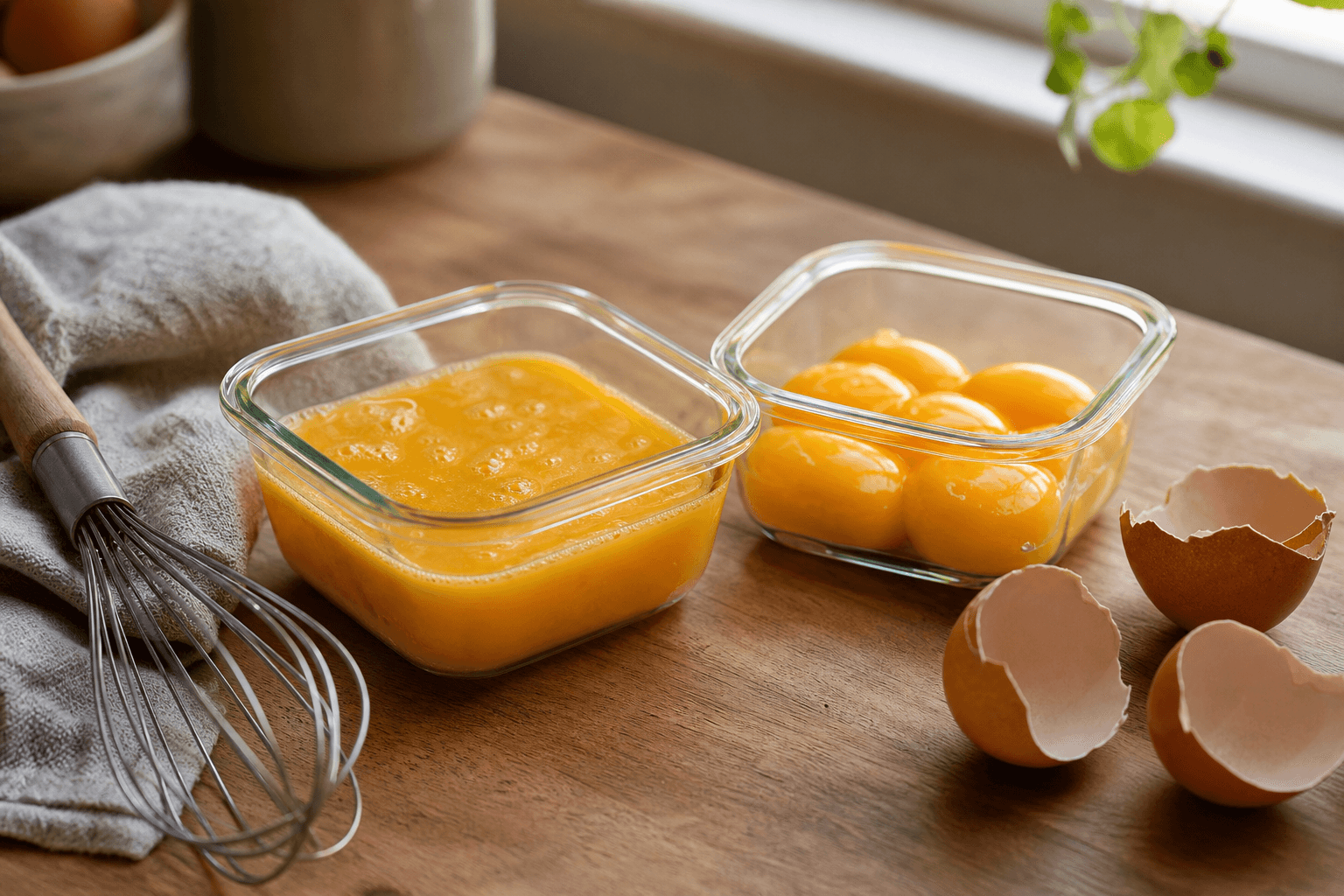
Yes, you can freeze eggs for up to a year, but only once they're out of the shell. Freeze whole eggs beaten together, or whites and yolks separately, in an airtight container, then thaw overnight in the refrigerator before cooking them thoroughly.
Can you freeze eggs?
Eggs freeze well once they're out of the shell. Raw shell eggs are the one exception: the liquid inside expands as it freezes and can crack the shell, so the USDA Food Safety and Inspection Service (FSIS) advises against freezing eggs in the shell on purpose.
If a carton of eggs freezes by accident in the back of the freezer, check the shells before you use them. A cracked shell means the egg goes in the trash. If the shell stayed intact, you can keep the egg frozen until you need it, then thaw it in the refrigerator. If you would rather use them up than freeze them, see using up extra eggs.
Cooked eggs are a mixed bag. Scrambled eggs, quiche, and egg casseroles freeze reasonably well because the eggs are already set. Hard-cooked eggs don't: the whites turn rubbery and watery, so plan to eat hard-boiled or deviled eggs within about a week in the fridge instead of freezing them.
How to freeze eggs
- Crack the eggs first and skip the shells entirely. Never put a raw egg in the freezer still in its shell.
- Decide how you'll use them later, then pick whole eggs, whites only, or yolks only.
- Whole eggs: beat the yolks and whites together until fully blended, no streaks left.
- Whites only: pour the separated whites straight into a container. They don't need anything added before freezing.
- Yolks only: yolks thicken into a gel on their own once frozen, so beat in 1/8 teaspoon salt (for savory dishes) or 1 1/8 teaspoons sugar or corn syrup (for baking) per 1/4 cup of yolks, about 4 yolks, to keep them pourable later.
- Portion before you freeze. As a rough guide, one whole egg is about 3 tablespoons, one egg white about 2 tablespoons, and one yolk about 1 tablespoon. Freeze in ice cube trays or small containers, whatever size matches how you actually cook.
- Leave headspace. Liquid expands as it freezes, so leave about half an inch of room at the top of any rigid container.
- Label the container with the date, the quantity, and whether you added salt or sugar, so you're not guessing six months from now.
- Freeze at 0 degrees Fahrenheit or below. Once the cubes are solid, pop them out of the tray and store them together in a freezer bag to save space.
How long eggs keep frozen and how to thaw them
| Egg form | Best way to freeze | Freezer life | How to thaw |
|---|---|---|---|
| Whole eggs (beaten) | Beat yolk and white together until blended | Up to 12 months | Overnight in the fridge, or under cold running water |
| Egg whites only | Pour into a container as is, no additive needed | Up to 12 months | Overnight in the fridge, or under cold running water |
| Egg yolks only | Beat in 1/8 tsp salt or 1 1/8 tsp sugar per 1/4 cup yolks (about 4 yolks) | Up to 12 months | Overnight in the fridge, or under cold running water |
| Hard-cooked eggs | Not recommended, whites turn rubbery | Do not freeze | Not applicable |
| Raw eggs in the shell | Not recommended, contents expand and crack the shell | Do not freeze | Not applicable |
Eggs kept at a steady 0 degrees Fahrenheit stay safe to eat indefinitely, but USDA guidance points to about 12 months for the best flavor and texture. After that window they're still safe if they've stayed frozen solid; they just won't taste or cook quite as well.
Thaw frozen eggs in the refrigerator overnight, or set the sealed container under cold running water for a faster thaw. Don't thaw eggs on the counter at room temperature. Once thawed, use them right away in a dish that gets cooked all the way through, and don't refreeze them. When in doubt about a frozen egg's shell, smell, or how long it sat out while thawing, throw it out.
What changes and what to use eggs for after
Freezing changes eggs more than most people expect. Egg whites can turn thin and watery, and they may never whip up to stiff peaks the way fresh whites do, so save frozen whites for cooking rather than for meringue. Egg yolks gel and thicken on their own, which is exactly why the salt or sugar step matters. Treated yolks stay pourable and blend back into a batter or custard base.
Because thawed eggs need to be cooked thoroughly and can't be refrozen, save them for dishes where they get fully cooked anyway: scrambled eggs, frittatas, quiches, egg casseroles, French toast, pancakes, and baked goods like cookies or muffins. The baked loaf is covered in can you freeze zucchini bread. If you're folding thawed eggs into a leftover casserole or quiche, reheat it to 165 degrees Fahrenheit before eating. Skip frozen and thawed eggs for anything that stays raw or barely cooked: homemade mayonnaise, eggnog, or a sunny-side-up yolk you want to stay runny.
The same logic applies to other freezer staples that change texture once frozen. Our guide to freezing food safely covers the general rules for what does and doesn't survive the freezer. Two dairy staples worth checking before you reach for them, can you freeze cream cheese and can you freeze heavy cream, need a similar rethink about texture after thawing.
An egg carton doesn't tell you when you moved half of it to the freezer three months ago. If you're already tracking what's in your fridge and freezer, an app that tracks food expiration dates can log the freeze date and quantity, then flag frozen eggs before they drift past that 12-month mark, forgotten in the back of the freezer.
Frequently asked questions
Can you freeze eggs in the shell? No, don't freeze raw eggs in the shell. The liquid expands as it freezes and can crack the shell, which can let bacteria reach the egg. Crack the eggs into a container first, then freeze. For fizzy drinks in cans and bottles, see can you freeze soda.
Can you freeze scrambled eggs, quiche, or an egg casserole? Yes. Cooked egg dishes generally freeze better than raw shell eggs because the eggs are already set. Cool the dish completely, portion it into airtight containers, and plan to use it within a few months for the best texture. Reheat leftovers to 165 degrees Fahrenheit before eating.
Can you freeze hard-boiled or deviled eggs? Not well. Hard-cooked egg whites turn rubbery and watery once frozen, and USDA storage guidance lists them as one to skip freezing. Hard-boil only what you plan to eat within about a week in the fridge instead.
Sources: USDA FSIS, Egg Products and Food Safety; USDA Ask USDA, If shell eggs freeze accidentally, are they safe?; USDA FoodKeeper via FoodSafety.gov, Cold Food Storage Chart; USDA FSIS, Leftovers and Food Safety.
Quick planning number: see the Eggs fridge shelf-life reference.
Track it in Well Stockd
Add what you have, see what you can cook tonight, and get a reminder before anything goes off.
