Is expired sour cream safe to eat if unopened?
Unopened sour cream stays safe for about one to three weeks past its printed date if it never left the refrigerator, according to USDA guidance. Here is how to tell if yours has turned.
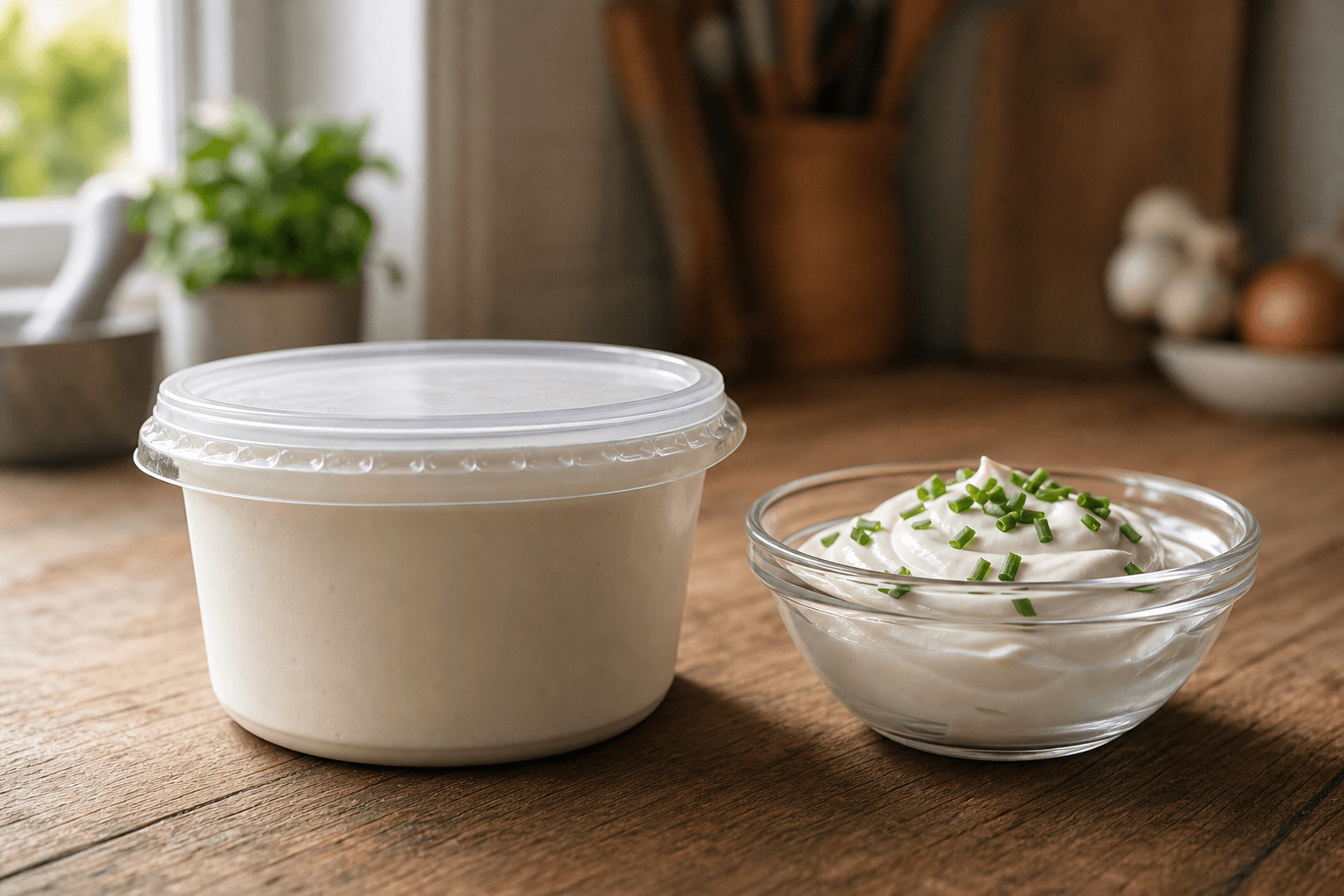
Yes, in most cases. Unopened sour cream kept continuously refrigerated at 40°F or below is usually safe to eat for one to three weeks past its printed date, according to USDA guidance, as long as the tub shows no mold, off smell, or heavy separation when you check it.
That range surprises a lot of people, because an unopened tub looks identical on day one and day twenty. The date stamped on the lid is a freshness estimate from the manufacturer, not a federal safety deadline. Except for infant formula, dates on food are not required by law and are not safety cutoffs, a standard the USDA and the FDA (which regulates dairy products like sour cream) both point to. What decides whether that sour cream is safe is simpler: whether the seal stayed intact and the fridge stayed cold the whole time. For a broader rundown of how this plays out across your fridge and pantry, our guide to how long food lasts covers dozens of everyday staples the same way.
How long does unopened sour cream last past its date?
| Storage situation | Still safe to eat? | Notes |
|---|---|---|
| Refrigerated at 40°F or below, before the printed date | Yes | Peak quality, seal intact |
| Refrigerated, 1 to 3 weeks past the printed date | Usually, if refrigeration was continuous | USDA guidance; inspect for mold, off odor, or separation first |
| Left at room temperature | No, after 2 hours (1 hour if above 90°F) | Bacteria multiply fast in the 40°F to 140°F danger zone |
| Frozen at 0°F, unopened | Yes, indefinitely for safety | USDA FoodKeeper lists freezing sour cream as not recommended, since it turns grainy and watery after thawing |
The one to three week window assumes the tub never left the refrigerator for more than a few minutes at a time. If your sour cream sat on the counter during a grocery run, a party, or a power outage, the clock resets and you need to think about how long it was warm, not how long it has been in the house.
How to tell if sour cream has gone bad
Before you rely on the date at all, look and smell. Signs an unopened container has spoiled include:
- Mold: any pink, black, green, or fuzzy spot on the surface, even a small patch
- Excess liquid: a thin, clear layer of whey on top is normal and can be stirred back in, but a deep pool of watery liquid, or liquid that looks yellow, is not
- Smell: a sharp, sour, bitter, or yeasty odor beyond sour cream's normal tang
- Texture: lumps, sliminess, or a texture that looks thinner or grainier than usual
- A bulging or domed lid, which signals that gas-producing bacteria are active inside
Some spoilage does not announce itself, though. A container that spent a few too many hours in a warm car, or a fridge that ran a little warm for a stretch, can grow bacteria to unsafe levels without any obvious change in smell or appearance. That is why the time-and-temperature rule matters more than a sniff test, especially near the end of that three-week window.
How to store sour cream so it lasts
- Keep it at 40°F or below at all times, and store it on an interior shelf rather than the door, where temperatures swing more with every open and close
- Reseal the lid tightly after every use and use a clean spoon, since introducing bacteria from a used utensil shortens the safe window
- Never leave it out longer than two hours, or one hour if the room is hotter than 90°F, such as a summer cookout table
- Note the date you bought it or opened it somewhere you will see it. An app like Well Stockd's food expiration tracker can log that date automatically and nudge you before the safe window closes, which beats trying to remember whether that tub is two weeks old or four
Can you freeze sour cream?
Yes, and freezing keeps it safe indefinitely as long as it stays frozen, but the texture takes a hit. Sour cream is an emulsion, and freezing breaks it apart, so thawed sour cream often looks grainy, watery, or separated. USDA FoodKeeper lists freezing sour cream as not recommended for exactly this reason: it is a quality problem, not a safety one. Thawed sour cream is not a great choice for dolloping on a baked potato, but it works fine stirred into soups, casseroles, baked goods, or sauces where texture matters less. If you do freeze it anyway, thaw it in the refrigerator, whisk it well before using, and plan to use it within a month or two, since quality keeps slipping the longer it stays frozen.
When in doubt
The USDA's standing advice for any perishable food applies here: when in doubt, throw it out. Because some bacterial growth does not change how food looks, smells, or tastes, do not taste-test a container that sat out too long, is well past three weeks refrigerated, or spent time in a fridge you are not sure held a steady temperature. A tub of sour cream is cheap to replace and not worth a stomach bug over.
If you are weighing shelf life on other staples in the fridge, we have also covered how long cooked rice lasts in the fridge and how long raw chicken lasts in the fridge, two foods where the safety margin for error is even tighter than it is for sour cream.
Frequently asked questions
Is it safe to eat sour cream after the expiration date if it is unopened?
Usually, yes, for about one to three weeks past the printed date, as long as it was refrigerated continuously and shows no mold, curdling, or off smell. The date on the lid is a manufacturer's freshness estimate, not a federal safety cutoff.
Can old sour cream make you sick?
Sour cream that has spoiled can cause nausea, vomiting, or diarrhea if eaten, the same as any spoiled dairy product. The risk rises the longer it sits unrefrigerated or the further past the safe window it goes, which is why checking the time and temperature history matters more than trusting taste alone.
Does unopened sour cream need to be refrigerated the whole time?
Yes. Sour cream is a perishable dairy product from the moment it is packaged. There is no shelf-stable pantry version, and it should never sit at room temperature for more than two hours, or one hour above 90°F.
Sources: USDA Ask FSIS: How long can you keep dairy products like yogurt, milk, and cheese in the refrigerator?, FSIS: "Danger Zone" (40°F - 140°F), FSIS: Food Product Dating, USDA FoodKeeper data
Quick planning number: see the Sour Cream fridge shelf-life reference.