Can you refreeze thawed beef?
Beef thawed in the refrigerator is safe to refreeze raw, but beef thawed in cold water or the microwave needs to be cooked first. This guide covers the USDA rules, storage times by cut, and what each thawing method means for your beef afterward.
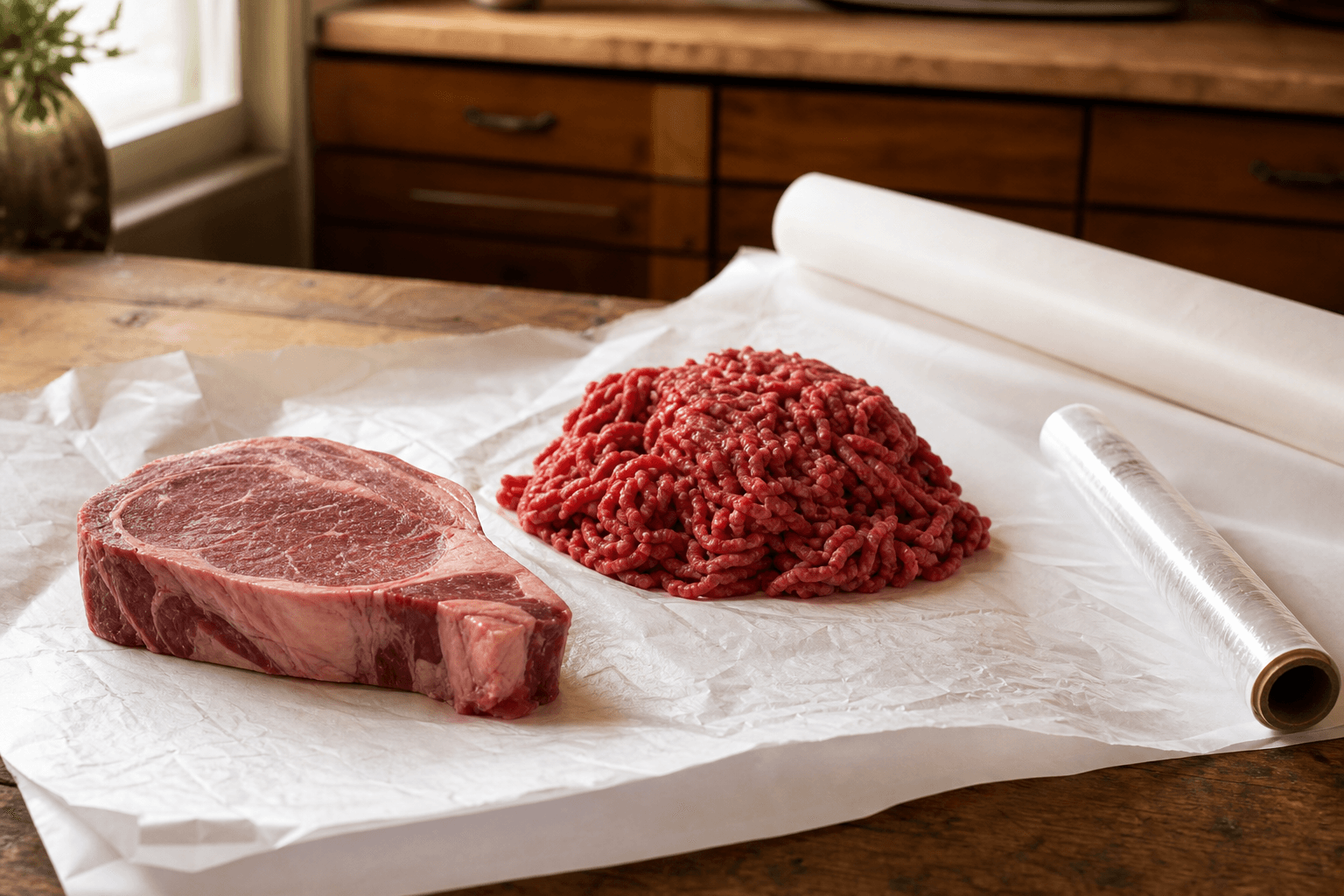
Yes, you can refreeze thawed beef, but it depends on how it thawed. Beef thawed in the refrigerator and kept at 40°F or below is safe to refreeze raw, per USDA guidance. Beef thawed in cold water or a microwave must be cooked before it goes back in the freezer.
Can you refreeze thawed beef?
Whether you can refreeze it raw depends on where it thawed.
If your steak, roast, or ground beef thawed slowly in the refrigerator, USDA's Food Safety and Inspection Service says it is safe to refreeze without cooking it first. The meat never left the safe temperature zone, so no extra bacteria had the chance to build up. You will lose a little quality (more on that below), but not safety.
If the beef thawed by the cold water method, sealed in a bag and submerged in changing cold tap water, it needs to be cooked before it goes back in the freezer. The same goes for beef thawed in the microwave. Both methods can let parts of the meat sit in warmer temperatures or start to cook unevenly, so USDA treats them as one-way trips: thaw, then cook, then freeze the cooked beef if you want to keep it.
There is one hard rule regardless of method: do not refreeze, or even keep, beef that has sat out at room temperature for more than 2 hours, or more than 1 hour if the room is above 90°F. When in doubt, throw it out.
How to freeze thawed beef
Follow the same steps whether this is beef's first trip to the freezer or a refreeze after it thawed safely in the fridge.
- Confirm it thawed in the refrigerator, not on the counter or in warm water. That is what makes refreezing raw beef safe.
- Pat the surface dry with a paper towel. Extra moisture on the surface turns into ice crystals that encourage freezer burn. See how to prevent freezer burn for more.
- Trim and portion the beef into meal-sized amounts so you only thaw what you will use next time.
- Wrap it tightly in freezer paper, a vacuum-seal bag, or a heavy-duty freezer bag, pressing out as much air as possible.
- Label the package with the cut and the date. If this is a refreeze, note that too, since the quality timeline is shorter the second time around.
- Set the freezer to 0°F and get the package in as soon as you can, before the fridge-safe window closes: within 3 to 5 days for steaks and roasts, within 1 to 2 days for ground beef.
How long thawed beef keeps frozen and how to thaw it
Beef stored at a constant 0°F stays safe to eat indefinitely. What declines over time is quality: texture, color, and flavor, especially after a second freeze.
| Beef cut | Fridge time before cooking or refreezing | Best-quality freezer time |
|---|---|---|
| Steaks | 3 to 5 days | 6 to 12 months |
| Roasts | 3 to 5 days | 4 to 12 months |
| Ground beef | 1 to 2 days | 3 to 4 months |
USDA lists three safe ways to thaw beef, and they are not interchangeable when it comes to refreezing. Refrigerator thawing is slow and steady, holding the beef at 40°F or below the whole time, and it is the only method safe for refreezing raw beef afterward. Cold water thawing keeps the beef in its sealed bag, submerged in cold tap water that you change every 30 minutes; cook it before it goes back in the freezer. Microwave thawing is fastest, but it can start cooking parts of the meat, so cook it right away and freeze the cooked beef if you want to keep it.
Never thaw beef on the kitchen counter. Room temperature lets the outside of the meat sit in the bacterial danger zone long before the center is even thawed.
What changes (texture and quality) and what to use thawed beef for after
Refrozen beef is just as safe as beef frozen once, but it is rarely as good. Thawing breaks down ice crystals inside the muscle fibers, and when you refreeze it, new crystals form and press against those already-weakened fibers. The result is more moisture lost on the next thaw: a drier, slightly firmer bite, a duller red or brown color on the surface, and a shorter freezer-burn clock if the wrap was not fully airtight.
Ground beef shows this the most, since the moisture loss is spread across so much surface area. Whole cuts like roasts and steaks hold up a bit better, but neither will sear or slice quite like beef that was only frozen once.
That does not mean the beef is wasted. Save refrozen or twice-frozen beef for dishes where a little extra moisture loss will not stand out: braises, stews, chili, tacos, meatloaf, meatballs, soups, and slow-cooker roasts. Save the beef you have only frozen once for a pan-seared steak or a quick weeknight stir-fry, where texture matters most. Got ground pork instead? See what to make with ground pork.
The same refrigerator-thaw rule that applies to beef also applies to plenty of other fridge and freezer staples. If you are working through a broader freezer cleanout, our guides on freezing cream cheese and freezing heavy cream cover two ingredients that behave very differently once they thaw. For the general rules behind freezing any food safely, start with our complete guide to freezing food.
Keeping track of when a package was frozen, and when it was thawed, is honestly the hardest part of getting refreezing right. An app that tracks expiration dates, like Well Stockd, can log those dates for you as you move beef between the fridge and freezer, so you are not relying on memory to know whether that steak is still inside its safe window.
Frequently asked questions
Can you refreeze thawed ground beef the same way as steak? The rule is the same, refrigerator-thawed can be refrozen raw, cold water or microwave-thawed needs to be cooked first, but the clock is shorter. Ground beef should be used or refrozen within 1 to 2 days in the fridge, compared with 3 to 5 days for steaks and roasts, because its larger surface area gives bacteria more room to grow.
Is it safe to refreeze beef that thawed on the counter? No. Beef left out at room temperature for more than 2 hours (or more than 1 hour above 90°F) should be thrown out, not refrozen or cooked, regardless of how it started thawing.
Does refreezing beef make it unsafe to eat? No, as long as it thawed in the refrigerator. Refreezing changes texture and moisture, not safety. Beef held at a constant 0°F stays safe indefinitely, even though USDA's quality windows suggest using it sooner for best results.
Sources: Freezing and Food Safety, USDA FSIS; The Big Thaw, Safe Defrosting Methods, USDA FSIS; Ground Beef and Food Safety, USDA FSIS; Cold Food Storage Chart, FoodSafety.gov
Track it in Well Stockd
Add what you have, see what you can cook tonight, and get a reminder before anything goes off.
