Can you refreeze thawed food? What USDA guidelines actually say
Food thawed in the refrigerator can go back in the freezer without cooking, but food thawed in cold water, the microwave, or on the counter needs to be cooked first. USDA and FSIS guidance sets the exact rules, plus how long refrozen meat, fish, and leftovers keep their quality.
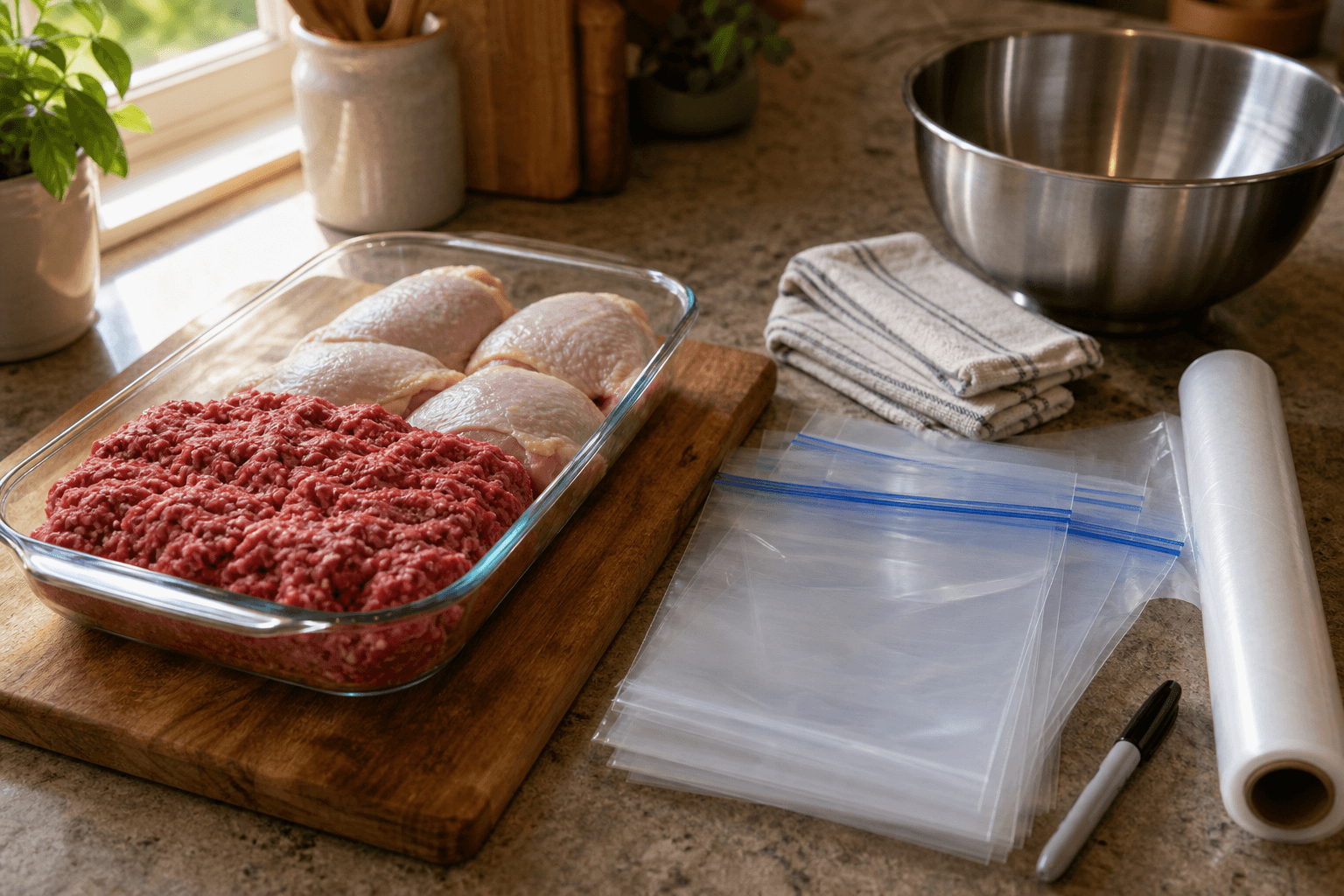
Yes, with a catch: food thawed slowly in the refrigerator can go straight back into the freezer without cooking, but food thawed in cold water, in the microwave, or left on the counter needs to be cooked first, according to USDA guidance.
Can you refreeze thawed food?
It depends entirely on how the food thawed and how cold it stayed the whole time. The Food Safety and Inspection Service (FSIS), the USDA agency that writes these rules, breaks it down by thawing method:
- Food thawed in the refrigerator at or below 40°F can go back in the freezer without cooking. You'll lose a little quality from the moisture it shed while thawing, but that's not a safety issue.
- Food thawed in cold water or in the microwave needs to be cooked fully before it goes back in the freezer. Both methods can let parts of the food sit in the 40°F to 140°F range where bacteria multiply fastest, so refreezing it raw isn't considered safe.
- Food thawed on the counter follows the two-hour rule: if it sat above 40°F for more than two hours, or more than one hour when the room is above 90°F, USDA guidance says to throw it out rather than refreeze or cook it.
The same logic covers power outages. FoodSafety.gov says food can be safely refrozen if it still has ice crystals in it or has stayed at 40°F or below the entire time. A full freezer holds a safe temperature for about 48 hours (24 hours if it's only half full), so if the power was out longer than that, check for ice crystals before you decide.
For the broader rules on freezing food the first time around, start with Can you freeze food?
How to refreeze food safely
- Check how the food thawed. Refrigerator-thawed food that stayed at or below 40°F can be repackaged and refrozen as is. Anything thawed in cold water, in the microwave, or on the counter needs to be cooked first.
- Cook it if it needs cooking. Bring meat and fish to a safe minimum internal temperature of 145°F, ground meat to 160°F, and poultry to 165°F before it goes back toward the freezer.
- Cool cooked food quickly. Split large batches into shallow containers so it drops out of the danger zone fast instead of sitting warm on the counter.
- Blot away extra moisture and repackage it airtight. Thawed food loses liquid, and moisture trapped in the package speeds up freezer burn. Use freezer bags, freezer paper, or airtight containers, and press out as much air as you can.
- Label the package with the date and freeze it right away at 0°F or below. If you track expiration and freeze dates in an app, this is the step Well Stockd's app to track food expiration dates can log automatically, so you don't have to remember it later.
How long thawed food keeps frozen and how to thaw it
Freezer times below are for best quality, not safety. Food held continuously at 0°F stays safe to eat indefinitely, according to FSIS, but texture and flavor decline the longer it sits.
| Food | How long it keeps frozen (0°F) | Safe thawing method |
|---|---|---|
| Ground beef, turkey, or pork | 3 to 4 months | Refrigerator, cold water, or microwave |
| Steaks, chops, and roasts | 4 to 12 months | Refrigerator, cold water, or microwave |
| Whole chicken or turkey | 1 year | Refrigerator, about 24 hours per 4 to 5 pounds |
| Chicken or turkey pieces | 9 months | Refrigerator, cold water, or microwave |
| Fatty fish (salmon, tuna, mackerel) | 2 to 3 months | Refrigerator or cold water |
| Lean fish (cod, halibut, sole) | 6 to 8 months | Refrigerator or cold water |
| Cooked meat or poultry leftovers | 2 to 6 months | Refrigerator or microwave |
| Soups, stews, and casseroles | 2 to 3 months | Refrigerator or microwave |
USDA considers only three thawing methods safe, and the one you use decides your refreezing options.
Refrigerator thawing is the slowest, but it's the only method that lets you refreeze raw food without cooking it first. Budget about 24 hours for every 4 to 5 pounds for a whole turkey or roast, and closer to a day for smaller cuts. Before you thaw, see how long frozen turkey lasts.
Cold water thawing is faster: keep the food in its sealed package, submerge it in cold tap water, and change the water every 30 minutes. A pound of meat can thaw in about an hour, a 3 to 4 pound package in 2 to 3 hours. Cook it before it goes back in the freezer.
Microwave thawing is fastest but least forgiving, since parts of the food can start to cook while it's still defrosting. Only use it right before you plan to cook the food anyway, and cook it fully before any thought of refreezing.
What changes (texture and quality) and what to use thawed food for after
Refreezing doesn't make food unsafe when you follow the rules above, but it does change how it eats. Ice crystals rupture cell walls every time food freezes, so a second freeze pulls out more moisture than the first one did.
Meat and poultry turn a little drier and more prone to toughness, especially in lean cuts. Fish flakes apart more easily and loses some of its firm texture. Fruits and vegetables go soft and watery once thawed, since their high water content makes them especially vulnerable to a second freeze. Dairy-based sauces and soft cheeses can separate or turn grainy, and cream cheese and heavy cream are both notorious for this. If either is part of what you're refreezing, it's worth checking the specifics: Can you freeze cream cheese? and Can you freeze heavy cream?
None of this makes refrozen food unsafe. It just means the food is better suited to everyday cooking than to a dish where you want it to look its best. Save refrozen meat for ground meat sauces, soups, chili, casseroles, and slow-cooked dishes rather than a dish where you want a clean sear or a crisp bite. Refrozen fruit works well blended into smoothies or baked into muffins rather than served fresh. To freeze fresh fruit right the first time, see how can you freeze peaches.
When in doubt about how long something sat out, or how it was thawed, throw it out. Refreezing questionable food doesn't make it safer. It only puts off the decision.
Frequently asked questions
Is it safe to refreeze meat that thawed on the counter?
Only if it was there for less than two hours (one hour above 90°F) and never rose above 40°F. If it sat out longer than that, USDA guidance says to discard it rather than refreeze or cook it.
Can you refreeze food after a power outage?
Yes, if it still has ice crystals in it or measured 40°F or below the entire time, according to FoodSafety.gov. If the freezer was out for more than 48 hours (24 hours for a half-full freezer) and the food warmed past that point, it's safer to toss it.
How many times can you refreeze the same food?
USDA guidance doesn't set a hard limit, but each freeze-thaw cycle pulls more moisture out and lowers quality. Most home cooks stop after one refreeze and use the food soon after, rather than freezing and thawing it again and again.
Sources: FSIS, Freezing and Food Safety, FSIS, The Big Thaw, Safe Defrosting Methods, FSIS, Danger Zone (40°F to 140°F), FoodSafety.gov, Food Safety During Power Outage, FoodSafety.gov, Cold Food Storage Chart.
Track it in Well Stockd
Add what you have, see what you can cook tonight, and get a reminder before anything goes off.
