Full fridge but nothing to eat? Here's the fix
A full fridge that still feels empty is a planning problem, not a shortage problem. The fix: a 10-minute scan-and-cook method, five hero recipes, and a fridge habit that keeps it from happening again.
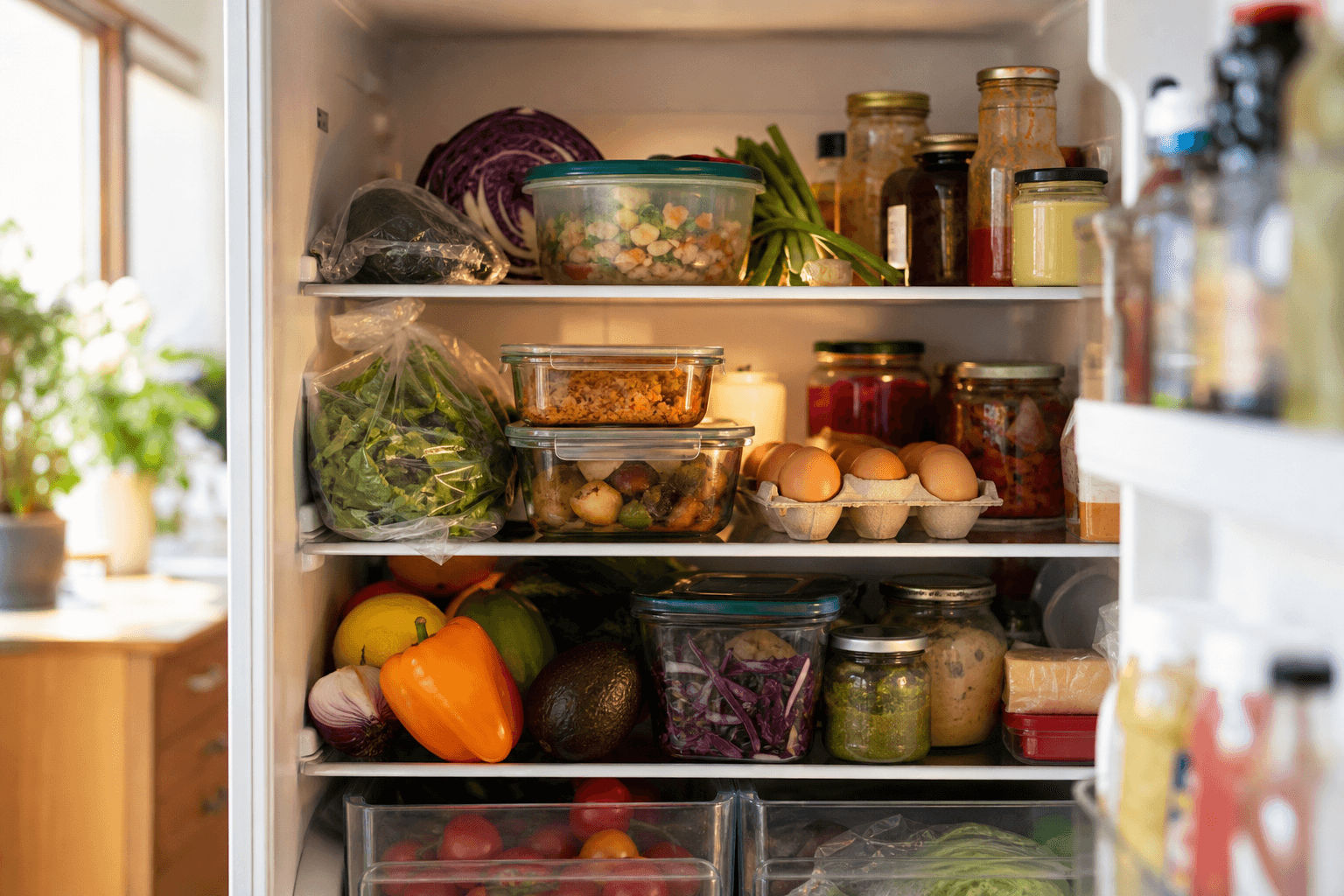
Full fridge but nothing to eat? Here's the fix
The fix is a 10-minute fridge scan followed by one flexible hero recipe, like fried rice, a frittata, or soup, that soaks up whatever odds and ends you have. Add a starch, a protein, a vegetable, and a sauce, and dinner is done in half an hour.
Why does a full fridge feel like there's nothing to eat?
Because most of what's in there is parts, not meals. Half a bag of spinach, two tablespoons of salsa in a jar, three eggs, some leftover rice from Tuesday. None of that reads as "dinner" on its own, so your brain quietly files the whole fridge under empty, even though the shelves are packed. If the spinach will not get used, see can you freeze spinach.
That's a planning problem, not a shortage problem. The cook with what you have hub exists to close exactly that gap: it turns scattered ingredients into an actual plan instead of a pile of maybes.
How do you turn a full fridge into dinner?
Four steps, in order.
- Scan in ninety seconds. Open the fridge, freezer, and pantry and sort what you see into four rough piles in your head: proteins, produce, starches, and dairy or sauces. You're not making a list yet, just noticing what you have the most of.
- Pick a format, not a recipe. Match your biggest pile to a hero format below. Lots of vegetables and eggs points to a frittata. Leftover rice points to fried rice. Sad produce and a carton of broth points to soup.
- Cook in order of how long things take. Aromatics first, then anything that needs real heat, then things that just need warming through. Leftover cooked grains and pre-cooked proteins go in last since they only need to heat up.
- Finish it bright. A squeeze of lemon, a spoon of hot sauce, chopped herbs, or a handful of cheese at the end is what turns "I used up some stuff" into something you'd order at a restaurant.
What are the best "use it up" recipes for a full fridge?
If sorting through drawers and staring at the contents isn't your idea of a good time, a fridge recipe finder can do the matching for you, since you just tell it what's in there and let it point you toward a format. Otherwise, these five hero dishes cover almost anything a full fridge throws at you.
| Hero format | Built from | Best for using up | Time |
|---|---|---|---|
| Fried rice | Cooked rice, egg, aromatics | Leftover rice, wilting greens, last bits of meat | 15 minutes |
| Frittata | Eggs, whatever's in the crisper | Half-used vegetables, cheese ends, a splash of cream | 25 minutes |
| Big pot soup | Broth, anything | Vegetable scraps, bones, produce past its prime | 30 to 40 minutes |
| Grain bowl | Cooked grain, protein, sauce | Roasted vegetables, canned beans, dressing dregs | 15 minutes |
| Quesadilla or wrap | Tortilla, cheese, filling | Small amounts of everything, condiment leftovers | 10 minutes |
What can you make with the stuff sitting in your fridge right now?
The usual suspects break down like this:
- Wilting greens or vegetables become soup, a quick stir-fry, or the filling for a frittata.
- Half a rotisserie chicken, or the last bit of any protein, goes into a grain bowl, a quesadilla, or fried rice.
- Cheese ends, half a container of sour cream, or leftover yogurt get stirred into a sauce, melted into a bake, or whisked into the frittata mix.
- Condiment dregs get whisked with oil and vinegar for a marinade or salad dressing, or brushed onto roasting vegetables as a glaze.
- Stale bread becomes croutons, panzanella, breadcrumbs, or a grilled cheese with whatever cheese is closest to its end. Not sure the loaf is still fine? Read can you eat expired bread.
- Leftover cooked grains or pasta become the base of fried rice, an add-in for soup, or the start of a grain bowl.
A trick a lot of chefs use is keeping a small "eat me first" box, a dedicated spot on one shelf for the half-used lemon, the last inch of coconut milk, and the produce that's starting to wrinkle. Everything in that box gets used before anything new comes out of the pantry, and it turns the guessing game into a single glance. If the half used lemon will not get used in time, see can you freeze lemons.
How long do fridge leftovers stay safe to eat?
Before anything goes into a hero dish, a quick freshness check matters more than eyeballing it. Cooked leftovers need to go into the fridge within two hours of cooking (one hour if the room is over 90°F), and your fridge itself should sit at 40°F or below.
| Food | Fridge storage time |
|---|---|
| Cooked meat, poultry, or fish | 3 to 4 days |
| Soups and stews | 3 to 4 days |
| Cooked pasta or rice | 3 to 5 days |
| Cooked vegetables | 3 to 4 days |
| Fresh herbs, stems in water | 7 to 10 days |
| Opened condiments (mayo, mustard, salsa) | 1 to 2 months, check the label |
| Milk, after opening | 5 to 7 days, check the date |
If something has been in there longer than that, or you're not sure how long, it's not worth the risk. When in doubt, toss it.
How do you stop this from happening every week?
Most "nothing to eat" moments come down to one thing: you can't see what you have. Typing a question like "tell me what's in my fridge and I'll give you a recipe" into a search bar only works if you remember every half-used item first, which is the whole problem to begin with.
That's the honest case for tracking your fridge, pantry, and freezer as you go instead of trying to recall it from memory every time you're hungry. Well Stockd keeps a running list of what you have on hand and matches it against thousands of recipes, so you can see what's makeable before you even open the door. It's the same idea behind an app that suggests recipes based on the ingredients you have at home: the fridge audit happens automatically instead of you standing there running through the process by memory, hungry and a little annoyed.
Pair that with a standing "eat me first" box and a five-minute inventory check the day before you grocery shop, and the full-fridge-nothing-to-eat feeling mostly goes away on its own.
Frequently asked questions
Why does this happen even right after I've been grocery shopping?
Because a fresh grocery haul is still parts, not meals. You bought ingredients for three or four specific recipes, and once those are cooked, what's left over is odds and ends that don't obviously go together. The fix is the same hero-recipe approach, not more shopping.
What's the fastest thing to make when I really don't feel like cooking?
A quesadilla or wrap, since it needs almost no prep and cooks in about ten minutes. Fried rice is a close second if you already have cooked rice sitting in the fridge.
Is it safe to combine a bunch of random fridge leftovers into one dish?
Generally yes, as long as each item is still within its own safe storage window and has stayed at 40°F or below. Cook everything to a safe internal temperature and use your nose and eyes as a final check before anything goes in the pot.
Sources: Leftovers and Food Safety, USDA FSIS, Cold Food Storage Chart, FoodSafety.gov, The "Danger Zone" (40°F-140°F), USDA FSIS
Track it in Well Stockd
Add what you have, see what you can cook tonight, and get a reminder before anything goes off.
