How to Stop Throwing Away Food From the Fridge
Most fridge food gets thrown out because you forget it's there. A two-minute weekly reset, a storage map organized by zone, and a first in, first out habit are enough to stop it for good.
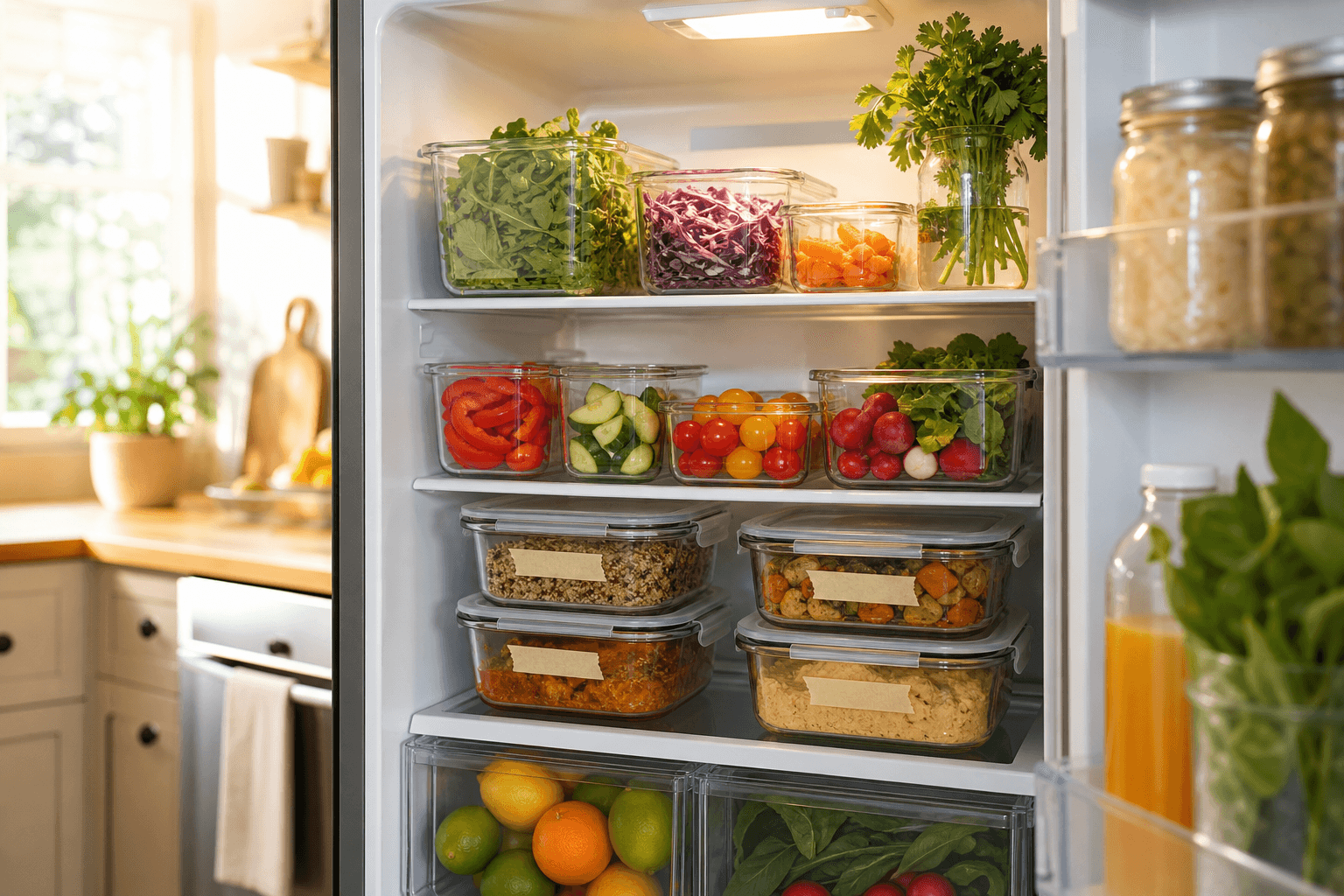
Most fridge food gets tossed for one simple reason: you forget it's there. Fix that by keeping a running inventory, doing a two-minute weekly reset, and storing food by zone so older items sit up front where you'll see them before they turn.
Food waste is mostly a visibility problem, not a willpower one. Once you can see what you have and when it needs to be used, most of the tossing stops on its own.
Why does food keep dying in the back of your fridge?
The average American wastes roughly 325 pounds of food a year, and a family of four loses about $1,500 annually to food that never got eaten, according to USDA data. Homes are the single biggest source of food waste in the country, generating more of it than restaurants, grocery stores, or farms do on their own.
Almost none of that is because people buy food they never intended to eat. It happens because:
- Leftovers get pushed to the back of a shelf and forgotten.
- Produce goes into an opaque drawer and stays out of sight until it's slime.
- Nobody checks what's already on hand before the next grocery run, so duplicates pile up.
- There's no simple system for knowing what's about to expire.
Every one of those is a fixable habit, not a character flaw.
What is the two-minute reset that stops the waste?
You don't need a full fridge overhaul. You need one small habit, repeated weekly, right before you go shopping.
- Open every drawer and container. Don't just glance at the shelves; pull out the crisper drawers and check what's inside.
- Pull anything within two to three days of its use-by date to the front. This is the whole trick behind first in, first out: older food goes where your eyes land first, newer food goes behind it.
- Smell-test and sort leftovers. Cooked leftovers are safe for three to four days in the fridge, per USDA food safety guidance. Anything older than that goes in the freezer or the trash; treat that as a hard rule, not a judgment call.
- Make a short list of what needs to be used this week. Three or four items is normal. This becomes the seed of your next few meals.
- Only then, go shopping. Buying around what you already have is what cuts waste, not buying less in general.
Do this once a week and it takes less time than scrolling your phone while the kettle boils.
Where should food go in the fridge?
Where you put things matters almost as much as when you check on them. A fridge organized by temperature zone keeps food fresh longer and, just as important, keeps it visible instead of buried.
| Fridge zone | Best for | Why it works |
|---|---|---|
| Top shelf (most visible, moderate temp) | Leftovers, ready-to-eat food, drinks | You see it every time you open the door, so it gets eaten instead of forgotten |
| Middle shelves (stable temp) | Milk, eggs, yogurt | Steady temperature suits dairy better than the door |
| Bottom shelf (coldest spot) | Raw meat, poultry, fish | Coldest air slows bacteria, and any drips stay below other food instead of on it |
| High-humidity crisper drawer | Leafy greens, herbs, broccoli | Humidity keeps moisture in so greens do not wilt |
| Low-humidity crisper drawer | Apples, pears, avocados | Lets ethylene gas escape so it does not speed up ripening in the rest of the drawer |
| Door shelves (warmest spot) | Condiments, juice, butter | Least stable temperature, fine for items that are already shelf-stable-ish |
Keep your fridge at 40°F or below. The Food and Drug Administration notes that bacteria multiply fastest between 40°F and 140°F, so a fridge running warm quietly shortens the life of everything inside it, no matter how well it's organized.
One more habit worth adding: store leftovers and cut produce in clear containers, not foil or opaque tubs. If you can't see it, you won't remember it, and food you can't remember is food you eventually throw out.
Can a pantry app cut down what you throw away?
Habits help, but they're easier to keep when something else is doing the remembering for you. That's really the whole idea behind a pantry inventory app: instead of relying on memory to know what's buried in the crisper, you log it once and get a nudge before it goes bad.
Well Stockd tracks what's in your fridge, freezer, and pantry with expiry dates attached, then surfaces which recipes you can already make with what's on hand and flags anything that needs to be used soon. It won't fix a fridge that's never checked, but it does remove the "I forgot it was in there" excuse that causes most of the waste in the first place.
For the bigger picture on cutting waste across your whole kitchen, not just the fridge, see the full guide on how to stop wasting food at home. If groceries specifically keep going bad before you get to them, this piece on stopping groceries from going bad walks through shopping and storage habits in more depth. And once your fridge inventory is under control, planning meals around food that is about to expire is the next habit that keeps waste from creeping back in.
Frequently asked questions
How long can leftovers sit in the fridge before they're unsafe? Three to four days, according to USDA guidance. After that, freeze them or toss them. Bacteria don't always change how food looks, smells, or tastes, so "it seems fine" isn't a reliable test past that window.
What temperature should my fridge be set to so food lasts longer? 40°F (4°C) or below. Check it with a separate appliance thermometer rather than trusting the dial, since the dial number doesn't always match the real internal temperature.
Does fridge organization really make a measurable difference, or is it just tidiness? It makes a real difference because visibility drives behavior. Food stored where you see it daily gets used. Food stored out of sight, especially in opaque containers or crammed in the back, gets forgotten until it spoils. Organizing by zone and doing a weekly reset gets at the real reason most households waste food.
Sources: USDA Food Loss and Waste, FDA: Are You Storing Food Safely?, FSIS: Leftovers and Food Safety