What's in my fridge recipe finder: the 5-minute method that works
A fridge recipe finder works in three moves: log what you have, search by ingredient instead of dish name, and cook whatever is closest to expiring first. Here's the 5-minute method, plus what common leftovers can become.
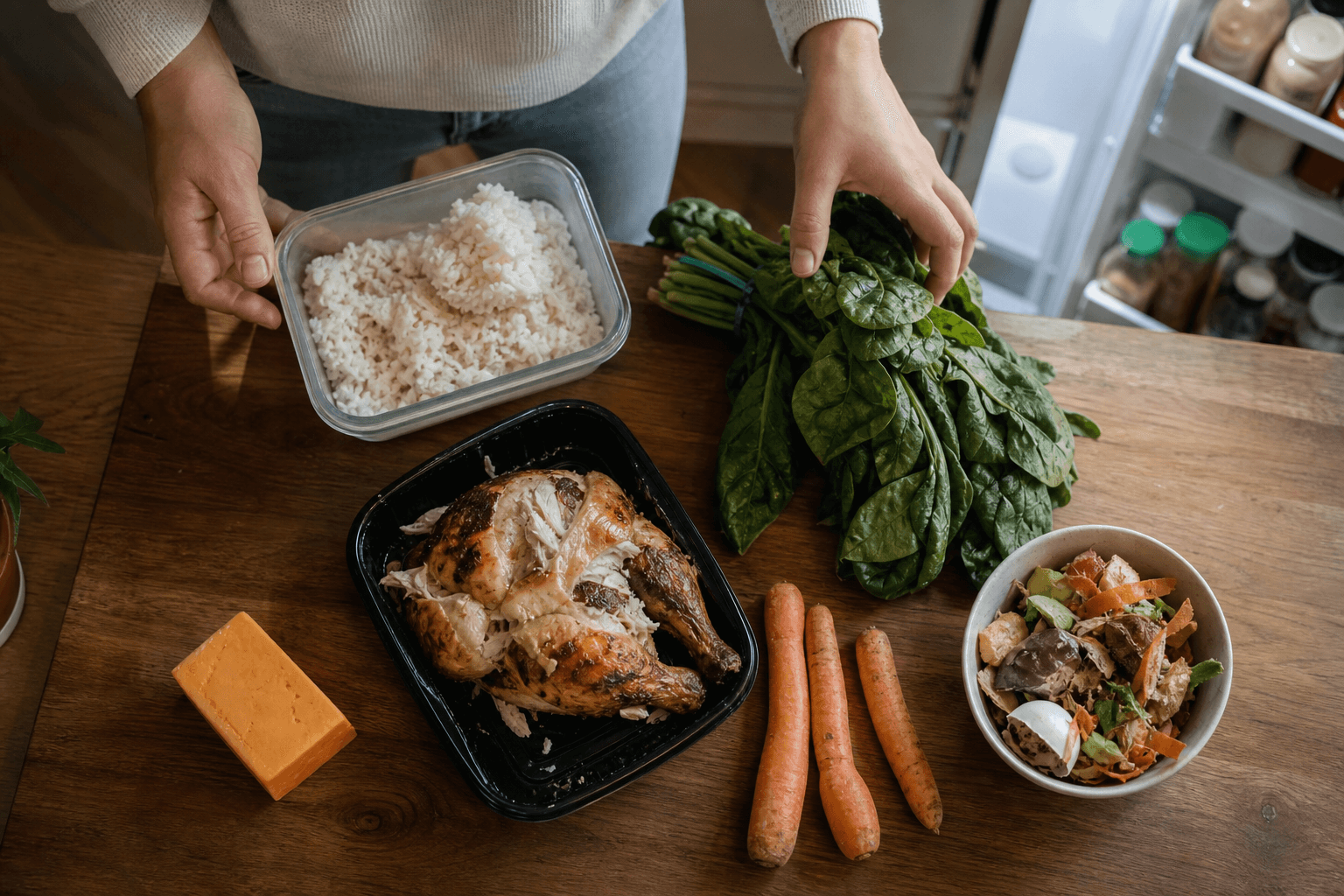
How a "what's in my fridge" recipe finder works
A fridge recipe finder works in three moves: write down what you have, search recipes by those ingredients instead of by dish name, then cook whichever recipe uses up your most perishable items first. Done well, it takes under five minutes and turns a half-empty fridge into real dinner.
That sounds obvious once you say it out loud, but most people still cook backward. They think of a dish they feel like eating, check whether they have the ingredients, and give up when something is missing. Flipping that order, starting from your ingredients and working forward to the dish, is the whole trick. Here's how to do it well, and a method you can repeat whenever your fridge feels more confusing than helpful.
What counts as a real "what's in my fridge" search?
There are three ways people try to answer "what can I cook with this," and they're not equally useful. If you want one without paying, here is a free recipe app to start with.
The first is a plain search engine query: typing "chicken thighs, half an onion, spinach recipe" into Google and hoping for the best. It works sometimes, but the results skew toward blog posts optimized for search traffic rather than for your actual fridge, and you still have to check the recipe against what you have, item by item.
The second is a dedicated ingredient-search recipe site, where you type in a few items and it filters its recipe database down to matches. This is faster and more reliable than a general search, but you're still doing the inventory part yourself, from memory, standing in front of an open fridge door.
The third is an app that already knows your inventory, because you logged it, and matches it against a recipe database automatically. This removes the "what do I have" step entirely, since the app already tracked it, and it can flag which recipes you can make right now versus which ones need one more trip to the store. For a deeper walkthrough of this whole category of approach, the guide to what you can make with what's in your fridge covers each option in more detail.
The 5-minute method
Whichever tool you use, the steps underneath it are the same. This is the order that gets you to a cooked dinner instead of a longer list of ingredients you still have to think about.
- Do a fast scan, not a full inventory. Open the fridge, freezer, and pantry and note what's there in broad strokes. You don't need exact quantities, just "half a bag of spinach" or "some leftover rice."
- Separate out what's about to turn. Anything wilting, close to its date, or already open goes on its own short list. These items decide your search, not your cravings.
- Search using your two or three most perishable items as anchors. A search for "spinach, ground beef, leftover rice" will surface more usable results than a search for "dinner ideas."
- Filter out anything that needs a special trip. A recipe that's 90 percent things you have and 10 percent an ingredient you don't is still a trip to the store. Skip it unless you're already headed out.
- Cook, then note what's left. Whatever remains becomes tomorrow's starting list. Keep track of this over a week or two and your searches get faster, because you'll already know your patterns.
If your fridge currently feels stocked but somehow useless, that gap between "full" and "usable" is common enough that it's worth reading through separately in when your fridge is full but you still feel like there's nothing to eat.
Example: what common leftovers can unlock
Some ingredients are far more flexible than they get credit for. Here's what to search for and what tends to come back.
| Ingredient sitting in your fridge | What to search for | Dishes it usually unlocks |
|---|---|---|
| Half a rotisserie chicken | shredded chicken, cooked chicken | chicken tacos, chicken fried rice, chicken noodle soup |
| Wilting spinach or greens | spinach, mixed greens | spinach omelet, sauteed greens side, spinach pasta |
| Leftover cooked rice | cooked rice, day-old rice | fried rice, stuffed peppers, rice bowl |
| Half a block of cheddar | cheddar cheese | quesadillas, mac and cheese, grilled cheese |
| A few soft carrots | carrots | roasted carrots, carrot soup, stir fry |
| Odds-and-ends vegetables | mixed vegetables, vegetable scraps | vegetable soup, stir fry, frittata |
| Ends of a rotisserie or roast | cooked meat scraps | fried rice, hash, soup base |
Notice the pattern: almost none of these searches use the vegetable or protein's exact original form. Wilting spinach is still spinach. Rice from Tuesday is still rice. Searching by what the ingredient is, not by how fresh it looks, is what makes this work.
How long can I keep cooking from the same leftovers before they go bad?
This matters because a real fridge recipe finder search often starts with leftovers, and leftovers have a shelf life. The USDA's food safety guidance is specific here: cooked leftovers are good in the refrigerator for 3 to 4 days, or in the freezer for 3 to 4 months. Perishable food should go into the fridge within 2 hours of cooking, or within 1 hour if the room is hotter than 90 degrees Fahrenheit. When you reheat leftovers, bring them to 165 degrees Fahrenheit, checked with a food thermometer, before eating.
Practically, that means your "must-use-soon" list from step 2 above should include anything cooked more than two or three days ago. If it's pushing four days, cook it today or freeze it today. Don't let it sit for a fifth day "to be safe." That's past the point the USDA considers safe.
A shortcut for the scanning step
The slowest part of this whole method is usually step 1: standing at the fridge trying to remember what's in there and what's already gone. That's the specific gap Well Stockd is built to close. You log what you have as you buy and use it, and the app matches your real inventory against its recipe database automatically. Instead of guessing your way through a search, you get a list of what you can already cook tonight, sorted by what's closest to expiring. For the mechanics of that kind of ingredient-matching search, this app that suggests recipes based on the ingredients you have at home walks through how it works. It won't replace knowing your own fridge, but it does remove the part where you have to remember everything correctly before you can even start searching.
Frequently asked questions
What's the fastest way to find a recipe from what's in my fridge? Skip the full inventory and search using just your two or three most perishable ingredients as anchor terms. A search for "spinach, ground beef, rice" returns more usable, cookable results than a general search for dinner ideas, and it takes about a minute to type.
Do I need an app, or can I just do this with a search engine or ingredient-search site? Either works. A search engine or an ingredient-search recipe site is fine if you don't mind doing the mental inventory yourself each time. An inventory-tracking app removes that step, since it already knows what you have, which matters most on nights when you genuinely can't remember what's in there. For a plain-language version of this same idea, see tell me what's in your fridge and I'll give you recipes back.
What if I don't have enough ingredients for a full recipe? Search by your most flexible items: cooked rice, eggs, cheese, canned beans, rather than a specific dish. These tend to bridge whatever gaps are left, since most weeknight recipes are built around one or two flexible staples plus whatever produce or protein is on hand.
Sources:
Track it in Well Stockd
Add what you have, see what you can cook tonight, and get a reminder before anything goes off.
