Tell me what's in my fridge and I'll give you a recipe
The method behind that familiar "what's in my fridge" question, broken into five steps you can run yourself in under a minute, plus a matching table of real ingredient combos.
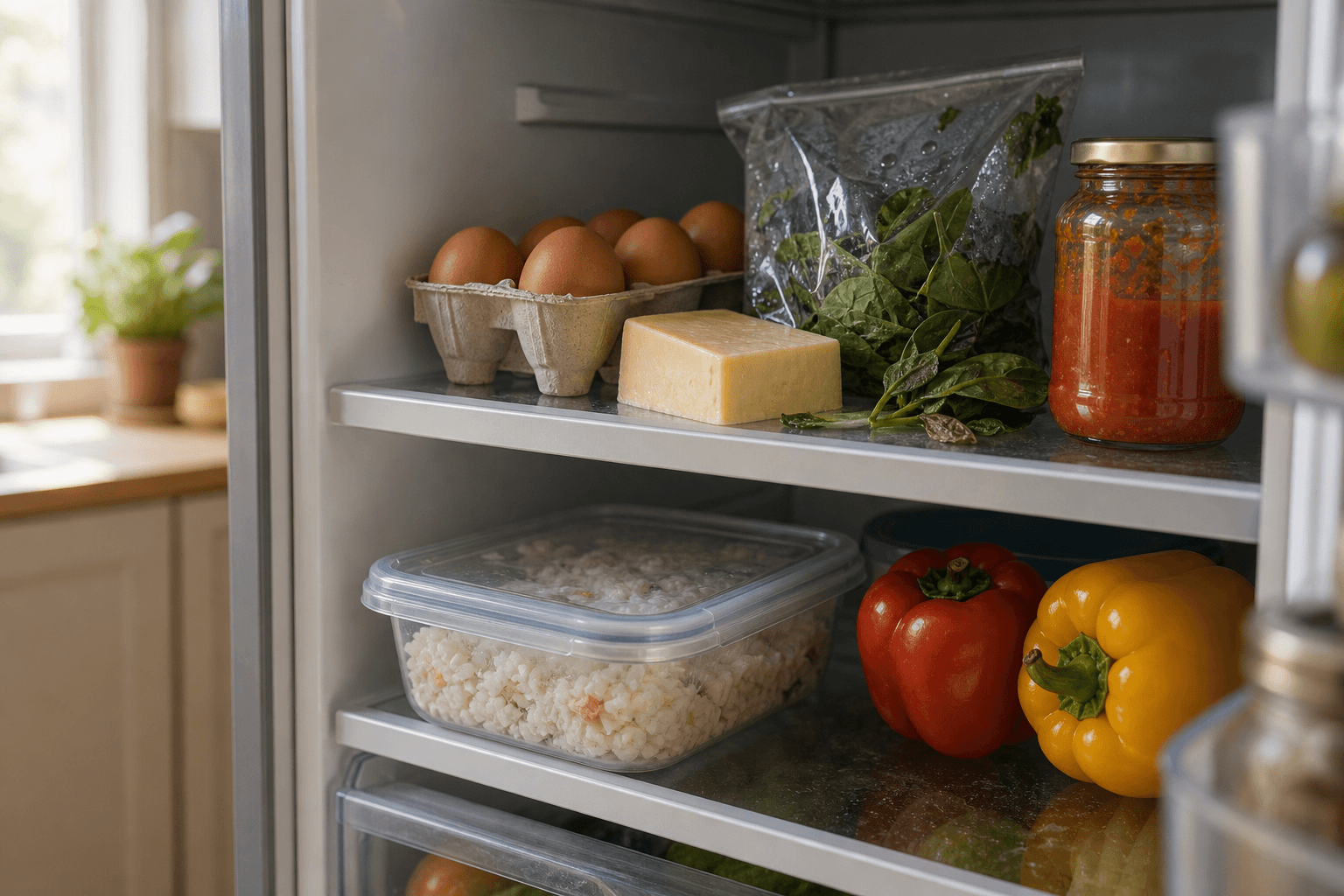
Give me three ingredients from your fridge and a starch from your pantry, and there's almost always a real recipe hiding in there. The method is simple: match your protein to a cooking technique, anchor the plate with a starch, pick one flavor direction, then use up whatever produce is closest to turning. That whole system takes about a minute to run, no matter what's in the fridge.
"Tell me what's in my fridge and I'll give you a recipe" has become a familiar line, typed into search bars and AI chat boxes by people staring into a lit fridge at 6 p.m. It works because most dinners follow the same handful of patterns. Once you know the pattern, you don't need someone else to tell you the recipe. You can build it yourself, every time, from whatever's sitting on your shelves. This piece walks through that method step by step, and it's one part of a larger approach we cover in the full guide to what to cook with what you have.
How does "tell me what's in my fridge and I'll give you a recipe" work?
Underneath the phrase is a simple matching exercise. A recipe is really just four decisions stacked together: a protein cooked a certain way, a starch to anchor the plate, a vegetable or two, and a flavor direction that ties it all together. When you list what's in your fridge, whether to a person, an app, or an AI tool, you're handing over the raw material for those four decisions. The "recipe" it hands back is just those four slots filled in with your specific ingredients.
That means you don't need to wait for someone else to fill in the slots. You can run the same matching exercise yourself, standing at the open fridge door, in less time than it takes to type the question into a search bar.
What should you gather before you look for a recipe?
Before you sort ingredients into a dish, take thirty seconds to see what you have. Open the fridge and pantry and split things into three groups in your head. First, protein: eggs, leftover cooked meat, a package of ground beef, tofu, beans, or cheese. Second, the produce that needs to go first: anything wilting, softening, or close to its use-by date. This is the list that should drive what you cook. Third, pantry anchors and flavor tools: rice, pasta, bread, tortillas, plus condiments, spices, canned tomatoes, or stock.
Most people skip this step and jump straight to "what can I make," which is why the fridge feels like a puzzle with no clear answer. Sorting first turns a vague pile of food into three short, workable lists.
The 5-step method: fridge to recipe in about a minute
- Pick your protein and its method. Eggs mean scramble, fry, or bake into a frittata. Ground meat means brown it and build around it. Leftover cooked chicken or beans mean skip the cooking step entirely and go straight to assembly.
- Choose one starch to anchor the plate. Rice, pasta, tortillas, bread, or potatoes. This decision alone tells you whether you're making a bowl, a wrap, a skillet dish, or a soup.
- Set one flavor direction. Garlic, soy sauce, and ginger point you toward a stir-fry. Cumin, lime, and chili point toward tacos or a bowl. Olive oil, lemon, and oregano lean Mediterranean. For a Mediterranean-style week, see meal planning for the Mediterranean diet. Pick one lane and stay in it.
- Fold in the vegetables that need using first. Whatever was wilting in your produce pile from step one goes in now, chopped small enough to cook fast.
- Cook the protein, then combine everything in one pan or pot. Most fridge-clearing meals are built to dirty just one skillet, sheet pan, or pot, and that's intentional.
Run through those five steps and you'll land on a real, nameable recipe almost every time, whether that's fried rice, a frittata, a grain bowl, or a sheet pan dinner.
A quick template for the method
| Step | What you're deciding | Common answers |
|---|---|---|
| Protein and method | How it gets cooked | Scrambled eggs, browned ground meat, reheated leftover meat, seared tofu |
| Starch | What anchors the plate | Rice, pasta, tortillas, bread, potatoes |
| Flavor direction | The one lane you stay in | Garlic and soy, cumin and lime, olive oil and lemon, tomato and basil |
| Vegetables | What needs to go first | Wilting greens, soft peppers, aging carrots, half an onion |
| Format | How it comes together | Skillet, sheet pan, one pot, wrap, bowl |
Fridge combos and what they become
Seeing the method applied to real ingredients makes it click faster than reading the steps alone. Here are common fridge situations and the recipe each one points toward.
| What's in the fridge | Best method | Recipe it becomes |
|---|---|---|
| Eggs, spinach, shredded cheese | Bake or fold in a pan | Spinach and cheese frittata |
| Leftover rice, an egg, half a bag of frozen peas | High heat, quick toss | Fried rice |
| Ground beef, a can of tomatoes, pasta | Brown, simmer, combine | Weeknight pasta with meat sauce |
| Roast chicken, tortillas, a lime, hot sauce | Shred and assemble | Chicken tacos |
| Wilting greens, a few eggs, cheese ends | Whisk and bake | Vegetable frittata or crustless quiche |
| Any two vegetables past their prime, stock, beans | Simmer until soft | Clean-out-the-fridge vegetable soup |
| Cooked rice or quinoa, roasted vegetables, a dressing | Combine cold or warm | Grain bowl |
What if the fridge is full but nothing sounds good?
Sometimes you have plenty of ingredients and still can't see a meal in them. That gap between a full fridge and something to eat is common enough that we wrote a separate guide on it, full fridge but nothing to eat, which covers the mental block as much as the ingredients.
One quick fix worth knowing: wilted greens and slightly limp vegetables are usually still fine to cook with, even when they look too sad for a salad. A few minutes in a bowl of ice water perks most greens back up, and anything that stays limp can still go into a soup, a sauté, or a frittata where texture matters less than it does raw.
Is it safe to cook with ingredients that have been sitting a while?
Fridge-clearing cooking works best when you also know the safe window for what you're using. As a general guide from the USDA's Food Safety and Inspection Service, cooked leftovers are safe in the refrigerator for three to four days, and should go into the fridge within two hours of cooking. Raw poultry is more time sensitive: the FDA's cold storage guidance puts raw chicken or turkey at one to two days in the fridge before it should be cooked or frozen. Eggs in the shell hold up much longer, generally three to five weeks refrigerated.
If something smells off, feels slimy, or has visible mold, throw it away rather than trying to cook around it. Everything else on your mental "should I use this today" list is fair game for the method above.
Let an app do the ingredient matching for you
Running this method by hand works, but it depends on you remembering everything in the fridge and doing the mental math every single night. That's the gap Well Stockd is built to close: you log what's in your fridge, freezer, and pantry once, and the app matches it against a catalog of thousands of recipes to show what you can make right now, ranked by what's closest to expiring first. If you want the tool version of this whole method, our guide to an app that suggests recipes based on ingredients you have on hand covers how that matching works.
For a narrower walkthrough that focuses on turning a fridge inventory into recipe suggestions, see what's in my fridge recipe finder, which pairs well with the step-by-step method above.
Frequently asked questions
Do I need exact amounts to turn fridge ingredients into a recipe? No. The method above works on rough quantities. A frittata still works with four eggs or six. A stir-fry holds together with one bell pepper or two. Precision matters more for baking than it does for the kind of savory, ingredient-driven cooking this method covers.
What if I only have two or three ingredients? Two or three is often enough, as long as one of them is a protein or a starch. Eggs and cheese alone make an omelet. Rice and an egg alone make a basic fried rice once you add oil, soy sauce, and whatever vegetable scraps you have.
How do I know if a vegetable is too far gone to cook with? Wilting, softening, or slightly discolored produce is usually still fine once it's cooked, since heat does most of the texture work for you. Sliminess, a sour smell, or visible mold means it's time to throw it away.
Sources: Leftovers and Food Safety, USDA Food Safety and Inspection Service, Refrigerator and Freezer Storage Chart, FDA
Track it in Well Stockd
Add what you have, see what you can cook tonight, and get a reminder before anything goes off.
