How to meal plan with what you already have
Skip the recipe-first shopping list. Learn the five-minute inventory and the step-by-step method for building a week of meals from what's already in your fridge, freezer, and pantry.
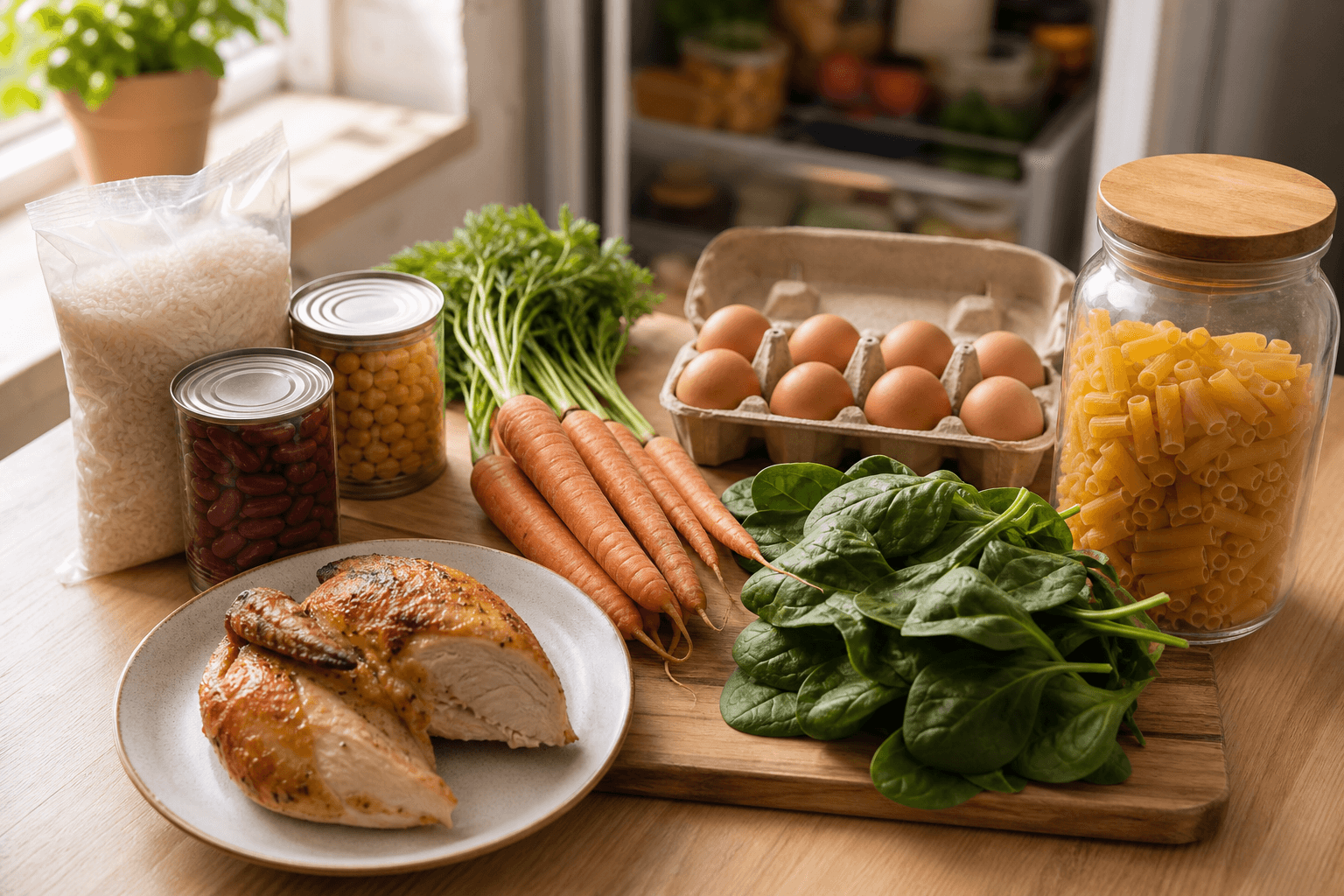
The fastest way to meal plan with what you already have starts with a five-minute pantry and fridge audit. From there, build three to five meals around whatever is closest to expiring plus your shelf-stable staples, then fill any real gaps with two or three add-on grocery items instead of writing a full shopping list.
What does "meal plan with what you have" mean?
Most meal planning starts backward. You pick recipes first, then build a grocery list, then buy things you may already own two of.
Planning with what you have flips that order. You start by looking at your fridge, freezer, and pantry, then you build the week's meals around those ingredients, and only shop to fill in small gaps.
It matters more than it sounds. The USDA's Economic Research Service estimates that food loss runs to roughly 31 percent of the food supply at the retail and consumer levels combined, and separate research on household habits puts the average American family's waste at close to a third of what it buys. A lot of that is ordinary kitchen drift: the second bag of rice bought because nobody remembered the first one, the half a bell pepper that went soft in the crisper, the freezer bag of chicken thighs pushed to the back. A quick habit of planning from your own shelves first closes most of that gap without any extra effort at the store.
How do you take a five-minute kitchen inventory?
You do not need a spreadsheet. Open the fridge, freezer, and pantry, and just look, in that order.
- Fridge first. This is where things spoil fastest, so note anything that's opened, cut, or getting soft.
- Freezer second. Frozen meat, vegetables, and bread all keep, but a running list of what's in there stops it from turning into a mystery drawer.
- Pantry last. Canned goods, grains, pasta, and dried beans are your safety net. They rarely go bad, so they're what you build around when the fresh stuff runs low.
Jot it down in three quick groups: proteins, produce, and everything shelf-stable. If you'd rather skip the notepad, a tool built for exactly this, like a fridge recipe finder, will scan what you type in and match it against recipes automatically.
What is the step-by-step method?
Once you know what you have, the planning itself takes about ten minutes.
- Start with what expires soonest. Whatever's closest to its use-by date gets a meal slot first.
- Pick two or three anchor proteins for the week, something like ground beef, a rotisserie chicken, a dozen eggs, or a can of chickpeas, and build everything else around them.
- Fill in with pantry staples. Rice, pasta, tortillas, canned tomatoes, and stock are what stretch a small amount of protein and produce into a full meal.
- Batch one flexible base. A pot of rice, a tray of roasted vegetables, or a simple tomato sauce made in bulk can show up in two or three different meals, each seasoned differently.
- Plan three to five dinners, not seven. Leave one or two nights open for leftovers or a "clean out the fridge" bowl, since a rigid seven-day plan is usually the one that falls apart by Thursday.
- Write a short gap list. Once you've mapped the week, you'll usually be missing three to five items, not thirty, and that's your grocery list.
What does a realistic week look like?
Here is an example built from a fairly ordinary starting point: half a rotisserie chicken, a bag of spinach on its last day, some carrots, a dozen eggs, and a stocked pantry.
| Day | Uses up | Meal | Pantry fill-in |
|---|---|---|---|
| Monday | Rotisserie chicken, spinach | Chicken and spinach fried rice | Rice, soy sauce, garlic |
| Tuesday | Carrots, canned beans | Carrot and white bean soup | Stock, canned tomatoes |
| Wednesday | Eggs, leftover rice | Fried rice with eggs and scallions | Frozen peas, sesame oil |
| Thursday | Remaining chicken | Chicken tacos | Tortillas, canned corn |
| Friday | Whatever is left | Fridge-clean-out grain bowl | Any grain, dressing, canned chickpeas |
Notice how little of this needs a store run. One protein and two vegetables cover most of the week once you let pantry staples do the heavy lifting. To keep it going for a month, the 31-day pantry challenge saves a snapshot of your kitchen and counts the meals you cook from it.
What if you are missing an ingredient?
This is where most home meal plans stall out, but it doesn't have to. Almost every recipe has a workable stand-in already in your kitchen: no buttermilk, use milk with a splash of vinegar; no fresh garlic, the jarred kind or a pinch of garlic powder works fine; out of one canned bean, grab another kind off the shelf. Frozen vegetables generally sub in for fresh at a one-to-one ratio in soups, stir-fries, and casseroles.
Missing ingredients are a substitution problem more than a shopping problem. Treat them that way and you'll rarely need an unplanned trip to the store. If you want a bigger list of ideas built entirely around ingredient swaps and using odds and ends, the guide on what to cook with what you have is a good next stop.
How can an app make this easier?
You can do this whole process on paper, and plenty of people do. But if you'd rather not retype your pantry into a search bar every week, an app that suggests recipes based on the ingredients you have at home does the matching for you. It keeps track of your fridge, freezer, and pantry and flags what's about to expire, then points you toward recipes you can make tonight instead of ones that need three more trips to the store. Well Stockd works this way, and it also builds the short gap-list shopping trip automatically once you've picked your meals for the week.
If typing out a list feels like extra work, some tools take it even further: you can just tell it what is in your fridge and let it handle the matching.
Frequently asked questions
How many meals should I plan around what I already have? Start with three to five dinners. That covers most of the week without requiring perfect foresight, and it leaves room for a leftovers night or a spontaneous cook-from-scraps meal on the days your plan doesn't quite work out.
Is meal planning from the pantry cheaper than planning first and shopping second? Usually, yes, because you're buying only what fills real gaps rather than a full list built around recipes you liked in isolation. Pantry-first planning tends to cut food waste, and households that waste less food spend less overall, since unused groceries are money thrown straight in the trash.
What if my pantry inventory does not add up to full meals? That's normal, especially early in the week. Plan the two or three meals that clearly work first, then build a short list for the three to five items that would round out the rest. You rarely need a full cart to close the gap.
Sources: USDA, Food Waste FAQs.
Track it in Well Stockd
Add what you have, see what you can cook tonight, and get a reminder before anything goes off.
