Cheap meals to stretch groceries until payday
A tight week before payday does not have to mean instant noodles for every meal. This is the inventory-first method, the cheapest staples to build around, and a sample five-day plan for stretching what is already in your kitchen.
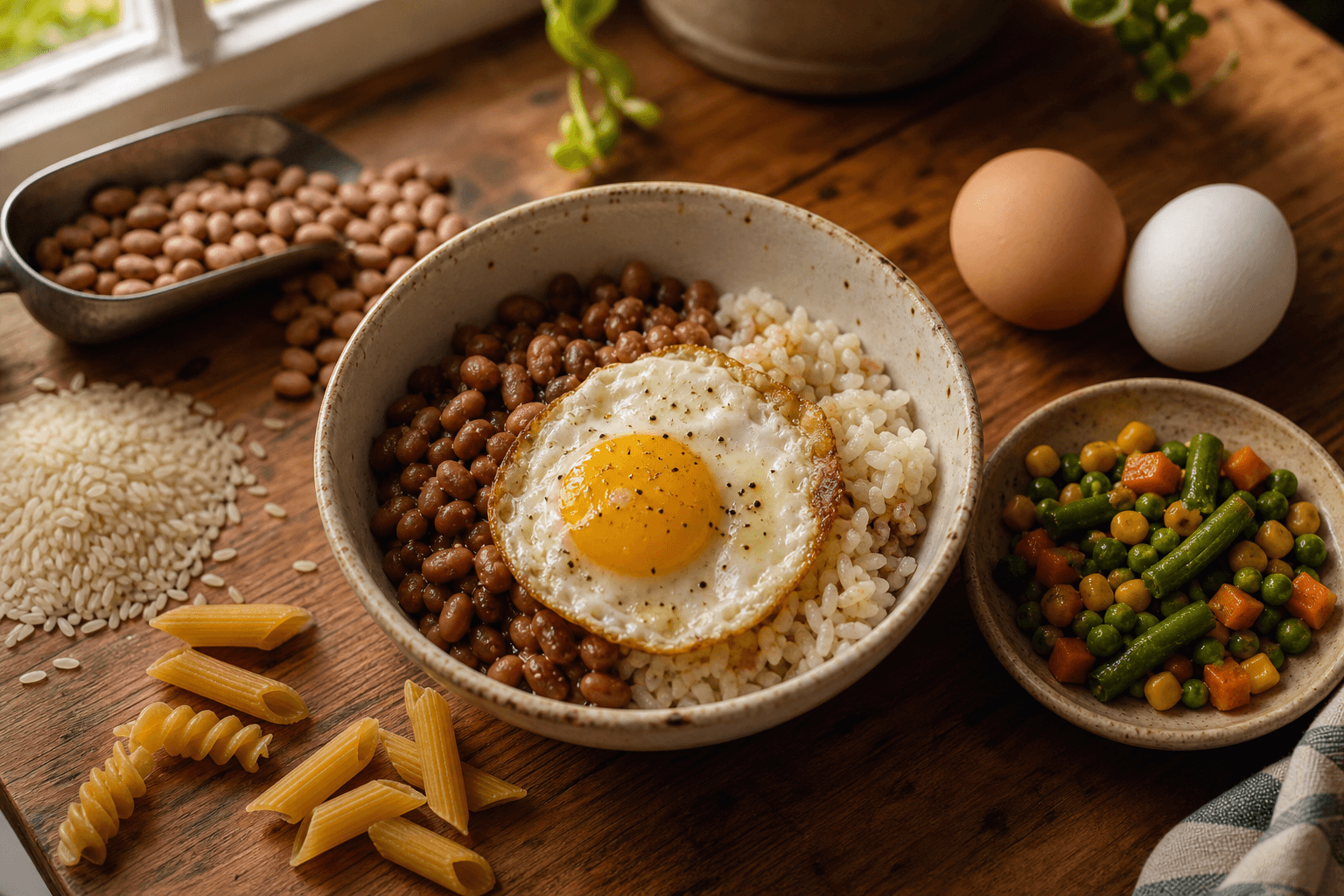
The fastest way to stretch groceries until payday is to take real stock of what you own, then build every meal around staples that multiply, like rice, beans, eggs, pasta, and frozen vegetables. A stocked pantry can turn into five or six real dinners without another trip to the store.
How do you stretch groceries until payday?
Most kitchens hide more dinners than they let on. The trick is to stop shopping with a list and start cooking from an inventory instead. Open the fridge, freezer, and pantry, write down everything you have in three columns (proteins, starches, produce), and then look for combinations before you look for recipes. A half bag of rice, a can of beans, and one wilting bell pepper is a dinner, not a problem.
The other half of the method is portion control on the expensive stuff. Meat, cheese, and pre-made sauces disappear fast because they get treated as the whole meal. Treat them as seasoning instead. A quarter pound of ground beef browned with onion and garlic can carry a full pot of rice and beans for four people if you stretch it with spices instead of serving it as a standalone patty.
A 5-step method for a no-shop week
- Inventory everything first. Check dates on anything that spoils fastest (dairy, ground meat, leafy greens) and plan to use those within the first two days.
- Pick two or three anchor staples. Rice, pasta, or potatoes are cheap, filling, and take on whatever flavor you cook them with.
- Build meals around what needs to go, not what sounds good. Cook backward from the ingredient closest to spoiling.
- Batch-cook a base you can reuse. A pot of beans, a tray of roasted vegetables, or a pan of scrambled eggs can become three different meals with different seasonings.
- Freeze what you will not eat in three days. Splitting a big batch into freezer portions now saves you from wasting it, and from cooking again from scratch later in the week.
If you are staring at a fridge and genuinely unsure what to do with it, that is exactly the gap what to cook when you have nothing in the house is built to close. It matches what is already in your kitchen to a real recipe instead of making you guess.
Cheap staples that stretch the furthest
These ingredients show up in almost every low-cost meal plan for a reason: they keep in the pantry or freezer, cost next to nothing per serving, and work for breakfast, lunch, or dinner without repeating the same dish.
| Staple | Rough cost per serving | Why it stretches | Easy way to use it |
|---|---|---|---|
| Rice | Around 10 to 15 cents | Bulks up any protein, freezes well cooked | Fried rice with whatever vegetables are left |
| Dried or canned beans | Around 15 to 25 cents | High in protein and fiber, filling on its own | Beans and rice, bean tacos, soup base |
| Eggs | Around 20 to 30 cents each | Cooks in minutes, works at any meal | Fried rice, frittata, egg and toast dinner |
| Pasta | Around 15 to 20 cents | Cooks fast, pairs with almost any sauce | Pasta with canned tomatoes and whatever cheese is left |
| Oats | Around 10 cents | Cheap breakfast that also works savory | Oatmeal, or a base for veggie patties |
| Potatoes | Around 20 to 25 cents | Filling, versatile, keeps for weeks | Baked, mashed, or hash with leftover meat |
| Frozen mixed vegetables | Around 25 to 35 cents | Never spoils and skips the prep work | Stir-fry, soup filler, fried rice |
| Peanut butter | Around 15 cents per tablespoon | Shelf-stable protein and fat | Sandwiches, sauces, noodle bowls |
A sample five-day plan for a nearly bare kitchen
This is the kind of week that comes together from a half-stocked pantry, one bag of frozen vegetables, and whatever protein is closest to its date.
| Day | Meal | Built from |
|---|---|---|
| Monday | Fried rice with eggs and frozen peas | Leftover rice, eggs, frozen vegetables |
| Tuesday | Bean and rice bowls with hot sauce | Canned beans, rice, any cheese scraps |
| Wednesday | Pasta with canned tomatoes and garlic | Pasta, canned tomatoes, pantry seasonings |
| Thursday | Loaded baked potatoes | Potatoes, last of the cheese, leftover meat or beans |
| Friday | Vegetable and egg fried rice, round two | Whatever produce is closest to spoiling |
If nothing on your shelf lines up into meals this easily, tools built for exactly this problem can help. Both what's in my fridge recipe finder and tell me what's in my fridge and I'll give you recipes walk through how to turn a random shelf of ingredients into an actual dinner list.
How to avoid wasting what you stretch
Stretching groceries only works if the food gets eaten. The USDA estimates that 30 to 40 percent of the food supply in the United States goes to waste, and a lot of that happens in home kitchens, not stores. Cooking a big batch on Monday only helps your budget if Thursday's version of you still wants to eat it.
A few rules keep batch-cooked food safe and appealing through the week. Refrigerate leftovers within two hours of cooking, eat refrigerated leftovers within three to four days, and reheat them to 165 degrees Fahrenheit before eating. If a batch will not get eaten in that window, freeze individual portions instead of leaving the whole pot in the fridge to quietly go bad.
When cooking from what you have is not enough
Some weeks, the fridge has ingredients that do not obviously add up to a recipe, or you are staring at three odd items with no idea what they go with. That is where an app that suggests recipes based on ingredients you have at home earns its place: type in what is left, and it matches those items against a recipe library instead of you guessing at combinations from memory. It will not replace a real grocery budget, but it can turn a stray can of beans and a half onion into dinner instead of into the trash.
Frequently asked questions
How many meals can you realistically get from a bare-looking fridge? Most kitchens hold more than people think. A working inventory of rice, one protein, a starch, and whatever produce is closest to spoiling usually produces three to five real meals, even when the fridge looks nearly empty.
What is the cheapest protein for stretching meals until payday? Eggs and canned or dried beans are typically the cheapest reliable proteins per serving, and both work at any meal, not just dinner.
Is it safe to eat leftovers a few days before payday if they have been sitting in the fridge? Yes, as long as you refrigerate them within two hours of cooking, eat them within three to four days, and reheat to 165 degrees Fahrenheit. After four days, discard them rather than risk it.
Sources:
Track it in Well Stockd
Add what you have, see what you can cook tonight, and get a reminder before anything goes off.
