How to organize a chest freezer so food doesn't get lost
A chest freezer only stays useful if you can find what's in it. This zone-and-label system, plus a storage time chart, keeps food from sinking to the bottom and getting forgotten.
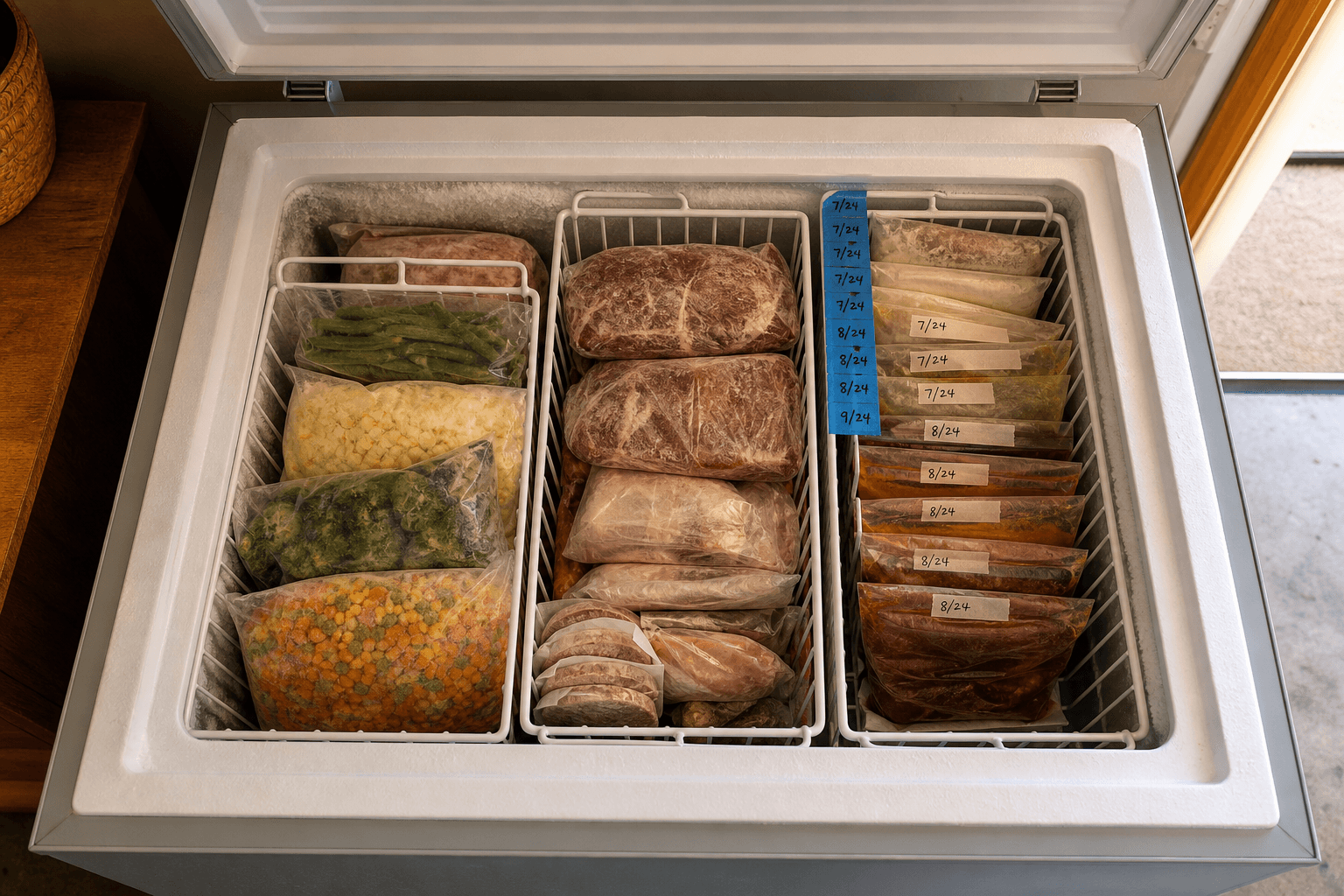
Organize a chest freezer by splitting it into five labeled zones, such as proteins, vegetables, and prepared meals, storing each zone in its own basket, and keeping a running inventory list taped to the lid. That habit, writing it down, is what actually stops food from vanishing to the bottom.
A chest freezer is the most efficient shape for keeping food frozen and the worst shape for finding it again. Everything sits in one open pit, gravity pulls newer items to the top, and by February you're digging through a glacier of mystery bags to find the chicken thighs you know are in there somewhere. The good news is that the fix isn't a new freezer. It's a system.
Why food gets lost in a chest freezer
Upright freezers have shelves, so your eyes can scan every level at once. A chest freezer has depth instead of shelves, which means anything you don't grab right away sinks under whatever you add next. Without a system, you end up with three problems stacked on top of each other: you can't see what's on the bottom, you can't remember what you own, and you keep buying duplicates of things you already have.
Fixing all three takes the same three tools: zones, containers, and a list. You can set all three up in an afternoon.
How to organize a chest freezer step by step
- Empty it out and sort into piles. Pull everything out, group it by type (meat, vegetables, baked goods, prepared meals, ice packs and odds and ends), and toss anything freezer-burned past the point of being appetizing.
- Wipe down the interior. A quick wipe with warm water catches spills before you load fresh food back in, and it's a lot easier with the freezer empty.
- Pick your zone layout. Decide which section of the freezer holds which category. A simple version: top for things you grab weekly, one side for proteins, the other for vegetables and prepared meals, and the back or bottom for bulk buys and seasonal stock you won't touch for months.
- Corral each zone in a basket, bin, or bag. Stackable wire baskets, dollar-store bins, or even reusable grocery bags all work. The point is that you lift one container out instead of digging by hand.
- Label everything with contents and date. Painter's tape and a permanent marker are enough. Write what's inside and when it went in, not just "chicken."
- Load newest to the bottom, oldest on top. Within each basket, keep the first-in, first-out rule: whatever you froze earliest should be the easiest thing to reach.
- Keep a running list. Tape an index card, small whiteboard, or printed inventory sheet to the underside of the lid and cross items off as you use them. This one step does more than any bin or label to stop food from getting lost, because you stop relying on memory entirely.
- Do a two-minute reset weekly. Straighten baskets, update the list, and move anything that's crept close to its recommended storage window to the front so you use it up.
How long does frozen food really last
Food held constantly at 0°F is safe to eat indefinitely. The times below are quality guidelines, not safety cutoffs, so food past these windows won't make you sick, it just won't taste its best.
| Food | Recommended freezer time |
|---|---|
| Ground meat (beef, turkey, pork) | 3 to 4 months |
| Steaks | 6 to 12 months |
| Roasts | 4 to 12 months |
| Whole chicken | 12 months |
| Chicken pieces | 9 months |
| Bacon | 1 month |
| Hot dogs | 1 to 2 months |
| Soups and stews | 2 to 3 months |
| Casseroles and prepared meals | 2 to 3 months |
| Vegetables (home frozen) | 8 to 12 months |
| Fruit | 8 to 12 months |
| Bread | 2 to 3 months |
Use this table when you're deciding what goes in your "grab soon" zone versus your bulk zone. Anything nearing the end of its window belongs up top.
What a good freezer zone layout looks like
There's no single correct map, but a five-zone version works for most households. Keep the top and center for what you reach for weekly, like bread, bagged vegetables, or breakfast items. Give one side to raw proteins, sorted by type and dated. The other side holds vegetables and fruit, ideally blanched and bagged flat so they stack like books. Middle depth is for prepared meals, leftovers, and portioned soups in stackable containers. Bottom and back is where bulk buys go: whole turkeys, or seasonal items you grabbed on sale and won't need until a specific holiday.
Bagged items that lie flat stack much better than lumpy round packages, and you can read the labels at a glance when you look straight down.
Do you need an app to keep it organized
The bins and labels handle physical order. The part that actually keeps you from losing food is knowing what you own before you open the lid, and a taped-up index card works fine until you're standing in the grocery store trying to remember if you already have ground turkey. If you'd rather your freezer list live on your phone instead of a card that falls off the lid, an app built for tracking pantry inventory can log each item once, so you can check from anywhere before you buy a duplicate bag of chicken thighs. Well Stockd, one of the options covered in our roundup of the best pantry inventory app picks, also flags what's close to its use-by window and suggests recipes built around what you already have frozen.
Whether you go digital or stick with a whiteboard, the freezer is really just one part of a bigger habit. Pairing it with tracking what's in your fridge and a broader kitchen inventory system means you always know what's on hand across every cold storage spot in the house, not just the chest freezer in the garage.
Frequently asked questions
How often should I reorganize a chest freezer? A full sort-and-reset once every three to four months keeps things from sliding back into chaos, with a quick two-minute tidy weekly in between to update your list and straighten baskets.
Do I need to defrost the freezer before organizing it? Only if you're seeing more than a quarter inch of ice buildup on the walls, which cuts into storage space and makes the compressor work harder. Otherwise, you can sort and rebin without a full defrost.
What's the best container for a chest freezer? Stackable wire or plastic baskets with handles are the easiest to lift out one-handed, but flat-bottomed bins or even sturdy reusable grocery bags work well if you're organizing on a budget.
Sources: