Does meal planning reduce food waste? Here's how it works
Meal planning reduces food waste by closing the gap between what you buy and what you eat: why it works, a simple step-by-step method, and a sample plan where one grocery list covers three dinners without anything going bad.
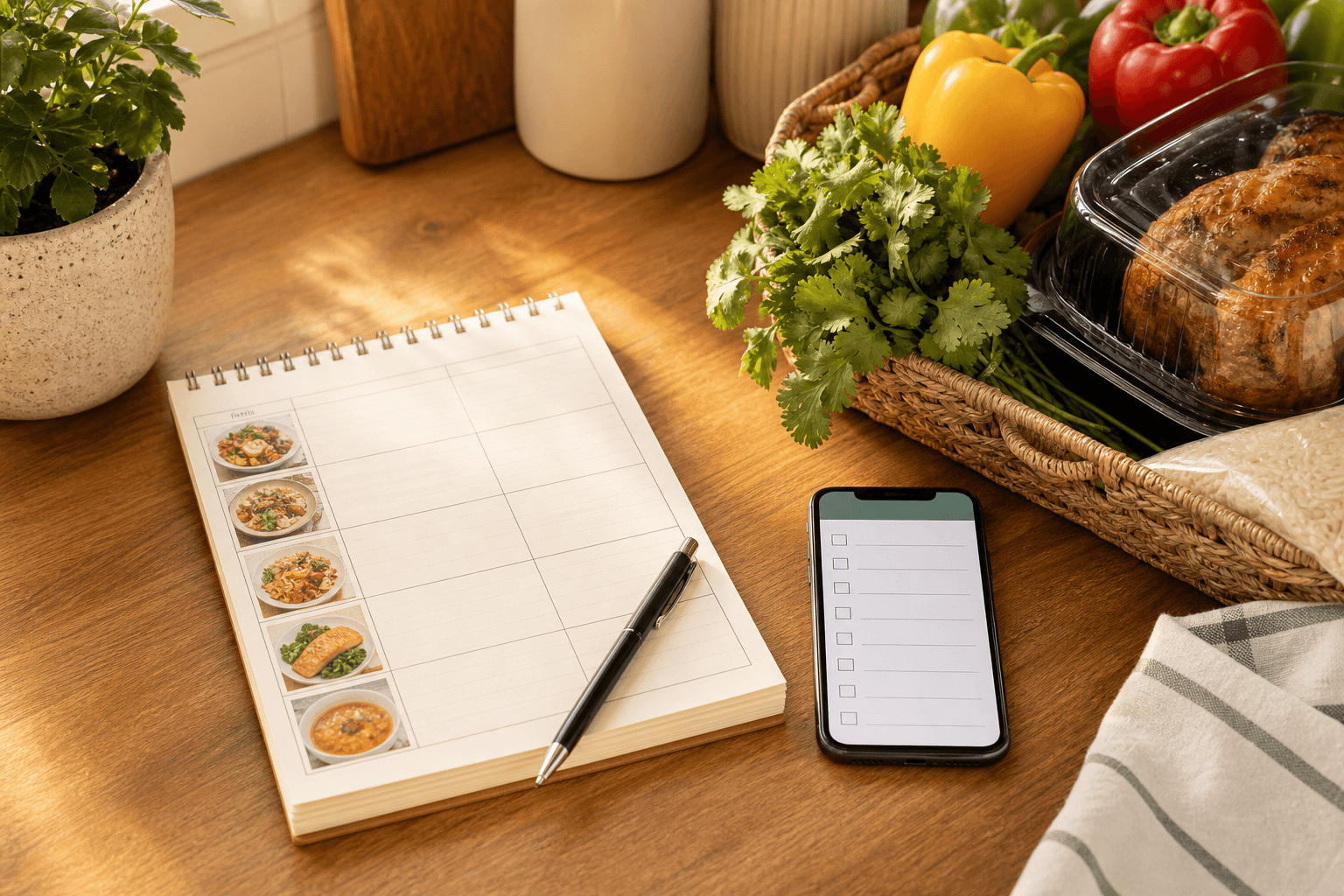
Yes: meal planning reduces food waste, because it replaces impulse buying and guesswork with a list built around what you already own and what you will realistically cook. The EPA puts the average cost of household food waste at nearly $2,913 a year for a family of four, and most of that gap closes once you plan before you shop.
Why does meal planning cut down on food waste?
Most household food waste has two root causes: food that never gets used before it turns, and meals where you cook or buy more than anyone eats. Research from WRAP, the group behind the UK's long-running household food waste studies, found that close to 40 percent of wasted food is thrown out because it simply wasn't used in time, and roughly a quarter is wasted because people cooked, prepared, or served too much. A meal plan attacks both problems directly. When you decide in advance what you're eating and how much you need, you stop buying duplicate bags of spinach that wilt in the crisper, and you stop guessing at portions on a Tuesday night. For the fuller picture of where household waste comes from, our guide on how to stop wasting food at home breaks down the other habits worth fixing alongside planning.
How much food and money is on the line without a plan?
The numbers add up faster than most people expect. The EPA estimates the average American loses $728 a year to food that goes uneaten, and USDA researchers put total food loss and waste in the United States at 30 to 40 percent of the entire food supply. None of that is one dramatic event. It's a forgotten bag of salad, a second rotisserie chicken bought because no one remembered the first one, a pot of soup made too big for a household of two. Meal planning doesn't eliminate waste entirely, but it removes the two biggest drivers: buying food with no destination, and forgetting food you already paid for.
What does a waste-cutting meal plan look like?
You don't need a color-coded spreadsheet. A plan that reduces waste follows a short, repeatable process:
- Check the fridge, freezer, and pantry first. Before you write down a single meal, look at what's already open, close to its date, or buried in the back of the freezer. Those items go on the menu this week, not next month.
- Pick a realistic number of meals. Planning all seven dinners when you know you'll order takeout twice just sets you up to waste the groceries you bought for the nights you skip. Plan four or five, and leave the rest open.
- Build meals around what repeats. Look for one or two ingredients, a bunch of herbs, a bag of rice, a rotisserie chicken, that can carry across two or three different dinners instead of being used once and forgotten.
- Write the list with quantities, not just names. "Bell peppers" is vague. "Three bell peppers for fajitas and stir-fry" tells you exactly how many to buy, and stops the extra one from rotting.
- Leave one night open for leftovers. A designated leftovers night, instead of hoping people remember the extra portions, is one of the simplest ways to make sure cooked food gets eaten.
- Keep it short and flexible. WRAP's research points to shorter, more flexible planning as more effective than locking in a rigid full month. Plan a week at a time, and let it flex around your schedule.
If your groceries tend to go bad before you even get to step three, it's worth reading how to stop wasting groceries before they go bad for storage-specific fixes that pair well with planning.
Example: one grocery list, three dinners
Step three in practice: a single trip built around repeating ingredients can cover half the week without a second store run.
| Ingredient bought | Monday | Wednesday | Friday |
|---|---|---|---|
| Rotisserie chicken (1) | Chicken tacos | Chicken fried rice | Chicken noodle soup |
| Bell peppers (3) | Fajita filling | Stir-fry mix-in | Soup base |
| Cilantro (1 bunch) | Taco topping | Fried rice garnish | Not used |
| Rice (1 bag) | Not used | Fried rice | Side for leftovers |
Nothing in that list is exotic, and nothing sits unused long enough to go bad. Every item has a job before it has a chance to spoil, and that's the point of building the plan this way.
What if food still goes bad before you get to it?
Even a good plan fails if you can't remember what's in the fridge. If you keep finding forgotten containers pushed to the back, or the same vegetable turning to mush every other week, the issue is less about planning and more about visibility. Our guide on how to stop throwing away food from the fridge covers storage order, expiry tracking, and the habits that keep a plan from falling apart mid-week.
Does an app help, or is a notepad enough?
A notepad and a fridge check work fine, and plenty of people plan meals that way for years. Where it tends to break down is step one: remembering what's already open, half-used, or close to its date, especially across a fridge, freezer, and pantry all at once. That's the specific gap a pantry inventory app is built to close. It tracks what you have and flags what needs to be used soon, so the plan is built on what's there instead of what you think is there. If you want to compare that approach, our roundup of the best pantry inventory app to reduce food waste walks through what to look for.
Frequently asked questions
Does meal planning really save money, or just reduce waste?
Both, and they're connected. The average household loses hundreds of dollars a year to food that never gets eaten, so every ingredient a plan uses is money that would have gone in the trash otherwise. Shopping from a list tied to specific meals, instead of shopping by feel, is one of the more reliable ways to trim a grocery bill.
What if my schedule changes and I cannot stick to the plan?
Plan short and loose rather than long and rigid. A five-day plan with one flexible night absorbs a canceled dinner or a late night far better than a full week locked in meal by meal. If a planned meal gets skipped, move it to the next open night instead of letting the ingredients sit.
Do I need to plan every single meal to see a difference?
No. Even planning dinners alone, while leaving breakfast and lunch loose, removes a large share of impulse buying and forgotten produce, since dinner ingredients are usually what sits longest in the fridge between the shop and the plate.
Sources: EPA, Estimating the Cost of Food Waste to American Consumers; USDA, Food Waste FAQs; WRAP, Household Food and Drink Waste in the UK 2022