Is freezer burned meat safe to eat?
Freezer burned meat is safe to eat. It's a quality issue, not a safety risk: air dries out the surface, so trim the dry spots and cook the rest as usual.
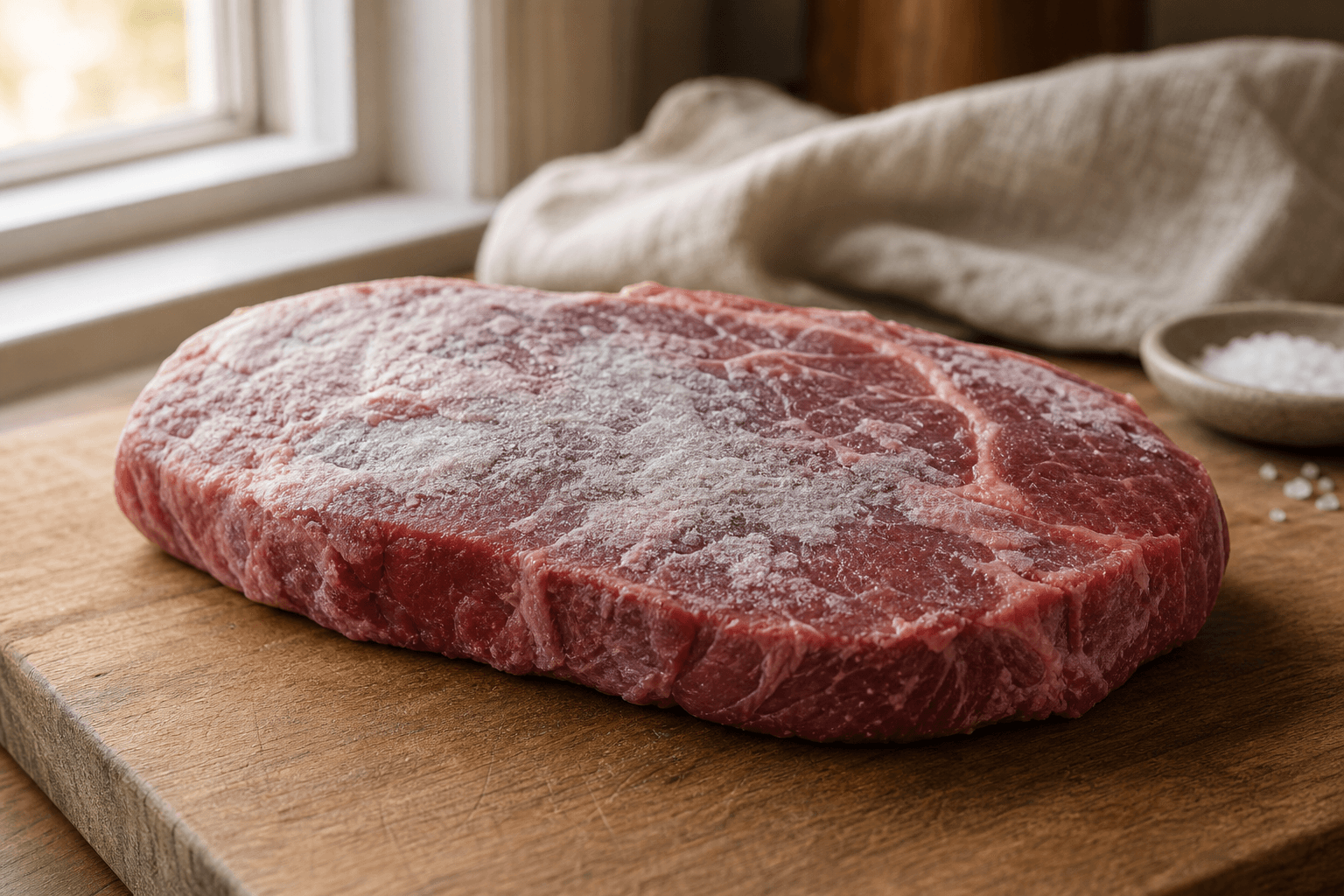
Yes, meat with freezer burn is safe to eat. Freezer burn is a quality problem, not a safety one: it happens when air reaches the meat's surface and dries it out, leaving grayish-brown, leathery patches. Trim the dry spots before or after cooking and use the rest of the meat as you normally would.
Is freezer burned meat safe to eat?
Freezer burn looks worse than it is. According to the USDA's Food Safety and Inspection Service (FSIS), it shows up as grayish-brown or whitish, leathery spots on frozen meat, where air has reached the surface of the food. The process is called sublimation: ice crystals on the surface evaporate straight into water vapor, pulling moisture out of the meat and leaving dry, dehydrated patches behind.
That process does not create bacteria or toxins. As long as your freezer holds a steady 0°F (-18°C) or below, no pathogens are growing in there, freezer burned or not. FSIS is direct about this: freezer burn does not make food unsafe, it just leaves it dry in spots. The fix is simple: cut the freezer-burned portions away, either before or after you cook the meat, and eat the rest.
The one caveat: don't apply the "when in doubt, throw it out" rule here. That rule is for time and temperature abuse: meat that thawed and sat out too long, or a freezer that failed and let food climb above 40°F for hours. Plain old freezer burn, from dry air reaching the surface over time, doesn't call for tossing the meat. It calls for trimming it and maybe adjusting how you cook it.
How to freeze meat so it does not happen again
Freezer burn is almost always a packaging problem, so it's preventable. To freeze meat well:
- Get it cold fast. Freeze meat within a day or two of buying it, or by its use-by date. Never let raw meat sit out longer than 2 hours at room temperature (1 hour if the room is above 90°F) before it goes into the freezer.
- Press the air out. Freezer burn needs air to happen, so squeeze as much as possible out of the bag before sealing, or use a vacuum sealer if you have one.
- Use freezer-grade wrapping. Thin store packaging, deli paper, or a loosely closed bag lets air in over months. Rewrap in freezer paper, heavy-duty foil, a freezer bag rated for cold storage, or a vacuum-seal pouch.
- Double up on long stays. If a cut is going to be in there more than a couple of months, wrap it once, then wrap or bag it a second time for extra protection.
- Portion before you freeze. Split ground meat, chops, or chicken pieces into meal-size portions first, so you're not repeatedly opening and re-exposing one large package to air.
- Label with the date. A piece of tape with the item and freeze date takes ten seconds and saves you from guessing later.
- Keep the freezer at 0°F or below and don't overpack it. Air needs to circulate for food to freeze quickly. A freezer stuffed too full freezes more slowly, which gives ice crystals more time to form and migrate to the surface.
For a broader rundown on freezing everyday foods well, our guide to freezing food safely covers the same wrapping and timing principles for things beyond meat.
How long meat keeps frozen and how to thaw it safely
Frozen meat stored continuously at 0°F never becomes unsafe, no matter how long it sits there. The times below are about quality, how long the meat stays tender and flavorful, not a safety deadline.
| Meat | Best quality if frozen at 0°F or below |
|---|---|
| Ground beef, turkey, chicken, pork, or lamb | 3 to 4 months |
| Beef, veal, lamb, or pork steaks, chops, and roasts | 4 to 12 months |
| Whole chicken or turkey | 12 months |
| Chicken or turkey pieces | 9 months |
| Bacon | 1 month |
| Hot dogs and luncheon meat | 1 to 2 months |
| Cooked meat or poultry leftovers | 2 to 6 months |
Ground meat and bacon fall off first because more of their surface is exposed to air, and their higher fat content turns rancid faster. A well-wrapped beef roast can go a full year and still cook up fine, while a loose bag of ground beef is more likely to show freezer burn by month four.
When you're ready to use it, thaw it one of three safe ways: in the refrigerator at 40°F or below (slowest but easiest, and it's fine to refreeze meat thawed this way), in a leak-proof bag submerged in cold water that you change every 30 minutes (cook it right after), or in the microwave on a defrost setting (also cook immediately after). Never thaw meat on the counter. Room-temperature thawing lets the outer layer sit in the bacterial danger zone above 40°F for too long, even while the center is still frozen.
What freezer burn changes and what to use it for
Freezer burn pulls moisture out of the meat's surface, and that's what changes the texture and flavor more than anything else. Expect the affected spots to be dry and tough, sometimes almost leathery, with a slightly stale taste compared to the rest of the cut. That's fat oxidation at work, not spoilage.
If the freezer burn is limited to a corner or one side, trim it off with a knife (before cooking is easiest) and cook the rest normally. If a piece is freezer burned all over, it's still safe, but you may not enjoy eating it plain. That's where cooking method matters. Freezer-burned meat does best in dishes with liquid and time: stews, braises, chili, soup, slow-cooker meals, or a sauced ground beef dish like bolognese or meatballs. The moisture and seasoning cover for the dryness, and long, slow cooking softens the tougher spots. It's a rougher fit for a pan-seared steak or anything where texture is the whole point.
The easiest way to avoid this whole problem is to use meat before it sits long enough to freezer burn in the first place. An app that tracks food expiration dates, like Well Stockd's tool for logging what is in your fridge and freezer, can log the freeze date automatically and remind you to cook that ground beef or those chicken thighs while they're still at their best. The same habit is worth building for other freezer staples too, whether that's figuring out if you can freeze cream cheese or freeze heavy cream left over from a recipe.
Frequently asked questions
Does freezer burn mean my freezer is too warm? Not necessarily. Freezer burn is mostly about air exposure and packaging, not appliance temperature, as long as you're holding 0°F or below. Opening the freezer door a lot, or ice buildup that signals temperature swings, can speed it up, but a well-sealed package can go a year without much freezer burn even in a normal home freezer.
Can you cut off the freezer burned part and eat the rest? Yes. FSIS guidance is to cut freezer-burned portions away, either before or after cooking, and use the rest of the food as usual. You can discard heavily freezer-burned pieces if you're not happy with the quality, but that's about taste, not health.
Why does ground beef freezer burn faster than a steak? Ground meat has far more surface area exposed to air relative to its size, so it dries out and its fat oxidizes faster. That's why ground meat is rated for 3 to 4 months of best quality, while a solid steak or roast wrapped the same way can hold up for 4 to 12 months.
Sources: USDA FSIS, What is freezer burn? · USDA FSIS, Freezing and Food Safety · FoodSafety.gov, Cold Food Storage Chart · USDA FSIS, The Big Thaw: Safe Defrosting Methods
Track it in Well Stockd
Add what you have, see what you can cook tonight, and get a reminder before anything goes off.
