Can you freeze vegetables? How to cook frozen vegetables so they taste good
Yes, you can freeze vegetables, and they can taste just as good as fresh if you cook them the right way. This post covers how to freeze, store, and cook frozen vegetables so they turn out tender and flavorful instead of mushy.
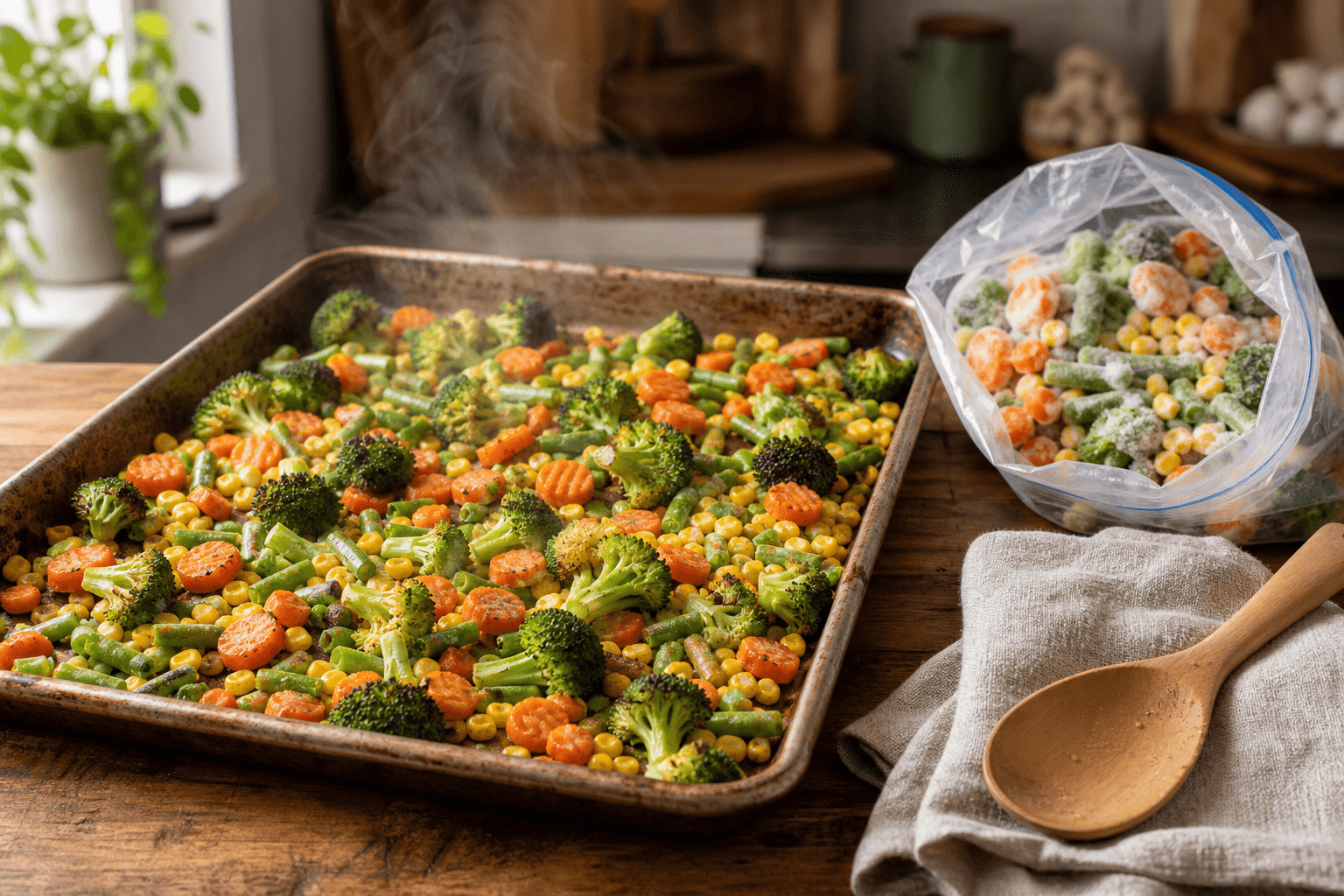
Yes, you can freeze vegetables, and they can taste just as good as fresh if you cook them right. Skip the thaw: cook them straight from the freezer over high heat in a single layer, so the ice turns to steam and escapes instead of turning vegetables to mush.
Can you freeze vegetables?
Freezing is one of the safest, most reliable ways to keep vegetables on hand for months. Cold temperatures do not kill bacteria, they just stop it from growing, which is why washing and prepping vegetables properly before they go into the freezer still matters. Once vegetables are frozen solid and held at 0 degrees Fahrenheit or below, they stay safe to eat for as long as they stay frozen.
Freezing usually isn't the problem. The cooking afterward is. Frozen vegetables carry extra ice, and if that ice melts slowly on the counter or in a crowded, lukewarm pan, it turns into water that steams your vegetables into a soft, watery pile. The fix is almost always heat and speed.
Most vegetables freeze well. A few high-water vegetables, like lettuce, celery, and cucumber, go limp and watery once thawed and are better eaten fresh or pickled instead. Wondering about cucumbers? See can you freeze cucumbers.
How to freeze vegetables
- Wash and trim. Rinse vegetables well and cut them into the size you plan to cook with, since you cannot easily resize them once frozen.
- Blanch. Drop vegetables into boiling water (or a steamer basket) for the time listed below. Blanching briefly stops the enzymes that keep breaking down color, flavor, texture, and nutrients even in the freezer.
- Ice bath. Move vegetables straight into a bowl of ice water for the same amount of time you blanched them, to stop the cooking fast.
- Drain and dry well. Pat vegetables dry or spin them in a salad spinner. Extra water turns into extra ice crystals in the bag.
- Flash freeze (optional but worth it). Spread vegetables in a single layer on a tray and freeze for an hour or two before bagging, so pieces stay loose instead of freezing into one block.
- Pack airtight. Press out as much air as possible from freezer bags or use rigid freezer containers, then label with the vegetable and the date.
- Freeze at 0 F or below. Set your vegetables toward the back of the freezer, away from the door, where temperature stays most consistent.
| Vegetable | Boiling water blanch | Steam blanch |
|---|---|---|
| Green beans | 3 minutes | 5 minutes |
| Broccoli florets | 3 minutes | 5 minutes |
| Cauliflower | 3 minutes | 5 minutes |
| Asparagus (medium stalk) | 3 minutes | 5 minutes |
| Summer squash | 3 minutes | 5 minutes |
| Brussels sprouts (medium) | 4 minutes | 6 minutes |
| Carrots (diced or sliced) | 2 minutes | 3 minutes |
| Leafy greens | 2 minutes | 3 minutes |
| Peas | 1.5 to 2.5 minutes | 3 to 5 minutes |
| Corn on the cob (medium) | 9 minutes | 13 minutes |
A few vegetables, like onions, peppers, and fresh herbs, are usually frozen raw without blanching since they end up cooked into a dish anyway and hold their flavor fine without the extra step.
How long vegetables keep frozen and how to thaw them
Vegetables held continuously at 0 F or below are safe to eat indefinitely. Storage time limits are about quality, not safety. For the best color, flavor, and texture, USDA guidance points to using home-frozen vegetables within about 8 to 12 months of the freeze date. After that, they are still safe, they just start to taste flatter or develop freezer burn.
Freezer burn, those grayish, dry, leathery patches, is also a quality issue, not a safety one. Trim it away and the rest of the vegetable is fine to cook and eat. If the whole bag looks and smells off, when in doubt, throw it out.
You generally do not need to thaw frozen vegetables at all, just cook them straight from the freezer. If a recipe does call for thawed vegetables, such as a cold salad, thaw them in the refrigerator or in a sealed bag under cold running water. Never thaw on the counter, and do not leave thawed vegetables at room temperature for more than 2 hours.
If vegetables thaw in the refrigerator and are still at 40 F or below (or still have ice crystals), it is safe to refreeze them, though they will lose more texture and flavor with each cycle. It is often better to cook thawed vegetables right away, or stir them into a soup or stew that you then freeze.
What changes (texture and quality) and what to use vegetables for after
Freezing turns the water inside vegetable cells into ice crystals, which rupture the cell walls as they form. That is why cooked frozen vegetables are almost always softer than fresh ones, no matter how carefully you cook them. That's just how freezing works. Knowing it helps you pick the right job for a frozen vegetable instead of fighting its texture.
Frozen vegetables are excellent in soups, stews, curries, casseroles, stir-fries, purees, and smoothies, anywhere a little extra softness disappears into the dish. They are less ideal raw, in a salad, or wherever you specifically want a crisp, snappy bite, since blanched and frozen vegetables have already given up some of that crunch before they even hit your freezer.
How to cook frozen vegetables so they taste good
- Skip the thaw. Go straight from freezer bag to hot pan or hot oven. A head start of melted, pooling water is the single biggest cause of mushy frozen vegetables.
- Use high, dry heat. Roasting and sauteing evaporate surface moisture as it forms, instead of trapping it against the vegetable the way steaming or boiling does.
- Do not crowd the pan. A crowded sheet pan or skillet steams vegetables instead of browning them. Give them room to breathe, even if that means cooking in two batches.
- Let them sit before you stir. In a hot skillet, resist the urge to toss constantly. A minute or two of undisturbed contact with the pan builds color and flavor.
- Season at the end. Salt draws out moisture, so add it after cooking rather than before to help vegetables brown instead of steam.
- Add a few extra minutes. Frozen vegetables start colder than fresh ones, so give them a little longer at the same heat rather than cranking the temperature.
| Cooking method | What it does to frozen vegetables | Best for |
|---|---|---|
| Roasting (425 to 450 F, single layer) | Fast, dry heat browns edges before vegetables turn soft | Broccoli, cauliflower, Brussels sprouts, root vegetables |
| Sauteing or stir-frying | Quick, high heat keeps some bite while extra liquid cooks off | Peas, corn, green beans, mixed stir-fry blends |
| Steaming or microwaving (short, covered) | Gentle, fast heat for a simple side with minimal browning | Leafy greens, small weeknight side portions |
| Boiling | Vegetables sit in water and soften fastest | Soups, purees, and mashed dishes where soft is the goal |
If you keep a well-stocked freezer alongside your fridge and pantry, our complete guide to freezing food covers the general rules for what freezes well and what does not. Rounding out your freezer stash with dairy staples helps too. Our guides to freezing cream cheese and freezing heavy cream cover two more items worth keeping frozen for quick sauces and creamy soups to go with your vegetables.
Freezer bags all start to look the same after a few months, and "8 to 12 months for best quality" is easy to lose track of once a bag slides behind the ice cream. Well Stockd's food expiration tracking logs the date you froze something and reminds you before quality slips, so you use vegetables while they still taste like the ones you blanched.
Frequently asked questions
Do I have to blanch vegetables before freezing them? No, freezing itself is safe either way. Blanching is a quality step: it stops the enzymes that would otherwise keep breaking down color, flavor, texture, and nutrients while the vegetables sit in the freezer. For a version that skips the blanching step, see freezing asparagus without blanching.
Why are my frozen vegetables always mushy? Almost always it is thawing, not the freezing itself. Thawed vegetables release water, and if that water pools in the pan it steams the vegetables soft. Cook them straight from frozen over high, dry heat instead.
Can I cook frozen vegetables without thawing them first? Yes, and it's the better method for texture. The USDA confirms it is safe to cook foods directly from the frozen state, and for vegetables, going straight from freezer to hot pan or oven gives a better result than thawing first.
Sources: USDA FSIS, Freezing and Food Safety, USDA, suggested storage times for frozen foods, USDA FSIS, The Big Thaw: Safe Defrosting Methods, USDA, is it safe to refreeze food that has thawed, USDA, what is freezer burn.
Track it in Well Stockd
Add what you have, see what you can cook tonight, and get a reminder before anything goes off.
