Reverse meal planning: the method that starts with your kitchen, not a recipe
Reverse meal planning flips the normal order: inventory first, meals built around what's on hand, then a short shopping trip for whatever's missing, plus a sample week and the potential savings.
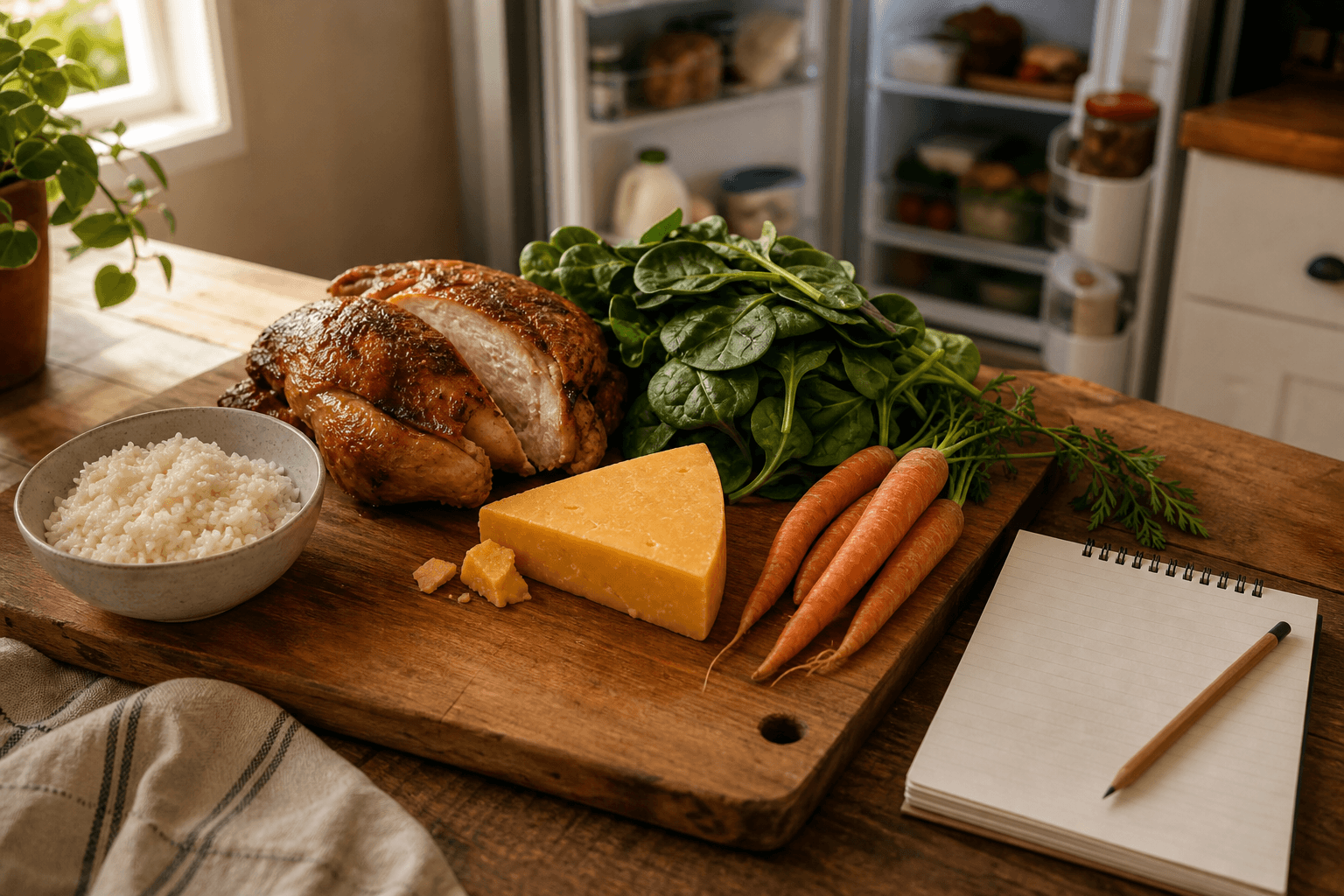
Reverse meal planning means you inventory your fridge, freezer, and pantry first, then build your dinners around what turns up, and shop only for the handful of items you're missing. Most people spend under fifteen minutes tallying what's on hand, then plan five to seven meals from that single list.
What is reverse meal planning?
Traditional meal planning starts with a recipe box or a Pinterest board: you pick five dinners you feel like eating, then write a grocery list to match. Reverse meal planning starts in the opposite place. You open the fridge, the freezer, and the pantry, write down what's actually there, and let that list decide the week's meals. The shopping trip happens last, and it's short, because you're only buying what fills the gaps.
It's a close cousin of the idea behind what to cook with what you have. Reverse meal planning just turns that everyday habit into a repeatable weekly system instead of a one-off "what's for dinner" scramble.
How do you do reverse meal planning step by step?
- Do a five-minute inventory sweep. Walk through the fridge, freezer, and pantry with your phone or a notepad. You're not counting every can, just naming what's there in categories: proteins, produce, dairy, grains, and anything half-used that needs to disappear soon.
- Sort into a use-first tier. Fresh dairy, cut produce, and thawed meat go at the top of the list because they spoil fastest. USDA's own rule of thumb gives you the order: cooked leftovers about 4 days, raw poultry and ground meats 1 to 2. Anything in those two groups is a Monday or Tuesday dinner, not a Thursday one. Freezer and pantry items can wait a few more days, so they become backup meals later in the week.
- Build meals around your proteins. Proteins are usually the most expensive item in the fridge, so plan around what you already have rather than buying more. A pound of ground turkey, half a rotisserie chicken, or a bag of frozen shrimp can each anchor two or three different dinners.
- Fill the gaps with a short shopping list. Once meals are roughed out, write down only what's missing: a lime, a can of beans, fresh herbs. This is where most of the money savings show up, because you're not restocking a full week of groceries from zero.
- Repeat it weekly so the pantry never overflows. The method works best as a habit, not a one-time cleanout. Doing it every week keeps ingredients moving before they expire instead of piling up in the back of the freezer.
If typing out a full inventory by hand feels tedious, a fridge recipe finder that already knows what you've logged can skip straight to step three. It matches your ingredients to recipes instead of you scanning a mental list of what pairs with what.
| Step | Traditional meal planning | Reverse meal planning |
|---|---|---|
| Starting point | Recipes you feel like eating | What's already in the kitchen |
| Shopping list | Full list for every recipe | Short list to fill gaps only |
| Risk of waste | Leftover odds and ends pile up | Odds and ends get used first |
| Time to plan | 20 to 30 minutes browsing recipes | 10 to 15 minutes taking inventory |
| Best for | Trying new recipes, special occasions | Everyday budgeting, using up what you bought |
What does a reverse meal plan actually look like?
One fridge and pantry sweep for a single household turned into this week of dinners.
| Day | What's already on hand | What you build |
|---|---|---|
| Monday | Half a rotisserie chicken, spinach, a wedge of cheddar | Chicken and spinach quesadillas |
| Tuesday | Ground turkey, a jar of marinara, half a box of pasta | Turkey pasta bake |
| Wednesday | Frozen shrimp, rice, a bag of frozen peas | Shrimp fried rice |
| Thursday | Leftover pasta bake, a bag of salad mix | Leftovers plus a quick side salad |
| Friday | Canned beans, tortillas, the last of the cheddar | Bean and cheese tacos |
Nothing on that list required a special trip. The only additions were a lime for the tacos and a fresh loaf of bread. Everything else was already in the kitchen.
Where does grocery shopping fit in?
Shopping happens last, not first. That's the point of the whole method. Once your five or so meals are mapped out, the list you carry into the store is short: a missing spice, a vegetable to round out a side dish, maybe one protein if your inventory came up thin. That short list is also what keeps the grocery bill down, since a full recipe-driven shopping trip tends to include ingredients for meals you never fully cook through the week.
This is the part a recipe app built around what you already have at home can simplify. Instead of cross-checking your handwritten inventory against a stack of recipes, an app that suggests recipes based on ingredients you already have can flag what's about to expire, show which dinners you can make tonight without a store run, and build the gap list for you. It's the same reverse meal planning logic, just with the matching done for you instead of by hand.
How much can reverse meal planning save you?
The EPA estimates that food waste costs the average US consumer $728 a year, which works out to about $2,913 annually, or $56 a week, for a household of four. Reverse meal planning cuts directly into that number: the whole method is built on using what you already paid for before it spoils, instead of burying it under a fresh grocery haul.
Frequently asked questions
Is reverse meal planning the same as a "clean out the fridge" night? Not quite. A clean-out night is a one-time scramble to use up whatever's left before it spoils. Reverse meal planning is that same instinct turned into a weekly habit, done before things go bad instead of after.
How often should I do a reverse meal plan? Once a week works for most households, ideally right before your usual shopping day. Some people do a lighter mid-week check too, especially if fresh produce is close to turning.
What if my inventory doesn't add up to a full week of meals? That's normal. It's what the gap-filling shopping trip is for. Reverse meal planning rarely means zero grocery shopping, just shopping for a handful of items instead of a full week's worth.
Sources: USDA FSIS, Refrigeration and Food Safety; EPA, Estimating the Cost of Food Waste to American Consumers
Track it in Well Stockd
Add what you have, see what you can cook tonight, and get a reminder before anything goes off.
