Meal planning on a budget for a family of 4: a step-by-step method
How to feed a family of four for about $200 to $250 a week: a six-step planning method, a sample dinner plan with real costs, and the staple ingredients that stretch a grocery budget furthest.
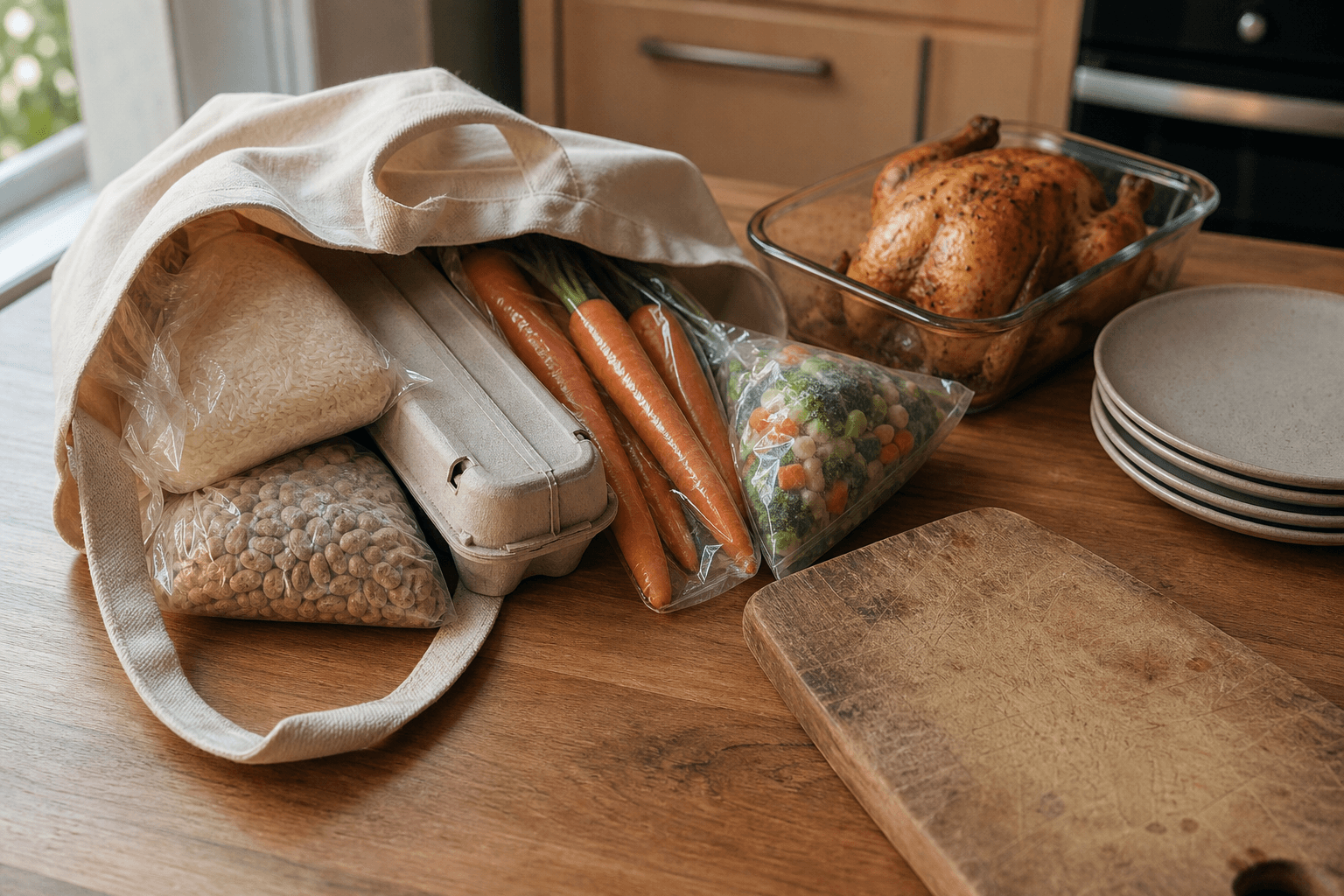
A family of four can eat well on about $200 to $250 a week by planning five or six dinners around what's already in the fridge, shopping from one list, and leaning on cheap staples like rice, beans, eggs, and frozen vegetables to fill the gaps.
How much should a family of 4 spend on groceries?
The USDA tracks four spending tiers for a reference family of four: two adults and two school-age children. It updates the figures every month for inflation. The most recent report puts the Thrifty plan at about $229 a week, the Low-Cost plan at about $253, and the Moderate plan around $311. Real households often report spending more than that, commonly $250 to $350 a week, mostly from convenience foods, produce that spoils before it gets used, and last-minute takeout standing in for a dinner nobody planned.
A realistic target for most families is close to the Thrifty to Low-Cost range, roughly $200 to $260 a week for all meals, not dinners alone. Getting there has less to do with buying cheaper brands and more to do with not paying twice: once for the groceries you planned, and again for the takeout or spoiled food that filled the gaps a plan would have covered. Meal planning alone is linked to 15 to 20 percent lower grocery spending among households that stick with it.
What's the step-by-step method for budget meal planning?
- Check the fridge, freezer, and pantry before planning anything. Note what needs to be used this week, especially fresh produce and dairy close to its date.
- Pick five or six dinners, not seven. Leave one night open for leftovers or a "use it up" meal built from whatever is left.
- Build meals around one protein and one starch you can buy in bulk, then rotate the vegetables and sauces so nothing feels repetitive.
- Write one grocery list, organized by store section, and shop it once. Lists cut impulse buying more than any other single habit.
- Shop your pantry stock and the sales flyer first, then fill in gaps rather than buying a full new set of ingredients every week.
- Price meals per serving, not per package. A $9 rotisserie chicken that stretches across three dinners beats three separate $6 cuts of meat.
What's a sample budget dinner plan for a week?
Here's an example week built around shared staples for a family of four, with rough costs based on typical grocery prices.
| Day | Dinner | Est. cost (family of 4) |
|---|---|---|
| Monday | Baked chicken thighs, rice, roasted frozen broccoli | $9 |
| Tuesday | Black bean and cheese quesadillas with salsa | $7 |
| Wednesday | Spaghetti with meat sauce and a side salad | $8 |
| Thursday | Sheet-pan sausage with root vegetables | $10 |
| Friday | Egg fried rice with frozen peas and carrots | $6 |
| Saturday | Slow cooker chili with cornbread | $9 |
| Sunday | Leftover remix night, whatever is left in the fridge | $3 |
That comes to about $52 for seven dinners, or roughly $1.85 a serving, without repeating a meal all week.
Which staple ingredients stretch a family grocery budget furthest?
A handful of ingredients do most of the work in a budget rotation because they cost little per serving, keep well, and combine with almost anything already in the fridge:
- Rice, oats, and pasta for a filling base
- Dried or canned beans and lentils for low-cost protein
- Eggs, which work for dinner as easily as breakfast
- Frozen vegetables, which cost less than fresh and don't spoil on a slow week
- Canned tomatoes and tuna for quick sauces and sandwiches
- A whole chicken or a larger cut of meat, portioned across two or three meals instead of one
Keeping four or five of these on hand at all times means a meal is almost always possible without an extra store run, which is one of the biggest budget leaks in family cooking.
How do you avoid the most common budget meal planning mistakes?
Most overspending comes from a short list of repeat offenders: meals that each call for a different set of ingredients instead of sharing them, shopping without a list, buying more fresh produce than the week can realistically use, and skipping the pantry check before something new lands in the cart that you already own. Food waste is the quiet one. A typical family of four loses close to $3,000 a year to food that never gets eaten, so a plan that uses up what you already bought is worth as much as a plan that buys cheaper items in the first place.
Our full guide to meal planning for the week walks through the weekly rhythm in more detail, and if you're just getting started, the starter guide to weekly meal planning and the beginner meal planning template are good next stops.
Can an app make budget meal planning easier?
Yes, mostly by handling step one: knowing what you already have. Well Stockd is a meal planning app that tracks your pantry, fridge, and freezer and suggests weekly meals from what's already on hand, then builds a shopping list of only what's missing. For a family working a tight grocery budget, not buying something twice because nobody remembered it was already in the crisper drawer usually saves more than any single coupon.
Frequently asked questions
How much does it cost to feed a family of 4 for a week on a budget?
Based on current USDA figures, a thrifty but complete grocery week for a family of four runs about $220 to $230 for all meals, not just dinners. Families cooking mostly from scratch with a short staple rotation often land close to that range.
What is the cheapest way to meal plan for a family?
Plan around what's already in the fridge and pantry first, then build five or six dinners that share a protein and a starch, and shop one list instead of multiple trips. Choosing basics like rice, beans, and frozen vegetables over pre-made and convenience items makes the biggest difference.
How do I stop overspending on groceries every week?
Shop with a list built from an actual meal plan, check what you already own before adding anything to the cart, and buy proteins in bulk to portion across two or three meals instead of one. Tracking price per serving instead of price per package also helps catch items that look cheap but aren't.
Sources: USDA Cost of Food at Home reports; EPA report on the cost of food waste to American consumers