What Can I Make With What's in My Fridge? A Simple Method
Staring into a fridge that doesn't obviously add up to dinner? Sort what you've got into protein, produce, and a starch or sauce, pick a cooking method instead of hunting for a recipe, and lean on this cheat sheet of combinations that work almost every time.
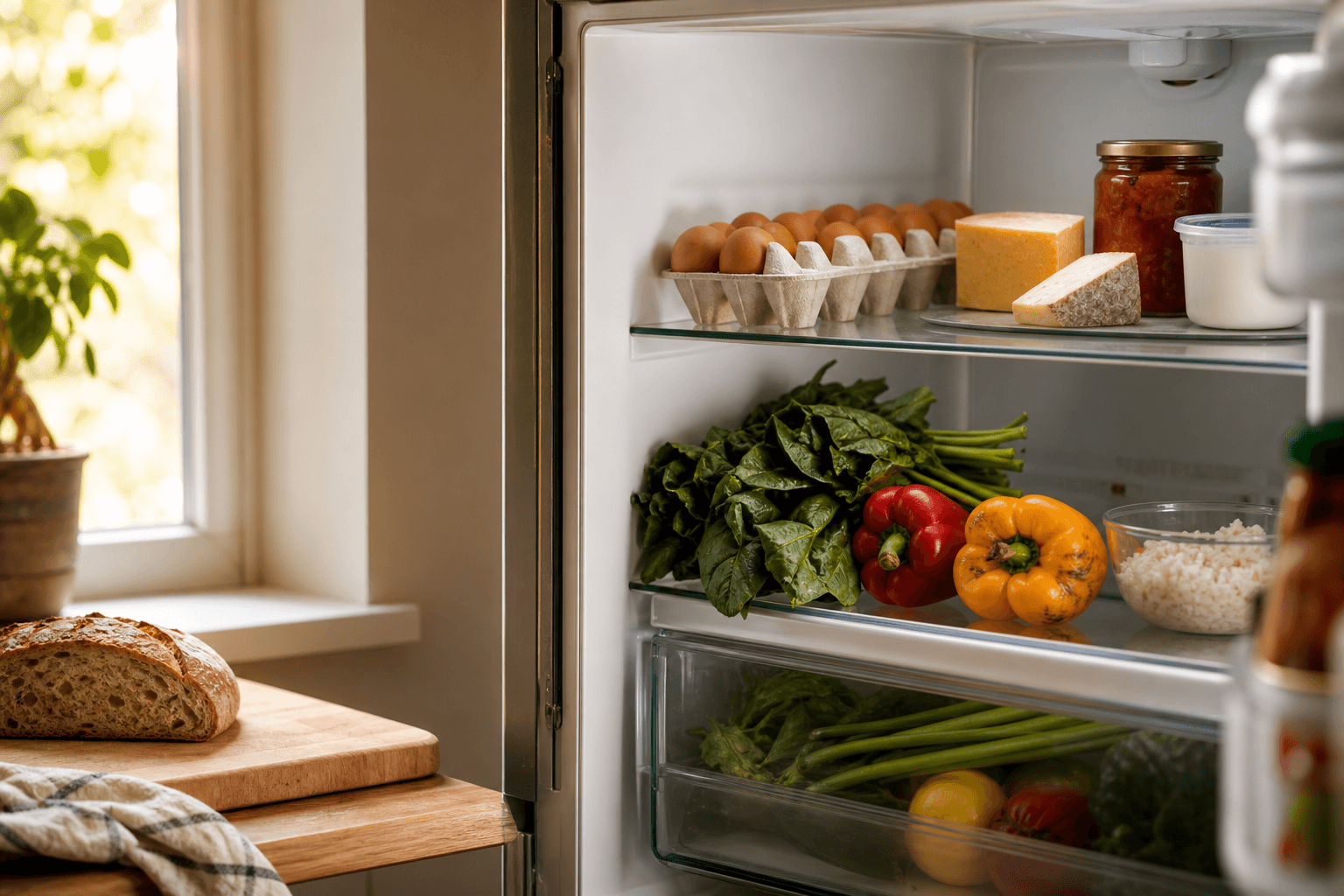
The fastest way to answer this is to sort what's open in your fridge into three piles: protein, produce, and something starchy or saucy, then match them to one cooking method (skillet, sheet pan, soup pot, or grain bowl) instead of hunting for a specific recipe.
Once you stop thinking "what recipe uses these exact ingredients" and start thinking "what method fits this pile," dinner comes together fast, even from a fridge that looks like a lost cause. Here's how to do it, plus a set of combinations that work almost every time.
How do you figure out what to cook from a random fridge?
Most people stall out because they're searching for a recipe that matches their ingredients exactly, and that recipe rarely exists. A better question is: what category is each item in, and what cooking method turns that category into a meal?
Almost everything in your fridge falls into one of three groups.
- Protein: eggs, leftover chicken, ground meat, tofu, canned beans, cheese
- Produce: anything fresh, wilting, or frozen, like spinach, bell peppers, or that lone carrot
- Starch or sauce base: rice, pasta, tortillas, bread, broth, salsa, yogurt, canned tomatoes
Pick one item from each pile, choose a method below, and you have dinner without a shopping trip.
If you want a broader rundown of strategies like this one, our guide to what to cook with what you have covers the bigger picture, including stocking a flexible pantry and planning meals around what's already open.
The 4-step method for turning your fridge into dinner
- Do a 60-second inventory. Open the fridge, freezer, and pantry and note what's closest to its use-by date. That item goes in tonight's meal, full stop.
- Sort into your three piles. Protein, produce, starch or sauce. You don't need one of each, but two out of three gets you most of the way to a real meal.
- Pick a method, not a recipe. Skillet stir-fry, sheet pan roast, soup pot, grain bowl, or scramble. Each method flexes to whatever you drop into it.
- Build in a rough ratio. About a cup of protein, two cups of produce, and a cup of starch or a ladle of sauce per person is a reliable starting point. Season with whatever's in the door: mustard, hot sauce, soy sauce, a squeeze of citrus.
That's the whole system. The rest is just knowing which combinations tend to work.
What fridge combinations basically always work?
Use this as a cheat sheet the next time you're staring into the fridge with no plan. Each row starts with what you likely already have and ends with a method that turns it into dinner in under 30 minutes.
| In your fridge | Add from the pantry | What to make |
|---|---|---|
| Eggs, any vegetable | Tortilla or cheese | Veggie scramble or breakfast burrito |
| Leftover chicken, wilting greens | Broth or pasta | Quick chicken soup or pasta toss |
| Ground meat, onion, pepper | Rice or taco shells | Skillet fried rice or tacos |
| Canned beans, wilting greens | Garlic, olive oil, bread | Beans and greens over toast |
| Cheese ends, stale bread | Egg, milk | Savory bread pudding or grilled cheese |
| Yogurt, soft fruit | Oats or honey | Yogurt bowl or quick smoothie |
| Frozen vegetables, broth | Noodles or rice | Fried rice or noodle soup |
| Roasted vegetables, tortillas | Salsa, cheese | Vegetable quesadilla |
There's a pattern in that table: almost every combination is protein plus produce plus one pantry item that pulls it together, whether that's broth, cheese, or a starch. You rarely need more than three or four items to make something that tastes intentional.
What should you do with the stuff that's about to turn?
The odds and ends are usually where "what can I make" turns into "what am I about to throw away." A few reliable fixes: For odds and ends plus a sheet of puff pastry, see puff pastry ideas.
- Wilting greens or spinach: wilt them into eggs, soup, or a grain bowl rather than trying to eat them raw.
- Half a jar of salsa, pesto, or tomato sauce: use it as the base for a skillet dinner instead of saving it for one more taco night that never happens.
- The last two eggs: fried rice, a frittata with vegetable scraps, or a quick egg drop soup all use them well.
- Stale bread: bread pudding, French toast, or torn into a soup for texture.
- Soft fruit: smoothies, a quick compote for yogurt or oatmeal, or baked into muffins.
- Cheese ends: grated into eggs, melted into a sauce, or folded into a quesadilla.
Leftovers themselves are only good in the fridge for three to four days if you refrigerated them within two hours of cooking, according to FoodSafety.gov. Past that window, freeze what's left instead of gambling on it, since frozen food stays safe indefinitely even as quality slowly declines.
How does the Well Stockd app help with this?
The method above works, but it still takes a minute of thinking every time. If you'd rather skip the sorting and just see what you can cook, an app that suggests recipes based on ingredients you have at home does that step for you. Well Stockd tracks what's in your fridge, pantry, and freezer, then matches it against thousands of recipes to show what you can make right now, with a swap suggested any time you're missing one or two items.
It's the same three-pile logic from this article, just automated. If you want to see it in action first, our piece on a fridge recipe finder walks through how the matching works, and tell me what's in my fridge and I'll give you a recipe covers the fastest way to get an answer when you're standing at the open door with no plan.
Frequently asked questions
What if I only have three or four random ingredients? That's usually enough. Pick the one item closest to spoiling, add a protein and a starch or sauce if you have them, and lean on a flexible method like a skillet or a grain bowl. Two ingredients plus eggs or rice can still be a full meal.
Is it safe to cook with vegetables that look a little wilted? In most cases, yes. Wilted greens, soft peppers, and slightly limp carrots are still safe to eat and cook well in soups, stir-fries, or roasted dishes. Toss anything with mold, a sour smell, or a slimy texture instead.
How do I stop food from going bad before I use it? Build your meals around what's oldest first instead of what sounds most appealing, and check the fridge before you shop rather than after. Keeping a running list of what you have, on paper or in an app, makes this a lot easier to stick to.
Sources: Leftovers and Food Safety, USDA FSIS, Cold Food Storage Charts, FoodSafety.gov
Track it in Well Stockd
Add what you have, see what you can cook tonight, and get a reminder before anything goes off.
