What foods should you not freeze?
Mayonnaise, raw lettuce, whole eggs in the shell, and canned food all hold up poorly in the freezer. Here's what USDA says happens to them, and what to do instead.
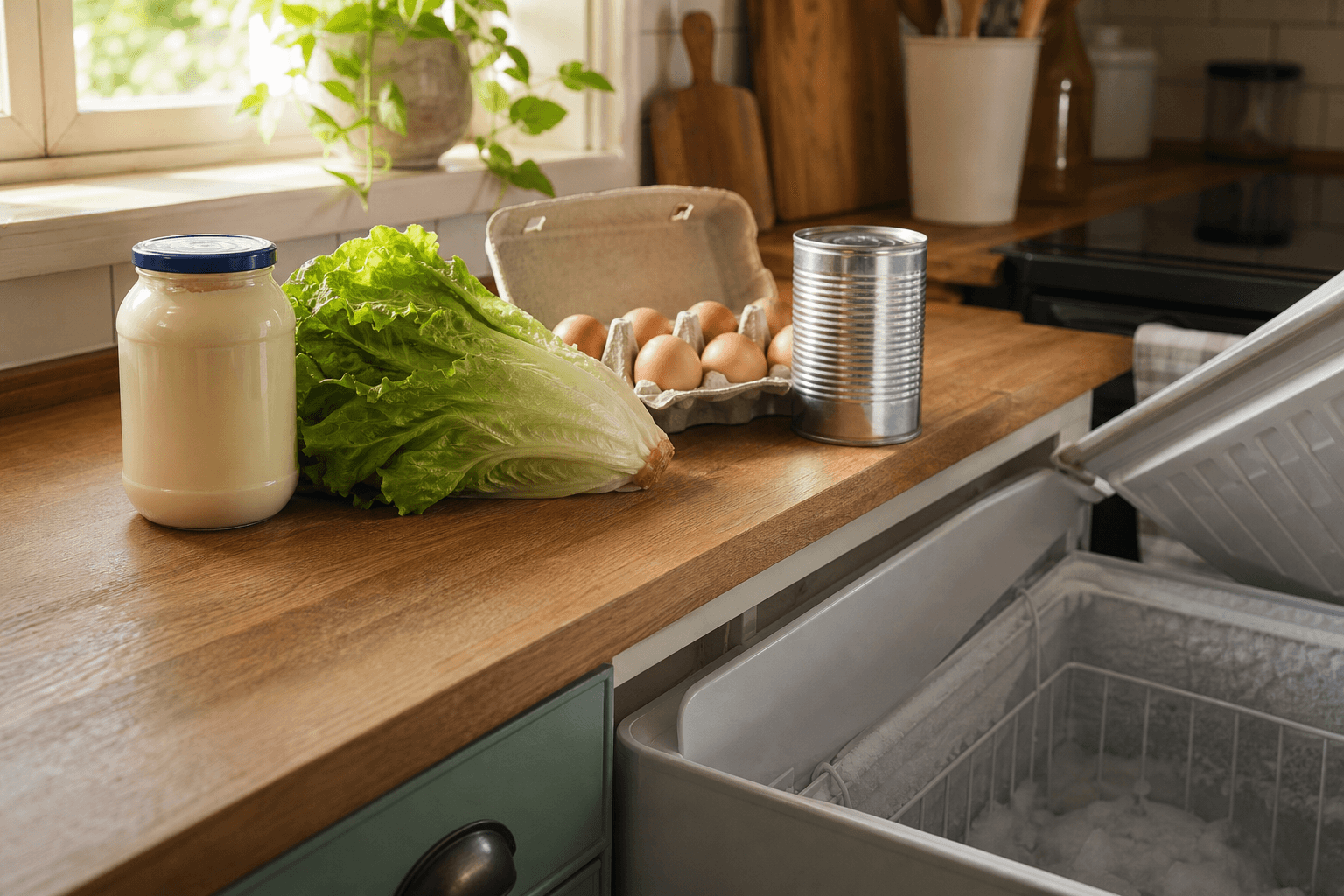
Most food freezes just fine, but a short list doesn't: mayonnaise and other egg-based sauces, whole eggs still in the shell, unopened canned food, raw salad greens and watery vegetables, and cream or custard fillings. For most of these, freezing just curdles, waters down, or turns them limp, without making them unsafe. The one exception is a whole egg that cracks in the freezer: USDA says to throw that one out, since bacteria can get in through the crack.
What foods should you not freeze?
Freezing doesn't spoil food, safety-wise. Food held continuously at 0°F stays safe to eat indefinitely, according to USDA's Food Safety and Inspection Service (FSIS). What freezing does ruin, for a handful of foods, is texture. Here is the short list FSIS points to, plus a few close relatives that behave the same way.
Mayonnaise and mayonnaise-based salads. FSIS names mayonnaise directly: it's an emulsion, and freezing breaks that emulsion so the mayo separates and looks curdled once it thaws. The same goes for potato salad, chicken salad, or coleslaw dressed with mayo.
Cream sauces and cream-based soups. FSIS lists cream sauce right alongside mayonnaise for the same reason: the fat and water separate during freezing and won't fully re-blend.
Lettuce, celery, cucumbers, radishes, and other raw salad vegetables. These are mostly water. Ice crystals rupture the plant cells as they form, so the vegetable turns limp and soggy once it thaws. FSIS specifically warns against freezing sandwiches that contain lettuce or tomato for this reason: tomatoes, lettuce, pickles, and onions all turn limp and watery once thawed.
Whole eggs in the shell. Don't freeze eggs still in the shell. The contents expand as they freeze, and the shell can crack. If that happens, FSIS says to discard the egg, since bacteria can work their way in through the crack. Keep only the eggs that froze without cracking, and thaw those in the refrigerator. FSIS also notes that a frozen egg yolk turns thick and syrupy and won't blend smoothly again, even after thawing.
Hard-cooked egg whites. Whites that have already been hard-cooked turn tough and rubbery in the freezer. If a recipe only needs the yolks, freeze the yolks and skip the whites.
Cream fillings, custard, pudding, and gelatin desserts. For a holiday pie, see whether to refrigerate pumpkin pie. The starch and egg-protein structure that holds these together breaks down when frozen, so they weep liquid and turn grainy on thawing.
Unopened canned food. Don't freeze food while it's still in the can. The contents expand as they freeze and can cause the can to swell or split. Canned soda has the same problem, see can you freeze soda.
| Food | What freezing does to it | Better option |
|---|---|---|
| Mayonnaise or mayo-based salads | Separates, looks curdled | Make fresh, or freeze the meat or pasta plain and dress it after thawing |
| Cream sauces and soups | Fat and water separate | Freeze the base without the cream, stir cream in after reheating |
| Lettuce, celery, cucumber, radish | Turns limp and waterlogged | Buy only what you will use in the next few days instead |
| Whole eggs in the shell | Expands and can crack the shell (discard the egg if it cracks) | Crack eggs out of the shell before freezing |
| Hard-cooked egg whites | Turns tough and rubbery | Freeze yolks only, or use whites fresh |
| Custard, pudding, gelatin desserts | Weeps liquid, turns grainy | Freeze the cake or crust only; make fillings fresh |
| Canned food, still in the can | Can swells or splits | Move contents to a freezer-safe container first |
For everything that isn't on this list, the freezer is usually a safe bet. Our full guide, can you freeze food, walks through the basics for meat, produce, dairy, and leftovers.
How to freeze around these foods
If a dish includes one of these problem ingredients, you can usually still freeze the parts worth saving.
- Leave the troublesome ingredient out before freezing. Skip the mayo, sour cream, or raw lettuce in a casserole, salad, or sandwich, and add it fresh after you reheat or thaw.
- Cool cooked food quickly, then portion it into freezer bags or airtight containers and press out the air to limit freezer burn.
- Label each container with the date and contents. Home-frozen dishes are safe indefinitely at 0°F, but for best quality most are worth eating within one to three months.
- For eggs, crack them out of the shell first. Whole eggs freeze well once beaten together; separate the yolks and whites if a recipe only calls for one.
- For canned food, open the can and move the contents to a freezer-safe container before freezing. Never put the metal can itself in the freezer.
- If you decide to freeze a mayo- or cream-based dish anyway, plan to use the thawed result in something cooked, like a casserole, soup, or baked pasta, rather than serving it cold.
How long these foods keep frozen and how to thaw them
Even the foods on this list stay safe to eat as long as they were kept frozen at 0°F, since freezer storage times are about quality, not safety. For best texture, use home-frozen versions of these dishes within one to three months rather than letting them sit for a year.
FSIS lists three safe ways to thaw any frozen food: in the refrigerator, in cold water, or in the microwave. Never thaw food on the counter at room temperature.
| Thaw method | How long it takes | Best for |
|---|---|---|
| Refrigerator | Overnight for small portions, up to a day or two for larger dishes | Anything, including the foods above |
| Cold water | 30 minutes to a few hours, changing the water every 30 minutes | Sealed packages you need the same day |
| Microwave | A few minutes, depending on the food | Food you plan to cook immediately after |
When in doubt about a food's safety, throw it out rather than taste it to check.
What changes (texture and quality) and what to use these foods for after
Thawed mayo-based salad or a cream sauce that has separated is still safe to eat if it stayed frozen and was thawed properly. It just won't look appetizing served cold. Whisk it back together and stir it into a hot dish, like a baked pasta or a casserole, where the texture matters less.
Thawed lettuce, celery, or cucumber won't work in a fresh salad again, but the same soft, watery vegetable is fine cooked into soup, stock, or a stir-fry, where crunch was never the point. For cucumbers specifically, see can you freeze cucumbers.
Thawed hard-cooked egg whites stay rubbery no matter what you do with them. Dice them small and fold them into fried rice or an already-dressed salad, or plan ahead next time and freeze just the yolks.
Thawed custard, pudding, or gelatin dessert that has wept liquid can sometimes be rescued with a hard whisk, or repurposed into a milkshake or bread pudding where a little extra liquid disappears into the batter.
If canned food ever freezes by accident, say in a garage freezer or during a power outage, don't use it if the can is swollen, leaking, or damaged. If the can isn't swollen and never thawed above 40°F, you can thaw it in the refrigerator and, if it looks and smells normal, boil the contents for 10 to 20 minutes before eating.
Not everything creamy belongs on the avoid list, either. Cream cheese and heavy cream both freeze with a bit of technique instead of falling apart the way mayonnaise does. Our guides on can you freeze cream cheese and can you freeze heavy cream cover how.
If the hard part is remembering what went into the freezer and when, that's exactly what Well Stockd's app to track food expiration dates is for. Log a freezer item once and it tracks the clock for you, right alongside your fridge and pantry.
Frequently asked questions
Does freezing make food unsafe to eat? Almost never. Freezing itself doesn't make food unsafe, and food held continuously at 0°F stays safe indefinitely, per FSIS. There are a few exceptions: canned food frozen in the can, which can swell or split; a whole egg whose shell cracks while frozen, which FSIS says to discard since bacteria can enter through the crack; and any food that thawed above 40°F for more than two hours and was then refrozen.
Is it safe to eat mayonnaise or cream sauce after it thaws and separates? Yes, as long as it stayed frozen at 0°F and was thawed in the refrigerator, in cold water, or in the microwave. The curdled or watery look is a texture change, not a safety problem.
What should I do if a can of food freezes by accident? Discard it if the can is swollen, leaking, or damaged. If the can isn't swollen and hasn't thawed above 40°F, you can thaw it in the refrigerator and, if it looks and smells normal, boil the contents for 10 to 20 minutes before eating.
Sources: USDA FSIS, Freezing and Food Safety; USDA FSIS, Egg Products and Food Safety; USDA FSIS, Shell Eggs from Farm to Table; Ask USDA, If canned goods freeze accidentally, are they safe?
Track it in Well Stockd
Add what you have, see what you can cook tonight, and get a reminder before anything goes off.
