Easy dinner ideas when you have nothing in the fridge
A four-part pantry formula plus ten ready-to-cook combos for turning canned beans, rice, pasta, and a bag of frozen vegetables into a real dinner without a grocery run.
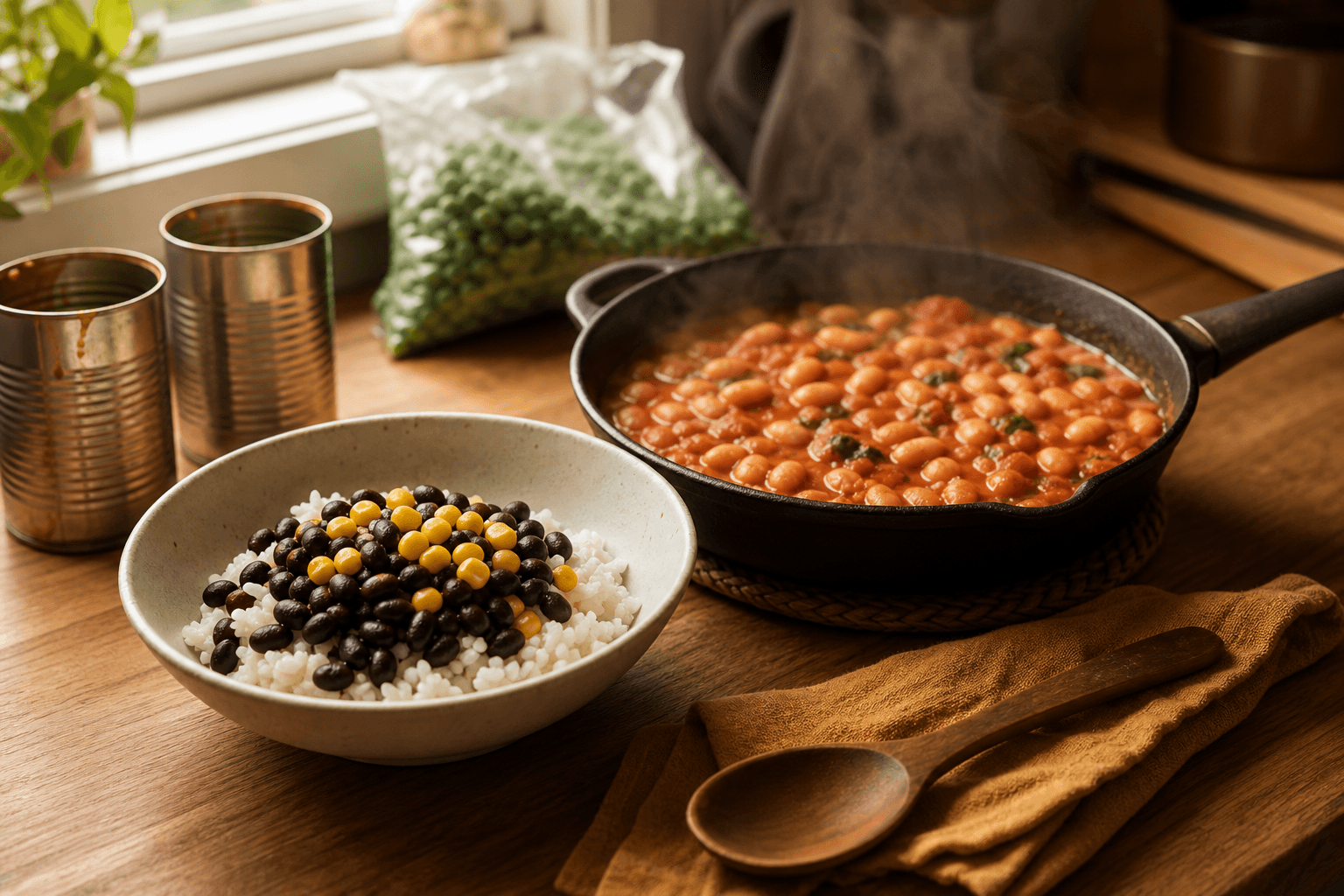
The fix for an empty fridge is a pantry formula: a carb, a canned or frozen protein, a fat, and one bold flavor. Put those four together and you have dinner on the table in under 30 minutes, using about seven items you probably already have in the cupboard, without buying anything fresh.
What counts as "nothing in the fridge"?
Most people who say this still have a freezer with something in it and a pantry shelf with cans, jars, and dry goods. Genuinely empty, as in a bare fridge with no milk, eggs, butter, or produce, is common the night before a grocery trip, after a move, or mid-month when the budget is tight. The good news: canned beans, canned tomatoes, rice, pasta, and a bag of frozen vegetables cover almost every nutritional base a meal needs, and none of them require refrigeration to stay safe.
The four-part formula for a pantry-only dinner
You do not need a recipe to make this work. You need one item from each of these four categories, and dinner assembles itself.
- Pick a base. Rice, pasta, couscous, tortillas, or bread. This is the bulk of the plate and the thing that makes a meal feel like a meal instead of a snack.
- Pick a protein. Canned beans, canned tuna or salmon, canned chicken, eggs if you have any shelf-stable ones on hand, or a frozen protein like chicken thighs or shrimp.
- Pick a fat and an aromatic. Olive oil or butter plus garlic powder, onion powder, or a spoonful of jarred minced garlic. Fat carries flavor, so do not skip it even if everything else feels sparse.
- Pick one bold flavor. Salsa, canned diced tomatoes, soy sauce, a bouillon cube, taco seasoning, or Italian seasoning. One strong flavor note turns "beans and rice" into an actual dish rather than a pile of ingredients.
Frozen vegetables are optional but worth adding if your freezer has a bag of peas, corn, or a mixed blend. They cook straight from frozen in the same pan as everything else, so you don't have to plan ahead or thaw anything first.
Ten dinners you can build from pantry and freezer alone
| Dinner | What it takes | Time | Note |
|---|---|---|---|
| Black bean rice bowls | Rice, canned black beans, taco seasoning, canned corn | 20 min | Top with hot sauce if you have it |
| Tuna pasta | Pasta, canned tuna, olive oil, garlic powder, canned peas | 20 min | A can of cream soup makes it creamier |
| White bean and tomato skillet | Canned white beans, canned diced tomatoes, olive oil, Italian seasoning | 15 min | Serve with toast or over rice |
| Fried rice from the freezer | Leftover or instant rice, frozen mixed vegetables, soy sauce, eggs if available | 15 min | Any frozen protein works too |
| Bean and cheese quesadillas | Tortillas, canned refried or black beans, taco seasoning | 10 min | Shelf-stable cheese or none at all still works |
| Pantry minestrone | Canned beans, canned diced tomatoes, broth cube, small pasta | 25 min | Add frozen vegetables for bulk |
| Salmon cakes | Canned salmon, breadcrumbs or crushed crackers, an egg or flax egg | 20 min | Pan-fry in oil until golden |
| Tomato and bean pasta | Pasta, canned crushed tomatoes, canned white beans, garlic powder | 20 min | Finish with olive oil off heat |
| Frozen shrimp stir-fry | Frozen shrimp, frozen vegetables, rice, soy sauce | 20 min | Shrimp cooks from frozen in minutes |
| Chickpea curry | Canned chickpeas, canned coconut milk or tomatoes, curry powder, rice | 25 min | One of the fastest curries around |
Why frozen vegetables are not a downgrade
If your freezer is the only thing standing between you and takeout, that is a fine place to be. Research comparing fresh, refrigerated, and frozen produce has found frozen vegetables are nutritionally comparable to fresh, and sometimes higher in vitamins, because they're frozen at peak ripeness instead of losing nutrients during days of transport and storage. Frozen peas, corn, and mixed vegetable blends are a legitimate way to round out a pantry dinner, not a compromise.
Canned goods hold up well too. Canned beans generally stay safe for two to five years unopened, and dried pasta and rice keep for around two years in the pantry, longer if stored in a cool, dry spot in an airtight container, according to guidance from the USDA. None of that means you need a bunker's worth of supplies, just a rotating shelf of a few cans and a couple of freezer bags.
How to keep this from happening every week
An empty fridge usually means your shopping and what's in the house have drifted apart. If you want to stop guessing what is left before you shop, a tool like our recipe finder that works from what's already in your fridge can flag when you are down to pantry-only territory before it becomes a last-minute scramble. And when you do want dinner ideas that match your exact shelf, not a generic list, an app that suggests recipes based on ingredients you have at home can search your pantry and freezer items directly instead of making you scroll past recipes that call for things you do not own.
For more ways to turn what you already have into a full meal, see our guide on what to cook with what you have, and if you are trying to build a habit of shopping around your actual stock instead of a fixed list, this piece on figuring out what's in your fridge before you shop walks through the process.
Frequently asked questions
What if I do not have rice or pasta either? Bread, tortillas, and crackers all work as a base in a pinch. A can of beans mashed onto toast with a little oil and garlic powder is a real dinner, and quesadillas need nothing but tortillas and whatever protein you have.
How long do canned beans and vegetables last? Unopened canned goods are generally safe for two to five years when stored below about 85 degrees Fahrenheit in a dry spot, and most shelf-stable foods stay safe well past their best-by date as long as the can shows no rust, dents, or swelling.
Are frozen vegetables as healthy as fresh ones? Yes. Multiple nutrition comparisons have found frozen produce is nutritionally similar to fresh, and sometimes higher in certain vitamins, since vegetables meant for freezing are usually picked and frozen at peak ripeness.
Sources: FSIS Shelf-Stable Food Safety, USDA: Before You Toss Food, Wait. Check It Out!, Healthline: Fresh vs Frozen Fruit and Vegetables
Track it in Well Stockd
Add what you have, see what you can cook tonight, and get a reminder before anything goes off.
