The pantry and freezer challenge: how to save money by eating what you already have
A pantry and freezer challenge helps you plan meals from food you own. Learn to track spending honestly and use a freezer quality chart while you cook.
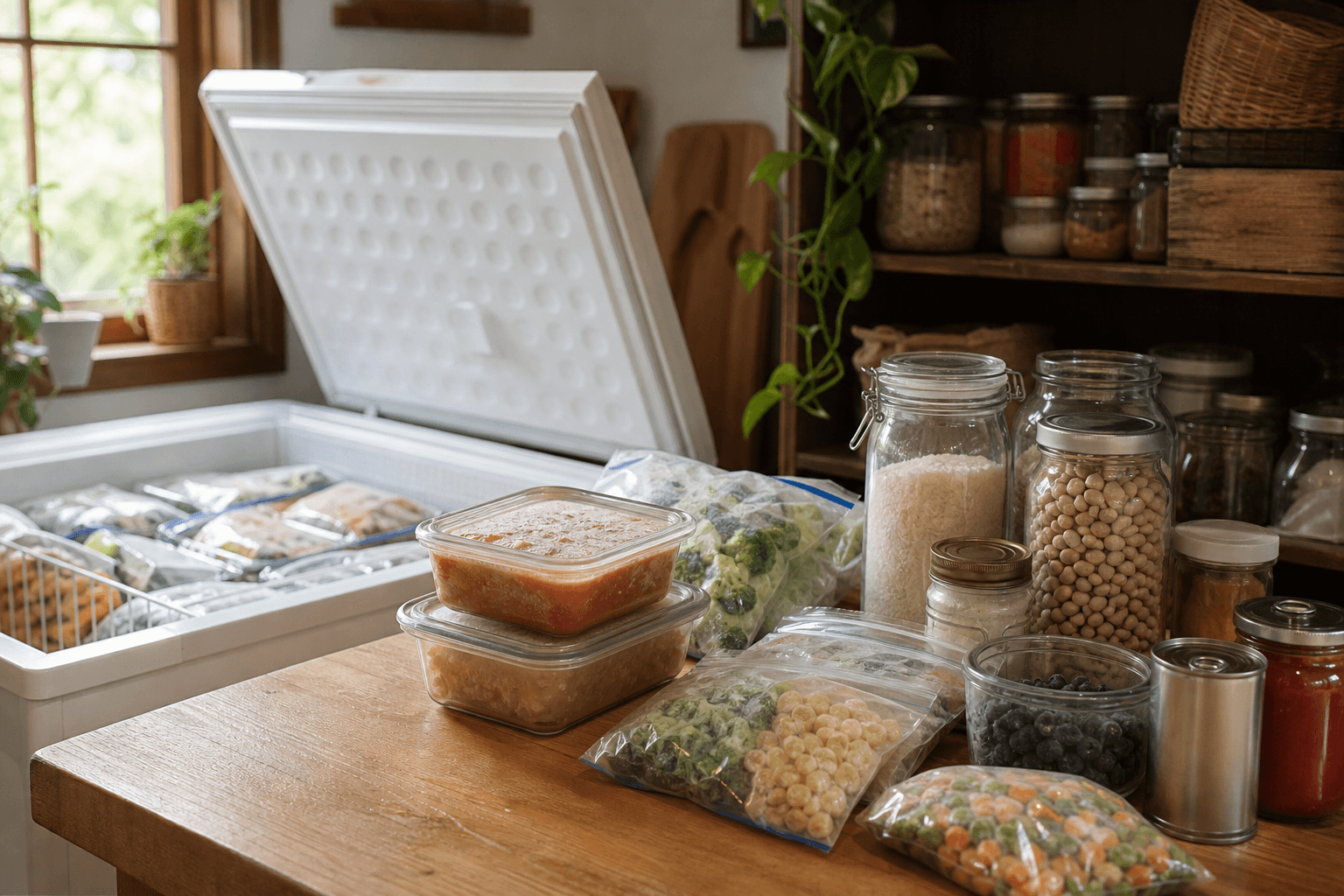
The pantry and freezer challenge: how to save money by eating what you already have
A pantry and freezer challenge means cooking mostly from food you already own for a set period, while buying any perishables you still need. Spending may fall if it replaces purchases you would otherwise make, but the result varies by household. Compare your grocery receipts with a similar period instead of assuming a fixed savings amount.
If your freezer has three mystery bags of something and your pantry shelf has four half-used bags of rice, you are exactly the person this challenge is for. It is not a diet, and it is not about deprivation. It is a short, deliberate period where you shop your own kitchen before you shop the store.
What is a pantry and freezer challenge
The idea is simple. For a set number of days, you build meals from what is already in your fridge, freezer, and pantry instead of running to the store for whatever a recipe calls for. Some people allow themselves a small weekly budget for fresh produce and dairy. Others set a hard rule of no spending at all until the challenge ends.
Saving money this month is only part of it. The bigger win is breaking the habit of buying food you never eat. Once you see how many meals were hiding in your freezer the whole time, it changes how you shop afterward.
How much can you save
Savings depend on how long you run the challenge and how deep your existing stockpile is, but the pattern holds across most households: fewer store trips means fewer unplanned purchases, and that adds up fast.
| Challenge length | How to measure your result | Best for |
|---|---|---|
| 1 week | Compare spending with a similar week | First-timers testing the idea |
| 2 weeks | Track all groceries bought during the challenge | The most common length, good freezer cleanout |
| 3 to 4 weeks | Compare several weeks and note pantry restocking afterward | A deep pantry and freezer purge, once or twice a year |
The U.S. EPA estimated in 2025 that food waste costs an average American consumer about $728 a year, or about $2,913 for a household of four. That is a population estimate of uneaten food costs, including food bought for home and away from home. It is not an estimate of what this challenge or Well Stockd will save you. Source: https://www.epa.gov/newsreleases/epa-launches-feed-it-onward-initiative
How to run your own pantry and freezer challenge
1. Take a real inventory.
Open every drawer, bin, and freezer door and write down what is in there, not what you remember buying. This step alone usually surfaces two or three meals you forgot you had the ingredients for. Group items loosely by protein, starch, and vegetable so meal ideas start forming as you go.
2. Pick your length and your rules.
One week is a reasonable first try. Choose a length that fits your available food and schedule. Decide whether you will buy fresh produce, eggs or milk during the challenge, and include those purchases when you compare spending afterward. If you want a set length and a record of what you used, the 31-day pantry challenge in Well Stockd saves a snapshot of your kitchen when you start and counts the meals you cook from it.
3. Plan two or three days at a time.
Do not try to map out the full month on day one. Your inventory changes daily, so plan in short bursts and re-check the fridge and freezer before each round. This keeps the plan realistic and stops you from defaulting back to a grocery list out of frustration.
4. Use the fridge and freezer first, the shelf-stable stuff last.
Fresh and frozen items have a shelf life, canned beans and dried pasta do not. Build your first week around anything perishable or already thawing, and save the true pantry staples for the back half of the challenge. For meals you can build ahead and freeze, see freezer dump meal ideas.
5. Track what you spend and what you toss.
Keep a running note of any money spent and anything that had to be thrown out. That second number matters as much as the first. It tells you what to buy less of next time, which is really the whole point of doing this more than once.
What to do with the odd ingredients you find
Every pantry challenge turns up a few orphans: half a bag of frozen peas, a lonely can of coconut milk, three ends of different pasta shapes. Instead of skipping those items because no single recipe uses all of them, search by what you have rather than starting from a recipe and shopping to match it. That is the whole premise behind the what to cook with what you have approach, and it is where most of the real savings in a challenge like this come from.
If you are staring at a fridge shelf and a freezer drawer wondering what they add up to, a what's in my fridge recipe finder tool can turn that list into an actual dinner instead of another delivery order. The same logic works for freezer odds and ends. If you would rather just tell me what's in my fridge and I'll give you a recipe than guess your way through another cookbook, that is exactly the gap these tools fill. Well Stockd's app that suggests recipes based on what you have works the same way during a challenge week: log your inventory once and it flags which of its 3,800-plus recipes you can already make, so nothing in the back of the freezer gets forgotten twice.
How long is frozen food still good
One thing that stalls a lot of pantry challenges is uncertainty about the freezer. People toss things that are still perfectly fine because they are not sure how old is too old. The guidance from FoodSafety.gov is useful here: food held continuously at 0°F stays safe to eat indefinitely. The times below are about quality and taste, not safety, so a slightly-past-date item is very likely still fine to cook and eat.
| Frozen food | Recommended time for best quality |
|---|---|
| Ground meat (beef, turkey, chicken, pork) | 3 to 4 months |
| Cooked meat or poultry | 2 to 6 months |
| Soups and stews | 2 to 3 months |
| Bacon | About 1 month |
| Fully cooked ham slices | 1 to 2 months |
| Pizza | 1 to 2 months |
| Casseroles or quiche with filling | 2 to 3 months |
Use this chart as a sorting tool during your inventory step. Anything near the top of its window gets cooked first, anything with months of runway left can wait until a later round of the challenge.
Common mistakes that end a challenge early
A few habits tend to derail a pantry challenge before it saves you anything:
- Planning the entire month at once instead of a few days at a time, which falls apart the moment the actual inventory does not match the plan.
- Treating it as an all-or-nothing rule, then quitting the first time a genuine gap appears, like running out of cooking oil.
- Skipping the inventory step and shopping from memory, which is usually how the freezer mystery bags got there in the first place.
- Not telling the rest of the household the plan, so someone else picks up takeout and quietly breaks the streak.
Frequently asked questions
How long should a pantry and freezer challenge last?
Start with one week, then extend it if you still have meals to build from your pantry and freezer. Compare receipts against a similar period, accounting for anything you will need to replace later.
Is it safe to eat food that has been frozen for a year or more?
Yes, as long as it has stayed frozen the whole time. Food kept continuously at 0°F is safe indefinitely; the storage times in the chart above are about flavor and texture, not food safety. Trust your senses on smell and appearance, and when in doubt with meat or poultry that has been frozen a long time, cook it thoroughly.
What if I run out of a basic ingredient partway through?
Most challenge rules allow small exceptions for staples like cooking oil, flour, or spices, since running completely dry on those tends to end the challenge for no good reason. Set that exception before you start rather than deciding in the moment, so it does not become an excuse to abandon the whole thing.
Sources: EPA, Estimating the Cost of Food Waste to American Consumers, FoodSafety.gov, Cold Food Storage Chart
Track it in Well Stockd
Add what you have, see what you can cook tonight, and get a reminder before anything goes off.
