Easy weekly meals to stop eating takeout
Stopping the takeout habit takes a repeatable system more than willpower: five easy dinners a week, one short prep session, and a backup shelf for the nights you're too tired to cook.
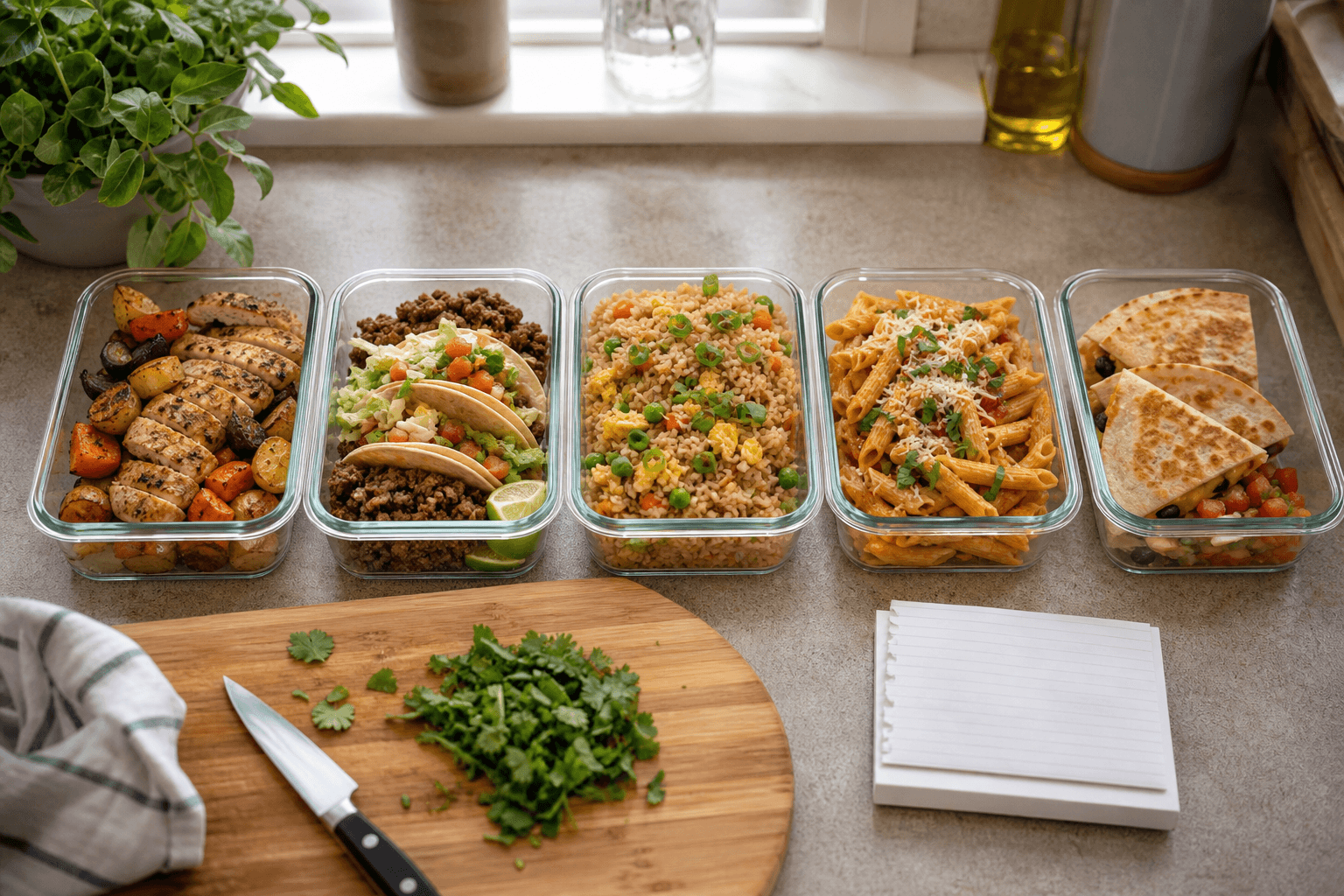
Breaking a takeout habit takes a repeatable plan more than willpower. The fastest fix is a five-dinner weekly system: pick five meals built around what you already buy, prep the shared basics in one short session, and keep two no-cook backups ready for nights you are too tired to cook.
If you have ever added up a month of delivery orders and flinched, you are not alone. The average US consumer now spends roughly $3,350 a year on restaurants and takeout combined, and most of that spending happens on nights when nobody decided anything ahead of time and the fridge felt empty. A stricter budget won't fix that. A system that makes cooking the easier option by 6pm will.
Why does takeout win by 6pm?
Takeout has more to do with decision fatigue than with hunger. By the time work ends, the kids need dinner, and nobody has answered "what's for dinner," ordering delivery feels like the only fast option left. A pantry with no plan loses to an app with three taps every time.
The math makes the habit expensive fast. A home-cooked meal runs about $4 to $6 a serving, while a similar restaurant meal costs $15 to $20. Add delivery fees, service charges, and a tip, and a $15 meal can climb past $25, which puts it four to six times the cost of cooking the same dish at home. That's not a guilt trip, just useful math for deciding where a small planning habit pays off most.
If you are starting completely from scratch, our full walkthrough on how to meal plan for the week covers the basics in more depth than this article will. What follows is the shortest version that still works.
How do you build a week of easy meals that beats takeout?
You do not need seven new recipes and a spreadsheet. You need five repeatable meals and one short prep window. Here's how:
- Plan five dinners, not seven. Two nights are always going to be leftovers, a freezer meal, or breakfast for dinner. Planning for five real cooking nights instead of seven is the single biggest reason people actually stick with a plan. Our guide to weekly meal planning for beginners walks through this exact five-night approach if you want more detail.
- Build each meal around one anchor ingredient you already have. Ground beef, a rotisserie chicken, a bag of black beans, whatever is already in your fridge or pantry. Starting from what you own instead of a new grocery list cuts both cost and decision time.
- Batch one task, not one meal. Instead of cooking five separate dinners from scratch, cook one big batch of a component, like rice, shredded chicken, or roasted vegetables, and reuse it across two or three meals within the 3 to 4 days cooked leftovers keep in the fridge.
- Assign your two backup nights before the week starts. Decide now, not at 6pm on Wednesday, what the fallback is. A frozen sheet-pan meal or a fridge-clearing fried rice counts as a real plan.
- Let one dinner be planned leftovers. Cook a slightly bigger batch on night one and call night three "remix night." Add a new sauce or a fried egg and it reads as a different meal.
A sample week of easy meals that beats takeout
Consider this one example of a five-dinner week, not a strict script. Once you stop starting from zero every night, this is roughly what it looks like.
| Night | Dinner | Total time | Replaces |
|---|---|---|---|
| Monday | Sheet-pan chicken thighs and roasted vegetables | 35 minutes | Rotisserie-style takeout |
| Tuesday | Ground beef tacos using Monday's chopped onions and peppers | 20 minutes | Taco truck order |
| Wednesday | Fried rice made from Monday's extra rice and any leftover vegetables | 15 minutes | Delivery Chinese food |
| Thursday | Backup night: frozen dumplings or a pantry pasta with canned tomatoes | 15 minutes | Pizza delivery |
| Friday | Bean and cheese quesadillas or breakfast for dinner | 15 minutes | Fast-food drive-thru |
Notice how little of the week is new cooking. Monday's roast chicken and rice quietly become Tuesday's taco filling and Wednesday's fried rice. That's the whole trick, and it's the same idea behind the printable structure in our meal planning template for beginners.
What should you keep stocked for the nights you don't want to cook?
Every household that has broken the takeout habit has some version of a backup shelf. It's the difference between reaching for the phone and reaching for the pantry when you're running on empty.
Keep these on hand at all times:
- A bag or two of frozen vegetables and a bag of frozen dumplings, meatballs, or shrimp
- Canned beans, canned tomatoes, and a box of pasta for a ten-minute dinner
- Eggs, always, for breakfast-for-dinner nights
- A rotisserie chicken or a pack of pre-cooked chicken strips, eaten within 3 to 4 days or frozen
- Tortillas in the freezer, which thaw in minutes and turn almost anything into a quesadilla or wrap
How can a pantry app make this easier?
The hardest part of this whole method is remembering what you already have, before you ever plan five meals or add anything to a cart. That's the specific gap Well Stockd is built for. You log what is in your fridge, freezer, and pantry, and it shows which of its recipes you can make right now, suggests a swap when you are short one ingredient, and can auto-build a week of dinners around what is already on your shelves. If building the weekly plan is the part that keeps falling apart, the pantry-aware meal planning app is worth a look, though the method above works fine with a notepad too.
Frequently asked questions
How many meals do I actually need to plan to stop ordering takeout?
Five. Plan five real dinners and leave two nights open for leftovers or a stocked backup meal. Planning all seven nights is where most weekly plans quietly fall apart.
What is the cheapest way to plan a week of meals?
Build the week around one or two proteins you already buy and one batch-cooked component, like rice or roasted vegetables, that gets reused across two or three dinners instead of cooked fresh each night.
How do I stop ordering takeout when I am too tired to cook?
Keep a stocked backup shelf, like frozen vegetables, canned beans, eggs, and a bag of tortillas, and assign your two least-planned nights to that shelf before the week starts.
Sources: 2025 Consumer Dining Trends, Escoffier, Cost of eating out vs cooking at home, 360 Cookware, Restaurant vs. home meals cost comparison, Forbes, Leftovers and Food Safety, USDA FSIS, Chicken from Farm to Table, USDA FSIS
Track it in Well Stockd
Add what you have, see what you can cook tonight, and get a reminder before anything goes off.
