Leftover recipe generator: turn what's left into tonight's dinner
A leftover recipe generator is really just a matching method: sort what you have into protein, starch, vegetable, and flavor base, then fit the mix to one of six easy formats. Below: the step-by-step version, a storage chart, and when it's worth letting an app do the sorting.
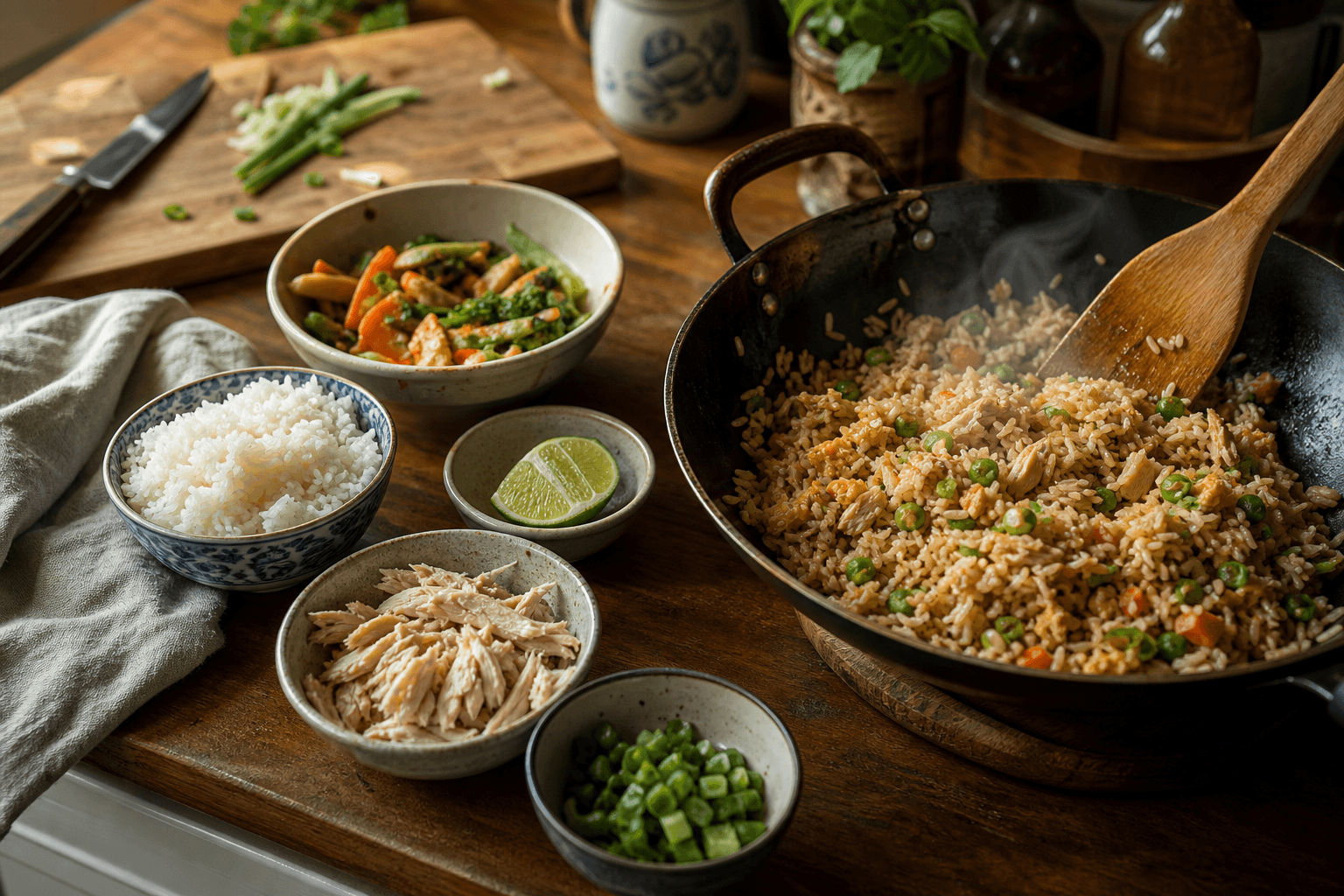
A leftover recipe generator sorts what's in your fridge into four buckets, protein, starch, vegetable, and flavor base, then matches that combination to one of six formats: stir-fry, fried rice, soup, hash, frittata, or grain bowl. You don't need an app for this, though a good one speeds up the matching.
What is a leftover recipe generator, exactly?
Strip away the tech and a leftover recipe generator is just a matching engine. You give it what you have, cooked chicken, half a bag of spinach, a cup of rice, and it hands back a dish those ingredients can become. Some tools do this with a text box where you type ingredients. Others scan a photo of your fridge. The better ones work from an inventory you already keep, so the suggestions update automatically as food gets used or gets close to its expiry date.
You don't need software to run the same process in your head. Cooks have been doing this for as long as there have been leftovers. The trick is knowing the handful of formats that almost any combination of ingredients can fill.
How does a leftover recipe generator work, step by step?
Whether you're using an app or your own kitchen instincts, the logic underneath is the same. Pulled pork is a good test case, see leftover pulled pork ideas.
- Take inventory first. Open the fridge and list what needs using, not what you wish you had. Three items is plenty to start.
- Sort into four buckets: protein (meat, beans, eggs, tofu), starch (rice, pasta, potatoes, bread), vegetable (anything cooked or raw that's starting to wilt), and flavor base (a sauce, a spice jar, citrus, cheese).
- Pick a format that fits what you have most of. Heavy on rice with small bits of meat points to fried rice. Heavy on vegetables and eggs points to frittata. Broth on hand, or something you could make, points to soup.
- Season toward one cuisine. Garlic, ginger, and soy pull a dish toward Asian flavors. Cumin and lime pull it toward Mexican. Picking one lane keeps a mix of odds and ends from tasting like a pile of odds and ends.
- Cook hot and fast, or low and slow. Stir-fries and hashes want high heat. Soups and frittatas reward a gentler pace so the flavors have time to blend.
That's the whole method. A generator, human or digital, is just running steps two and three faster than you would on a tired Tuesday night staring at three unlabeled containers. For a longer walkthrough of matching what's on hand to a finished plate, the full guide to cooking with what you have covers the reasoning behind each step in more depth.
Six formats that turn almost any leftovers into a meal
Once you know which bucket has the most in it, the format usually picks itself.
| Format | Best leftovers to use | What to add | Ready in |
|---|---|---|---|
| Fried rice | Cooked rice, small bits of meat, wilted vegetables | Egg, soy sauce, garlic, scallion | 10 minutes |
| Stir-fry | Any cooked protein, crisp or soft vegetables | Garlic, ginger, a splash of vinegar or soy sauce | 12 minutes |
| Hash | Roasted or boiled potatoes, cooked meat, root vegetables | Onion, a fried egg on top | 15 minutes |
| Frittata | Cooked vegetables, cheese ends, small amounts of meat | Six eggs, a splash of milk | 20 minutes |
| Grain bowl | Cooked grains, roasted vegetables, beans, protein | Dressing, a squeeze of lemon, fresh herbs | 10 minutes |
| Soup | Broth, cooked vegetables, meat, pasta or rice | Stock, a can of tomatoes, dried herbs | 25 minutes |
Treat the "what to add" column as a starting point, not a rulebook. The whole point of this method is using what's already in the kitchen instead of shopping for what a recipe says you need.
How long are those leftovers safe to use?
A generator is only useful if the ingredients it's matching are still good. Per USDA Food Safety and Inspection Service guidance, cooked food should go into the refrigerator within two hours of cooking, or within one hour if the room is above 90°F. Most cooked leftovers are safe in the fridge for 3 to 4 days after that. Past that window, throw them out instead of relying on the sniff test.
| Leftover type | Refrigerator | Freezer |
|---|---|---|
| Cooked meat, poultry, fish, or eggs | 3 to 4 days | 2 to 3 months |
| Soups and stews | 3 to 4 days | 2 to 3 months |
| Cooked rice, pasta, or potatoes | 3 to 4 days | 1 to 2 months |
| Cooked vegetables | 3 to 4 days | 1 to 2 months |
Freezer times are for best quality, not a hard safety cutoff, since food kept frozen stays safe indefinitely but loses texture and flavor over time. If you're relying on a fridge recipe finder rather than your memory, this is the detail that trips people up most. A tool can only suggest what's safe to eat, so one that tracks dates alongside ingredients is worth more than one that only tracks what's on the shelf.
Do you need an app for this, or can you just wing it?
For one container of leftover rice, wing it. Fried rice is fried rice. Where a generator earns its keep is when the fridge has six half-used things at once and you can't hold every combination in your head, or when you're staring at three items and aren't sure they're still good. For beef from a roast, see leftover prime rib ideas.
That's the gap Well Stockd is built to close. Log what's in the fridge, pantry, and freezer once, with expiry dates attached, and the app cross-references it against a large recipe catalog to show what you can cook right now, leftovers included, plus what a couple of substitutions would unlock. It won't invent a dish out of thin air the way an open-ended AI generator might, but it also won't suggest a recipe that needs an ingredient that expired last Tuesday. If typing ingredients into an app that suggests recipes based on the ingredients you have sounds useful, that's the same matching logic, just automated.
For nights when the fridge looks more like a puzzle than a meal, plain language works too. Describing what you have out loud, the way you would to a friend standing in your kitchen, works whether you're typing into a search bar or telling a fridge what you have and asking for a recipe. The method underneath is the same either way.
Frequently asked questions
Is it safe to reheat leftovers more than once?
Yes, as long as they were stored properly and reheated to 165°F each time, but quality drops with each round. Most food safety guidance recommends reheating only the portion you plan to eat rather than cycling the whole container in and out of the fridge repeatedly.
Can a leftover recipe generator work with raw ingredients too, not just cooked food?
Yes. The same matching logic applies to raw vegetables, unopened pantry staples, and fresh proteins. Cooked leftovers just add a time pressure that raw ingredients don't, since they're already partway through their safe shelf life.
What is the single biggest mistake people make with leftovers?
Letting them sit in an opaque container in the back of the fridge until no one remembers what's inside. Clear containers, a strip of tape with the date, or a running list of what's in the fridge solve most of the problem before a recipe is even needed.
Sources: Leftovers and Food Safety, USDA Food Safety and Inspection Service, FoodKeeper App, FoodSafety.gov
Track it in Well Stockd
Add what you have, see what you can cook tonight, and get a reminder before anything goes off.
