The eat me first bin: the simple fridge fix that stops food waste
One labeled bin, one fixed spot: that is what keeps food from disappearing to the back of the fridge. This guide covers how to set up an eat me first bin and what belongs in it.
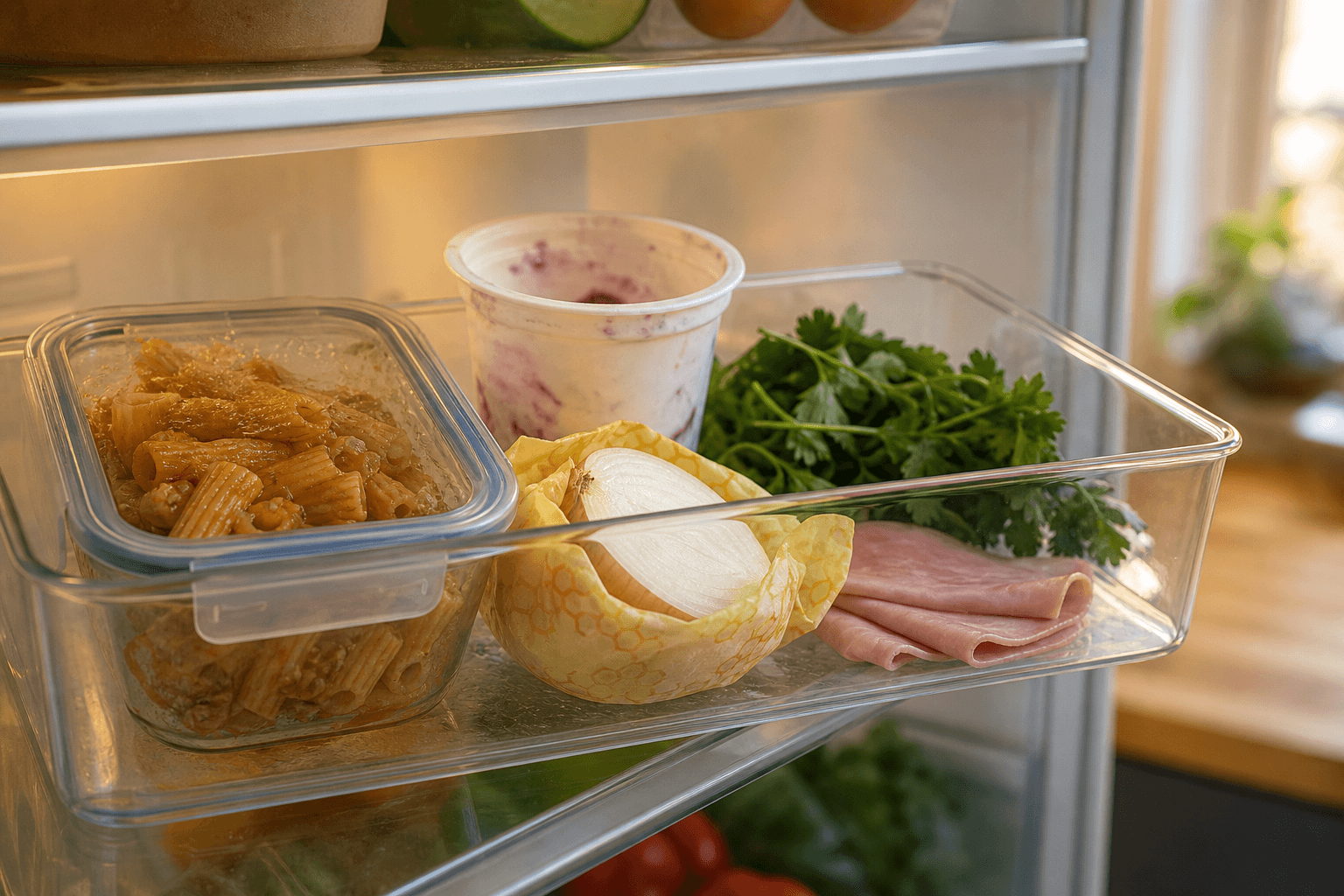
An eat me first bin is one labeled container on a fridge shelf where you group everything that needs to be used within three to five days: leftovers, opened dairy, ripening produce, and cut ingredients. Put it front and center at eye level, and check it before reaching for anything else.
It sounds almost too simple to bother with, and that is exactly why it works. Food rarely goes bad because it disappeared. It goes bad because it got pushed behind a jar of pickles on the bottom shelf where nobody looks twice. Give the food that is closest to spoiling its own spot, and you stop losing it.
What is an eat me first bin?
An eat me first bin is a single container, a box, a tray, or a clear tub, that lives on one shelf and holds only the food with a short clock on it. Cooked leftovers from last night. Half a rotisserie chicken. Yogurt a few days from its date. Salad greens starting to go soft at the edges. Instead of scattering that food across three shelves and two drawers, you keep it in one place.
The idea goes by a few names: the "eat first" box, the EMF rule, the "eat me first" bin. The mechanics stay the same: one container, clearly labeled, sitting somewhere you cannot miss it.
Why does grouping food this way cut waste?
Most food does not spoil because it went bad overnight. It spoils because it became invisible. A container of soup pushed to the back of the middle shelf loses out to a fresh block of cheese sitting right at eye level. You reach for what you can see, and what you cannot see does not get eaten, so eventually it gets tossed.
An eat me first bin flips that. It puts the food with the shortest shelf life in the one place you are guaranteed to look, front and center, right when you open the door. You stop deciding what is for dinner by digging through drawers, and start deciding by glancing at one bin.
It also changes the question you are asking yourself. "What should I cook tonight" is a big, open question that is easy to put off. "What is sitting in the eat me first bin" is small and specific, and small, specific questions are the ones people answer on a weeknight. For more on why food quietly disappears from the fridge in the first place, see how to stop throwing away food from the fridge.
How to set up an eat me first bin
- Pick a container. A clear, low-sided bin around 8 to 12 inches wide works best. Clear so you can see contents without opening it, low-sided so nothing hides at the bottom.
- Label it. A strip of painter's tape and a marker is enough. The label matters more than the container. It is the visual cue that makes everyone in the house check it first.
- Give it a fixed spot. Front and center, ideally at eye level on the main shelf, not tucked in a drawer. If you have to hunt for the bin, it stops doing its job.
- Do a quick sweep every time you put groceries away. Before new food goes on the shelves, spend thirty seconds moving anything that is aging, opened, or already cooked into the bin.
- Check the bin first, every time. Before you open a new package or start cooking from scratch, look in the bin. Build a meal around what is already there.
- Empty it completely once a week. Right before your next grocery trip, clear out whatever is left. If something survived a full week in the bin, either eat it that day or accept it needs to go, and note what kept slipping past you so you can catch it sooner next time.
What goes in the bin, and how soon should it be used
| Food | Move it to the bin when | Use it within |
|---|---|---|
| Cooked leftovers | As soon as they're in the fridge | 3 to 4 days |
| Opened dairy (yogurt, sour cream, cream cheese) | A few days before the use-by date | About 1 week after opening |
| Deli meat and sliced cheese | Once the package is opened | 3 to 5 days |
| Fresh herbs and leafy greens | The moment they start to wilt or soften | 1 to 3 days |
| Cut or prepped produce (onion, peppers, melon) | As soon as it's chopped | 3 to 5 days |
| Half-used cans or jars (broth, sauce, tomato paste) | Right after opening | 3 to 5 days |
The 3 to 4 day window for cooked leftovers comes from the USDA, which also recommends keeping your fridge at 40°F or below and refrigerating leftovers within two hours of cooking. Bacteria that cause food poisoning do not usually change how food looks, smells, or tastes, so when in doubt, go by the date, not the sniff test.
Where should the bin sit in the fridge?
Eye level, front of the shelf, not in a drawer and not on the door. The whole point is that you see it before you see anything else. If your fridge has a shelf at roughly chest to eye height, that is the spot. Some households add a second, smaller version in the pantry for bread, crackers, or opened snacks that are going stale, using the same rule: one bin, clearly marked, checked first.
If counter space or shelf space is tight, a small bin in the door shelf can still work for smaller items like opened condiments or single servings, as long as it stays visible and does not get shoved behind taller bottles.
An eat me first bin solves the problem of food you can already see going bad. It is a habit, not a full system, and it depends on you noticing what needs to move into it. For the bigger picture on building habits that stop waste before it starts, our guide to reducing food waste at home covers the shopping, storage, and planning side of the problem, and how to stop wasting groceries before they go bad covers what to do before food even reaches the point of needing a bin.
The harder food waste problem is usually the stuff you forget you bought, not the stuff sitting in front of you. The chicken thighs pushed to the back of the freezer drawer. The yogurt from three weeks ago that never made it into rotation. A bin only helps with what you can see. For what you cannot, a fridge and pantry tracking app like Well Stockd can work alongside the bin: it logs what you have, flags items nearing their date before they land in the bin, and suggests recipes that use them up. You can read more about that approach in our guide to the best pantry inventory app for reducing food waste.
Frequently asked questions
Does the bin have to be a specific size or container?
No. Any low-sided, easy-to-see container works: a repurposed produce bin, a plastic shoebox, a wire basket. The label and the fixed spot matter far more than what the container is made of. Clear plastic is the easiest to scan at a glance, but it is not required.
I live alone and don't cook big batches. Is this still worth it?
Yes, arguably more so. A single person's fridge tends to have more half-used items, one yogurt, a quarter onion, two eggs left in a carton, that are easy to lose track of one at a time. Grouping them in one bin makes the small stuff visible instead of scattered.
How is this different from just doing first in, first out?
First in, first out is about shelf position: older items go to the front, newer ones go to the back. An eat me first bin is more direct: it does not rely on you remembering purchase dates or comparing labels. Everything that needs to be eaten soon is already sitting in one obvious place, so there is nothing to compare.
Sources: