Weekly meal planning for beginners: a simple method that actually sticks
A six-step method for weekly meal planning beginners can stick to, with a sample first week, a food-waste fix, and the tools that make the pantry check faster.
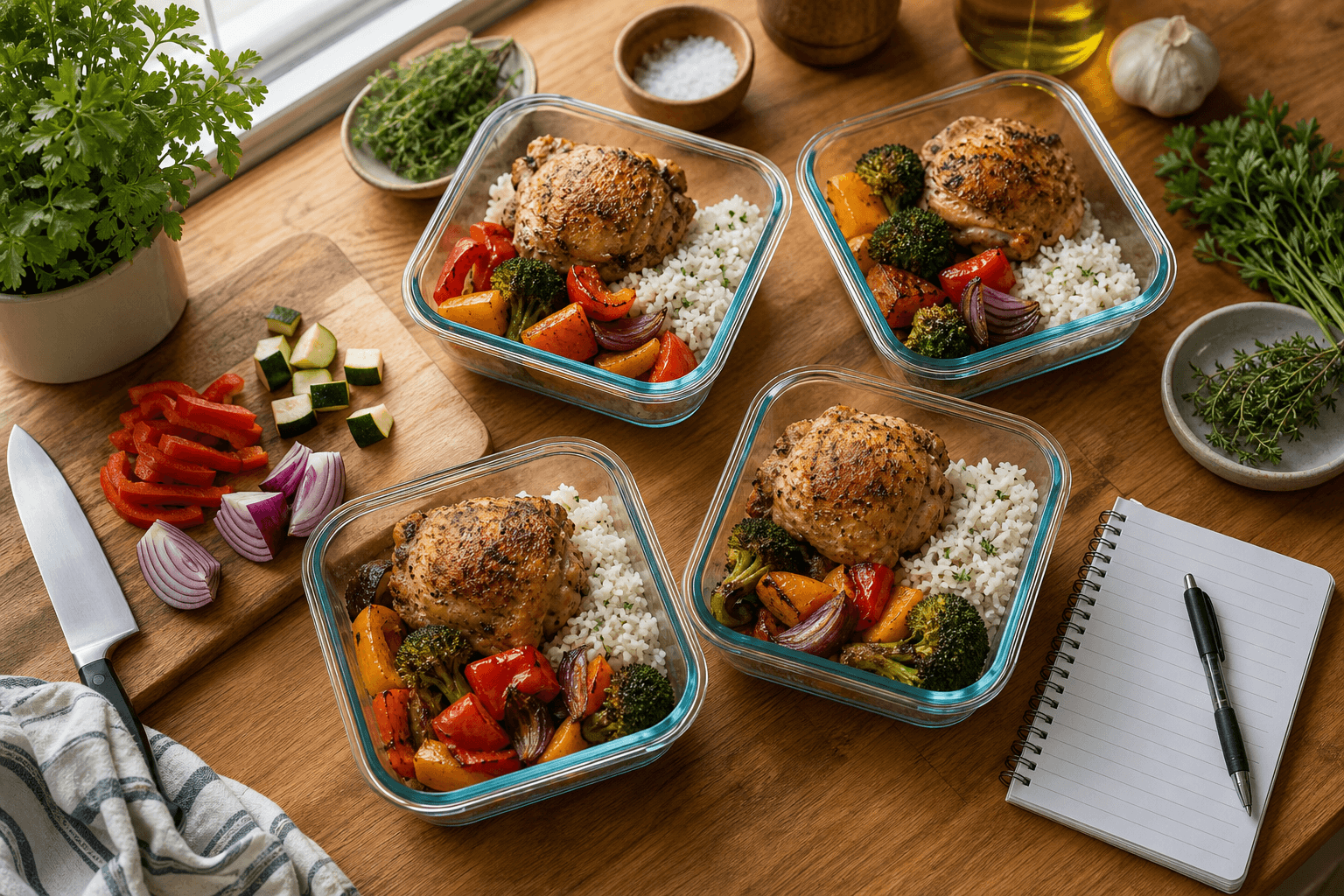
Weekly meal planning for beginners comes down to six repeatable steps: check what you already have, pick a loose weekly structure, choose four or five recipes that share ingredients, build a grocery list from what's actually missing, prep in one focused session, and leave at least one night unplanned. Most people find a rhythm that sticks within two or three weeks.
If you've tried meal planning before and abandoned it by Wednesday, you're not bad at this. You probably just started with too much ambition and not enough structure. This guide breaks the process down into a version simple enough to actually finish, with a sample first week you can copy exactly.
What is weekly meal planning, and why do beginners struggle with it
Weekly meal planning is just deciding, before you shop, what you're going to eat for the next several days. That's it. The struggle isn't the concept. It's that most beginner advice jumps straight to elaborate spreadsheets, seven different dinners, and homemade everything, which is a lot to ask of someone who hasn't built the habit yet.
The fix is to plan fewer new things and reuse more of what you already cook. A beginner plan should feel almost boring. Boring is what makes it repeatable.
For the fuller framework this article builds on, see how to meal plan for the week.
How do you start meal planning if you've never done it before
Start with your calendar, not your recipes. Meal planning fails most often because the plan doesn't match real life: a late meeting, a kid's practice, a night you're simply too tired to cook. Before you pick a single dish, look at the week ahead and mark which nights need something in fifteen minutes and which nights you can actually cook.
Once you have that map, work backward. Busy nights get the simplest meals or planned leftovers. Open nights get the recipe you're actually excited about. This one adjustment fixes more failed meal plans than any recipe choice does.
A simple step-by-step method for weekly meal planning
Each of these six steps takes a few minutes on its own, and together they run under an hour.
- Start with a five-minute pantry and fridge check. Open the fridge, freezer, and pantry, and note what needs to be used soon, so your menu starts from that instead of from a blank page.
- Pick a loose weekly structure. You don't need seven unique dinners; something like one chicken night, one pasta night, one soup, one big salad, and two flex nights gives you enough variety without overplanning.
- Choose four or five recipes that share ingredients. If Monday's recipe calls for a bag of spinach, look for a second recipe that uses spinach too, so nothing wilts in the crisper by Thursday.
- Build your grocery list from the gaps, not from scratch. Compare your recipes against what you already checked in step one, and buy only what's missing.
- Prep once, in one sitting. Chop vegetables, cook a batch of rice or grains, and marinate proteins in a single 30 to 45 minute block, usually on a weekend. This is what saves time during the week.
- Leave at least one night unplanned. Call it a flex night for leftovers, eggs on toast, or takeout. A plan with zero flexibility is a plan you'll abandon the first time life doesn't cooperate.
If you'd rather fill in a ready-made grid instead of building the structure yourself, the beginner meal planning template walks through the same steps in a fill-in-the-blanks format, and the free printable weekly meal planner with grocery list gives you a page to print and stick on the fridge.
What should your first week of meal planning look like
This first week is built around one main protein and a few pantry staples, so almost nothing gets bought and wasted.
| Day | Dinner | Built from |
|---|---|---|
| Monday | Sheet-pan chicken thighs with roasted vegetables | Chicken thighs, whatever vegetables need using |
| Tuesday | Chicken and rice soup | Leftover chicken, rice, broth |
| Wednesday | Big salad with roasted vegetables and a fried egg | Leftover vegetables, eggs |
| Thursday | Pasta with jarred sauce and frozen vegetables | Pantry pasta, freezer vegetables |
| Friday | Flex night: leftovers, eggs, or takeout | Whatever's left |
| Saturday | Batch-cook and prep for next week | New shopping list |
| Sunday | Simple one-pan meal, low effort | Whatever's easiest |
Notice how little gets bought new. One protein and a couple of pantry staples carry most of the week. That overlap is the entire trick to keeping a grocery list short and a fridge empty of forgotten produce by Friday.
How do you avoid overbuying and food waste as a beginner
Overbuying usually comes from planning meals in isolation instead of as a set. If five recipes each need their own specialty ingredient, you end up with five half-used bags of things in the crisper. Planning meals that share two or three core ingredients, like the chicken and vegetables above, solves most of this automatically.
Leftovers are also part of the plan, not a failure of it. Cooked leftovers keep safely in the fridge for three to four days, or in the freezer for three to four months, so a Monday batch of chicken can honestly still be dinner on Wednesday. If a recipe won't get eaten within that window, freeze the portion right away instead of letting it sit and hoping.
What tools make this easier
A written list and a calendar are enough to start, and plenty of people plan successfully with nothing more than a notepad on the fridge. Where beginners tend to lose time is in the pantry check from step one, standing in front of the fridge trying to remember what's already there and what's about to expire.
That's the specific gap Well Stockd is built for. It's a meal planning app with pantry inventory tracking, so instead of guessing what's in the fridge, you log it once and the app shows you which of its 3,900-plus recipes you can already make with what's on hand, flags things closer to expiring, and builds the grocery list from whatever's missing. It won't replace the thinking in the method above, but it does cut step one down from a fridge inventory to a glance.
Frequently asked questions
Do I need to plan all seven dinners to call it meal planning? No. Planning four or five dinners and leaving the rest as leftovers, eggs, or a flex night still counts, and it's more sustainable for most beginners than trying to plan every meal every day.
How long does weekly meal planning take once you're used to it? Most people land around 20 to 30 minutes for the planning and list-building, plus a 30 to 45 minute prep session. It takes longer the first few weeks while you're still learning your own patterns.
What if I don't finish everything I planned? Roll it forward. An unused ingredient or a skipped dinner just becomes part of next week's plan instead of waste, especially if it's something shelf stable or freezer friendly.
Sources: