How Long to Thaw Chicken in the Fridge
USDA-backed times to thaw chicken safely in the refrigerator by weight and cut, plus how long chicken keeps in the freezer and how long thawed chicken stays safe before you cook it.
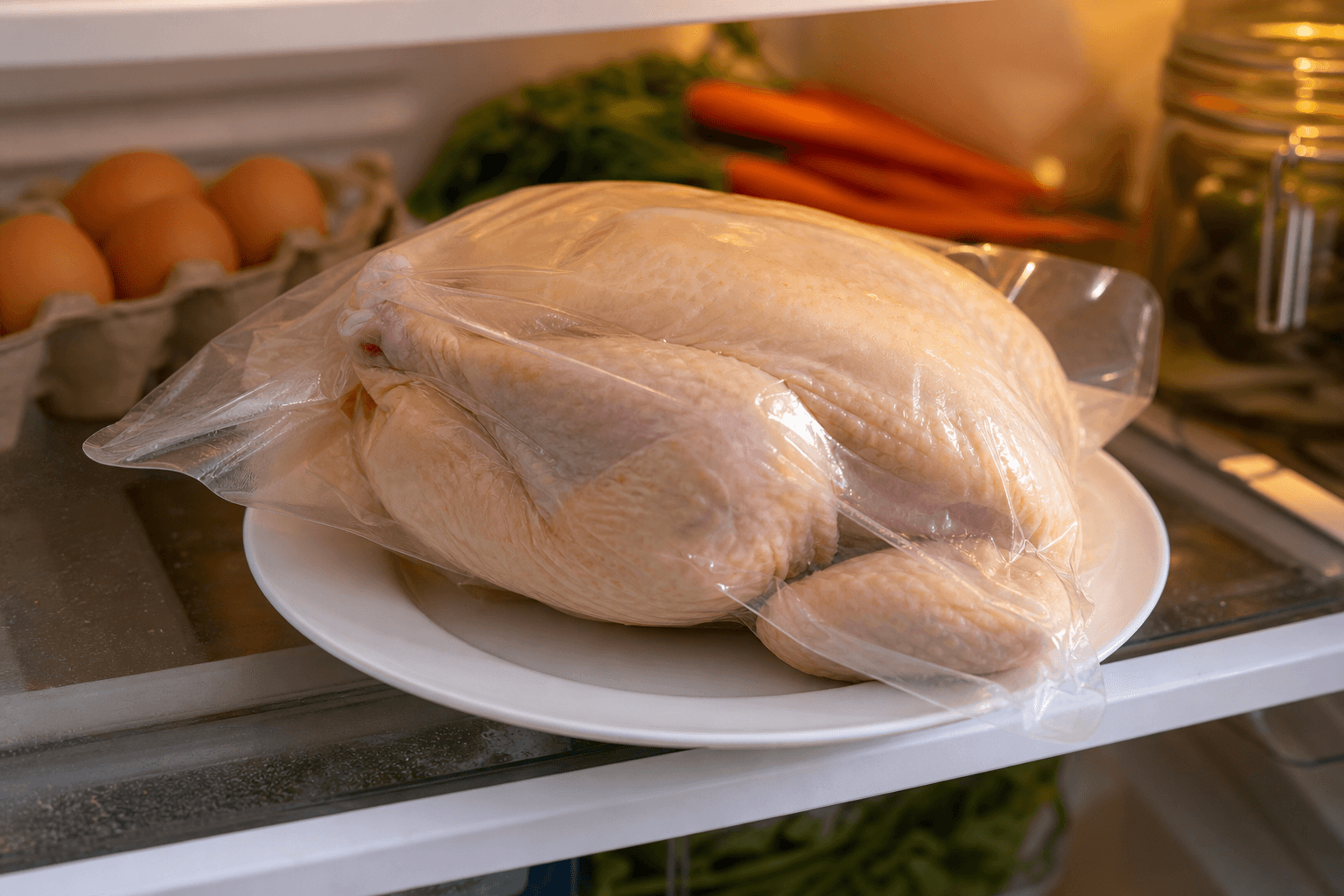
Plan on about 24 hours in the refrigerator for every 5 pounds of chicken. A pound of boneless breasts or pieces takes roughly a full day, and a whole chicken needs 1 to 2 days or longer. Keep the fridge at 40°F or below the whole time, and cook the chicken within 1 to 2 days once it's thawed.
Can you freeze chicken so it thaws faster?
Yes, and how you freeze the chicken in the first place is exactly what sets up the thaw time you're planning around later. A well-wrapped, well-portioned package thaws faster and more evenly than a bulky one, so the freezing step and the thawing step are really two halves of the same job. Whole birds and bone-in pieces both freeze and thaw fine; the main thing that changes the clock is size, not cut. If you're curious about the basics for other foods, the guide to what freezes well and what doesn't covers the general rules.
How to freeze chicken
- Portion it the way you'll cook it. Freeze a whole chicken whole, and split breasts, thighs, or wings into meal-size packages so you're never thawing more than you need for one dinner.
- Pat the chicken dry, then wrap it airtight. The original grocery tray and film are fine for a month or two, but that wrap is permeable to air, so for longer storage overwrap it with heavy-duty foil, freezer paper, or a freezer bag with the air pressed out.
- Label each package with the cut and the date. It's the only way to know later whether you're looking at last week's chicken or last winter's.
- Lay pieces flat in a single layer and freeze them fast. A quicker freeze forms smaller ice crystals, which means less moisture loss when the chicken eventually thaws.
- Set the freezer to 0°F or below. Chicken stored at that temperature is safe to eat indefinitely, though it holds its best quality within the windows below.
How long chicken keeps frozen and how to thaw it
Once it's frozen, chicken holds its quality for a while, and the window depends on the cut.
| Chicken form | Best-quality freezer time |
|---|---|
| Whole raw chicken | About 1 year |
| Raw chicken pieces (breasts, thighs, legs, wings) | About 9 months |
| Raw ground chicken | 3 to 4 months |
Those numbers are quality windows, not safety cutoffs. Chicken kept continuously at 0°F or below stays safe to eat indefinitely; it just turns drier and less flavorful the longer it sits. An app like Well Stockd can log the freeze date for you, so you always know what's been sitting in the back of the freezer and for how long.
When it's time to thaw, the refrigerator is the safest method because the chicken never leaves a safe temperature. Here's roughly how long that takes by size.
| Chicken cut or size | Refrigerator thaw time |
|---|---|
| Boneless breasts or tenders (about 1 pound) | About 24 hours |
| Bone-in pieces or cut-up chicken (2 to 3 pounds) | 1 to 2 days |
| Whole chicken (3 to 5 pounds) | 1 to 2 days |
| Whole roasting chicken (6 to 8 pounds) | 2 days, sometimes longer |
USDA's rule of thumb is about 24 hours for every 5 pounds, and even a small package needs the full day, since a pound of boneless breasts or ground meat still takes roughly that long to thaw all the way through. Keep the refrigerator at 40°F or below for the entire time.
Once chicken thaws in the fridge, it stays safe for an additional 1 to 2 days before you need to cook it, and you can safely refreeze it raw without cooking first, though the texture takes another small hit each extra trip through the freeze-thaw cycle.
Never thaw chicken on the counter. As soon as the outer layer warms past 40°F, it's sitting in the 40°F to 140°F danger zone where bacteria multiply quickly, even while the center is still icy. If you're short on time, cold water thawing (submerged in a leak-proof bag, water changed every 30 minutes, roughly 30 minutes per pound) and microwave thawing are the two other USDA-approved methods, but chicken thawed either of those ways needs to go straight into the pan or oven afterward.
What changes (texture and quality) and what to use chicken for after
Frozen and properly thawed chicken is just as safe to eat as fresh, but it's not quite identical. Ice crystals push into the muscle fibers as the chicken freezes, and some of that moisture leaks out instead of staying in the meat once it thaws, so previously frozen chicken can cook up a touch drier than fresh. If a package picked up freezer burn (those grayish, leathery patches where air reached the surface), the flavor right at those spots turns stale even though the rest of the chicken is fine. Just trim the freezer-burned patches away before or after cooking.
None of that makes previously frozen chicken worse to cook with. It's just better suited to dishes where a little extra moisture loss doesn't stand out: soups, stews, shredded chicken for tacos or salads, casseroles, and anything marinated before it hits the grill or oven. Save fresh, never-frozen chicken for the moments when texture really counts, like a simple pan-seared breast or crisp-skinned roast.
If you're juggling fresh and frozen chicken alongside other staples, it helps to know how the rest of the fridge behaves too. The guides on freezing cream cheese and freezing heavy cream cover two other items that thaw a little differently than chicken does.
Frequently asked questions
Can you refreeze chicken after it thaws in the fridge? Yes. Chicken that thawed in the refrigerator can be refrozen raw without cooking it first. Expect a bit more quality loss with each round trip through the freezer, but it's still safe to eat.
How long can thawed raw chicken sit in the fridge before you cook it? About 1 to 2 days. After that window, cook it, freeze it again, or throw it out.
Is it safe to thaw chicken on the counter overnight? No. Counter thawing lets the outer layer of the chicken sit in the 40°F to 140°F danger zone for hours, long enough for bacteria to multiply. Stick to the refrigerator, cold water, or a microwave instead.
Sources: USDA FSIS, The Big Thaw: Safe Defrosting Methods; USDA FSIS, Chicken from Farm to Table; USDA FSIS, Freezing and Food Safety; USDA FSIS, "Danger Zone" (40°F to 140°F); FoodSafety.gov, Cold Food Storage Chart.
Track it in Well Stockd
Add what you have, see what you can cook tonight, and get a reminder before anything goes off.
