How to prevent freezer burn on bread
Yes, bread freezes well, and stopping freezer burn comes down to one thing: keeping air off the loaf. Wrap it tightly before freezing, and it thaws soft instead of dry and leathery.
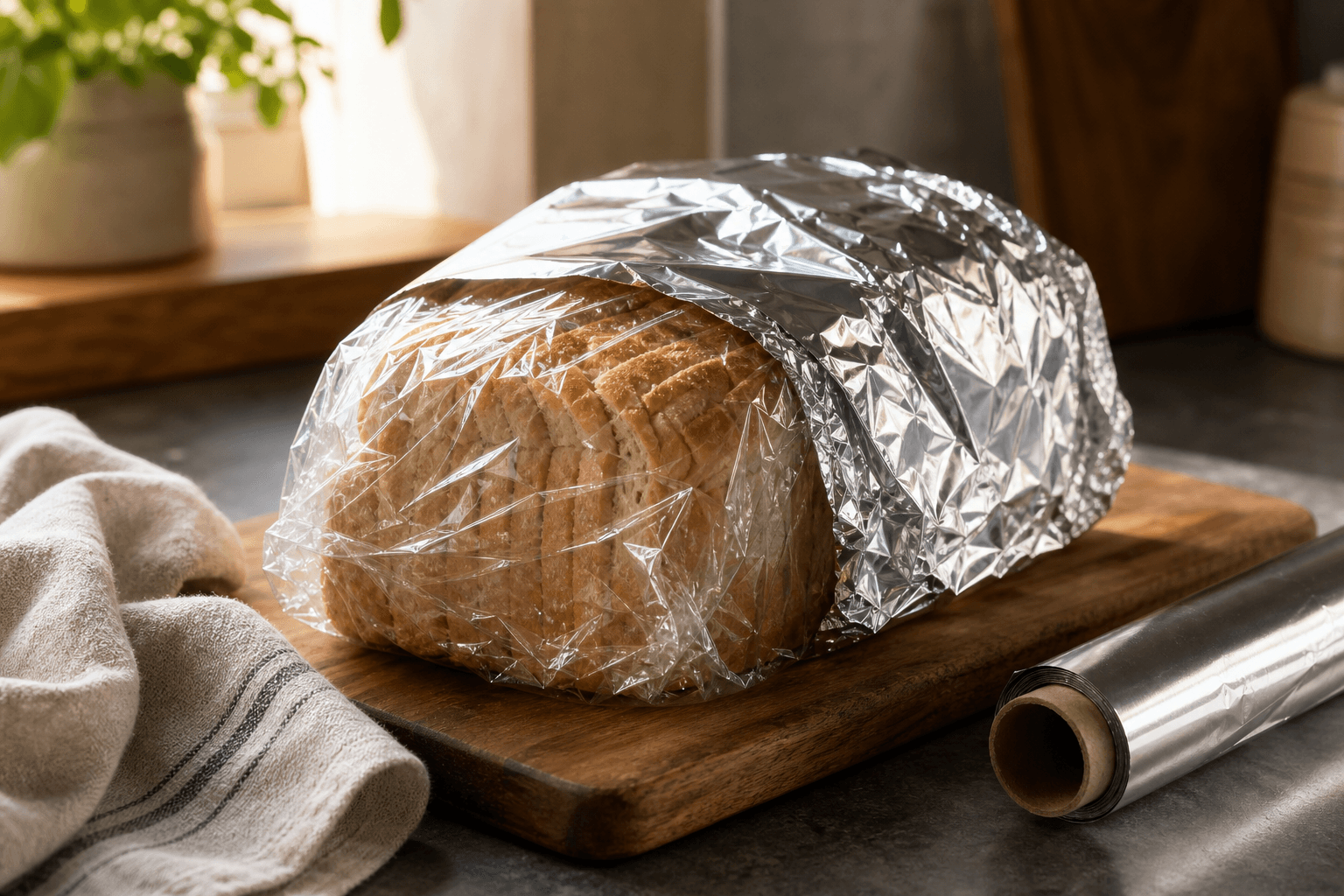
Yes, you can freeze bread, and airtight wrapping is what stops freezer burn. Cool the loaf, wrap it tightly in plastic wrap plus foil or a sealed freezer bag with the air pressed out, then freeze at 0 degrees F. Sliced bread holds its best texture for about three months.
How to prevent freezer burn on bread
Bread freezes well, and freezer burn on bread simply comes from air reaching the surface of the loaf. Moisture inside the bread turns to ice, then slowly evaporates into the open air of the freezer, leaving dry, grayish patches that feel tough instead of soft. The Food Safety and Inspection Service is clear that freezer burn is a quality problem, not a safety one. It will not make you sick, but it does turn soft bread tough and stale-tasting.
The fix is simple: keep air away from the bread's surface. A loaf sealed tightly in plastic wrap, then foil or a heavy freezer bag with the air squeezed out, has almost nowhere for ice crystals to form. A loaf left in a thin grocery bag with a twist tie, on the other hand, is basically inviting freezer burn in.
How to freeze bread
- Let the bread cool completely before wrapping. Warm bread releases steam inside the wrapping, and that steam turns to ice crystals that speed up freezer burn.
- Slice it first if you'll use it a little at a time. Pre-sliced bread lets you pull out a piece or two without exposing the whole loaf to air over and over.
- Wrap it airtight, in two layers. Plastic wrap or freezer paper against the bread, then a layer of aluminum foil or a heavy-duty freezer bag on top. Press out as much air as you can before sealing.
- Bag sliced portions separately if that fits your routine. Four to six slices per bag makes it easy to grab exactly what you need.
- Label the wrapping with the date. It is easy to lose track of what is in the freezer, and a date tells you at a glance when quality starts to slip.
- Freeze at 0 degrees F or colder, ideally toward the back of the freezer, away from the door where temperature swings most.
How long bread keeps frozen and how to thaw it
| Storage detail | What to know |
|---|---|
| Best-quality window | 3 to 5 months, tightly wrapped (USDA FoodKeeper). Many home bakers use it within 3 months for the best texture |
| Safety window | Indefinite, as long as the freezer holds a steady 0°F or below |
| Ideal freezer temperature | 0°F (-18°C) or colder |
| Freezer burn itself | Dry, grayish-white patches caused by air exposure; a quality issue, not a safety one |
| Thawing a whole loaf | Leave it wrapped at room temperature for a couple of hours, or overnight in the refrigerator |
| Thawing slices | Toast straight from frozen, or thaw a few minutes on the counter |
If a wrapped loaf shows signs of a broken seal, an off smell, or mold once thawed, throw it out rather than risk it. Bread itself, though, is low-risk. Past its date on the counter instead? See whether you can eat expired bread. It is not the kind of food that supports rapid bacterial growth the way meat or dairy can, so a properly wrapped loaf that has stayed frozen is almost always fine once thawed.
What changes (texture and quality) and what to use bread for after
Freezing halts staling, but it does not reverse anything that already started before the loaf went in the freezer, and thawing brings its own small changes. Expect the crust on crusty loaves to soften, and expect thawed bread to dry out a little faster than fresh bread once it is back at room temperature. If a spot did pick up freezer burn, FSIS notes you can simply cut that portion away before or after using the rest. Freezing a cake instead of bread? See can you freeze Nothing Bundt Cakes.
None of that rules out good uses. Slightly drier thawed bread is better for some things than fresh bread is:
- Toast, where a little extra dryness crisps up nicely
- French toast or bread pudding, which both want bread that can soak up liquid
- Croutons or breadcrumbs, made by cubing or pulsing the thawed bread and toasting it dry
- Grilled cheese or garlic bread, where the bread gets buttered and cooked again anyway
For a wider look at what freezes well and what doesn't, see our guide to freezing food. If you're stocking the freezer with more than bread, we've also covered whether you can freeze cream cheese and whether you can freeze heavy cream. And if you'd rather not rely on memory to know when that loaf went into the freezer, an app that tracks food expiration dates like Well Stockd can log the freeze date for you and remind you before quality starts to drop.
Frequently asked questions
Can you freeze bread in the bag it came in? You can, but most store bread bags are thin and not fully airtight, so freezer burn shows up faster. Adding a layer of foil or moving the loaf into a heavy freezer bag with the air pressed out gives much better protection. Gluten free loaves are covered in can you freeze gluten free bread.
Why does thawed bread go stale faster than fresh bread? Bread staling is a starch process that speeds up just above freezing temperature, which is part of why bread left in the fridge goes stale quickly. Freezing skips past that zone, but once the loaf thaws and sits at room temperature, the clock on staling starts again.
Can you refreeze bread after it has thawed? Yes, if it was thawed in the refrigerator or only briefly at room temperature and still looks and smells fine. The texture will keep getting a little drier with each freeze-thaw cycle, so it is best treated as a one-time refreeze rather than a habit.
Sources: USDA FoodKeeper via FoodSafety.gov, Cold Food Storage Chart, FSIS, Freezing and Food Safety, FSIS, What is freezer burn?
Track it in Well Stockd
Add what you have, see what you can cook tonight, and get a reminder before anything goes off.
