Can you freeze cooked rice? Yes, here's how to do it right
Cooked rice freezes well for about six months at best quality, and it stays safe indefinitely at 0 degrees F. Cool it fast, pack it airtight, and thaw or reheat it straight from frozen.
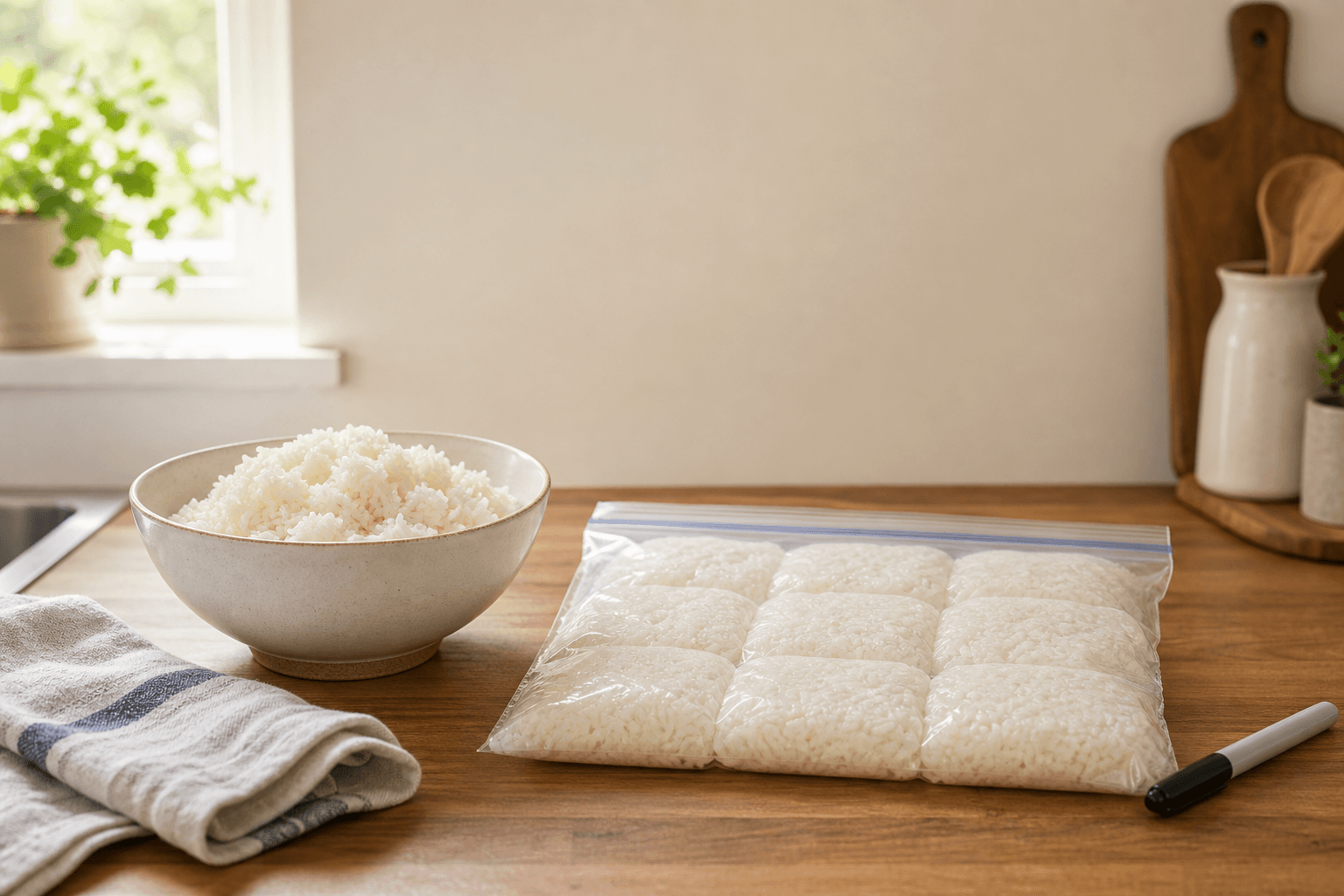
Yes, cooked rice freezes well. Cool it within two hours, pack it airtight in meal-size portions, and freeze at 0 degrees F, where it stays safe indefinitely and keeps its best texture for about six months. Thaw in the fridge or reheat straight from frozen to 165 degrees F.
Can you freeze cooked rice?
You can, and it's one of the easier leftovers to freeze. White rice, brown rice, jasmine, basmati, and wild rice all hold up fine once they're portioned and packed. Risotto and rice pudding come out a little softer after freezing because of their creamy starch content, but they're still worth freezing rather than tossing. Sushi rice is the one exception worth knowing about: its texture depends on being freshly made and lightly warm, so it rarely tastes the same after a freeze and thaw, though it's not unsafe to try.
The one real caution with rice, frozen or not, is how fast you cool it after cooking. Cooked rice can carry heat-resistant bacterial spores that survive the boiling process and multiply quickly if the rice sits out at room temperature. The USDA's Food Safety and Inspection Service (FSIS) advises getting any cooked food into the refrigerator within two hours of cooking, or within one hour if your kitchen is above 90 degrees F. For rice specifically, that means skipping the "let the pot cool on the stove" habit and getting it chilled and stored right away.
How to freeze cooked rice
- Cool it fast. Spread the rice out on a sheet pan or shallow container instead of leaving it in a deep pot, so it drops out of the warm zone quickly and fits inside that two-hour window.
- Portion it. Divide the rice into meal-size amounts before freezing. It's easier to pull out exactly what you need, and you won't be thawing and refreezing more than you'll use.
- Pack it airtight. Use freezer bags with the air pressed out or rigid airtight containers. A light drizzle of oil or a splash of water tossed through the rice before packing helps keep the grains from clumping into one solid block.
- Flatten and label. Press freezer bags flat so they freeze faster and stack easily, and write the date on each one so you know how long it's been in there.
- Freeze at 0 degrees F or below. That's the temperature FSIS says keeps frozen food safe indefinitely, so set your freezer accordingly and get the bags in as soon as they're packed.
How long cooked rice keeps frozen and how to thaw it
| Storage method | How long | Notes |
|---|---|---|
| Room temperature | Up to 2 hours (1 hour if above 90°F) | Refrigerate or freeze after this window |
| Refrigerator (40°F or below) | 3 to 4 days | Store in a shallow, airtight container |
| Freezer (0°F or below) | About 6 months for best quality | Safe indefinitely at 0°F, but texture fades over time |
Those numbers come from USDA's FoodKeeper guidance and FSIS's general leftovers advice: cooked rice is good in the fridge for three to four days, and it holds its best quality in the freezer for about six months, though it stays safe to eat well past that as long as the freezer never climbs above 0 degrees F.
To thaw, move a frozen portion to the refrigerator the night before, or skip thawing altogether and reheat it straight from frozen. Either way, FSIS's rule for leftovers is the same: reheat until it reaches 165 degrees F all the way through, checked with a food thermometer, and if you're turning it into a soup or sauce, bring that to a full boil. If you reheat frozen rice and don't eat all of it, it's fine to refreeze the rest as long as it hit 165 degrees F first. If you freeze rice in small, dated batches, a food tracking app like Well Stockd can keep tabs on how long each portion has been in there, so you grab the oldest bag first instead of losing track of what's in the freezer.
What changes (texture and quality) and what to use cooked rice for after
Freezing firms up the starch in rice, so thawed grains are usually a bit drier and more separate than they were fresh, and they can turn slightly gummy or grainy if they were packed while still warm and moist. None of that makes the rice unsafe; it just changes how it behaves in the pan.
That drier texture is an advantage in a few dishes. Frozen-and-thawed rice is a favorite for fried rice, since day-old, moisture-reduced grains fry up separate instead of clumping. It also works well stirred into soups, folded into stuffed peppers or casseroles, packed into burrito bowls, or reheated with a splash of broth or water and a lid to steam the moisture back in. Rice pudding and creamy risotto are better reheated gently on the stove with a little extra milk or broth stirred in to loosen them back up. Rice inside stuffed cabbage rolls is covered in can you freeze cabbage rolls.
Rice isn't the only staple with its own freezing rules. Our full can you freeze food guide covers the general principles, and if you're wondering about other kitchen basics, we've also broken down freezing cream cheese and freezing heavy cream, both of which behave very differently once they thaw.
Frequently asked questions
Can you freeze fried rice or rice mixed with soy sauce and vegetables? Yes. The same rules apply: cool it within two hours, pack it airtight in portions, and freeze at 0 degrees F. Fried rice freezes and reheats a little better than plain steamed rice because it's already drier.
Is it safe to eat rice that's been in the fridge for a week? No. FSIS guidance caps cooked leftovers, including rice, at three to four days in the refrigerator. Past that, freeze it or toss it. When in doubt, throw it out.
Can you refreeze rice after it's been thawed? Yes, but only after it's been reheated to 165 degrees F first. We don't recommend refreezing rice that was thawed and never reheated, since it sat in the temperature danger zone without coming back up to a safe internal temperature.
Sources: USDA FSIS, Leftovers and Food Safety, USDA FSIS, Freezing and Food Safety, FoodSafety.gov, FoodKeeper App.
Track it in Well Stockd
Add what you have, see what you can cook tonight, and get a reminder before anything goes off.
