Meals to make with random ingredients: a no-recipe method
Sort your fridge and pantry into four buckets, protein, starch, vegetable, and flavor booster, then match them to one of five easy formats. You won't need a recipe.
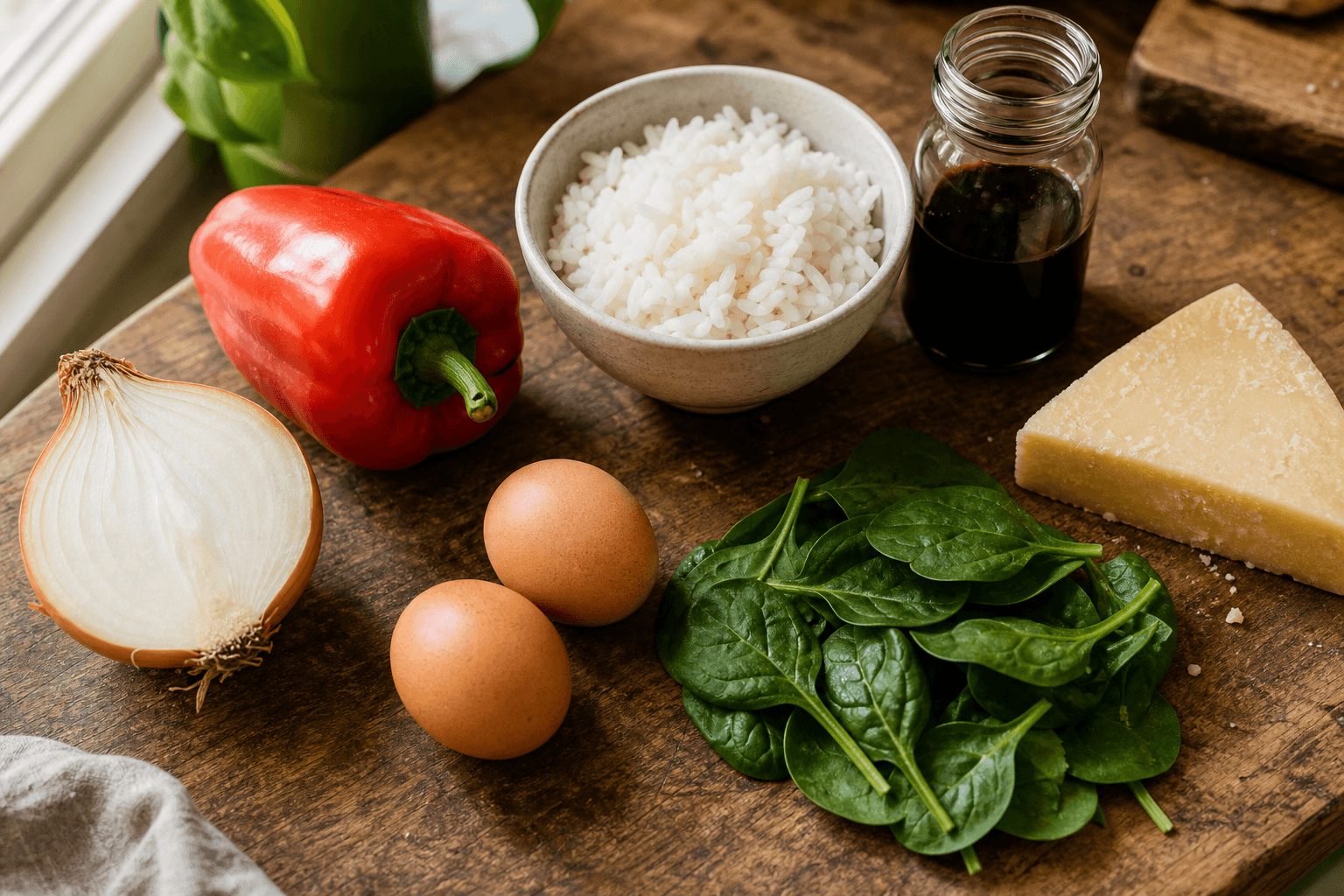
Meals to make with random ingredients
Sort what you have into four buckets, a protein, a starch, a vegetable, and a fat or flavor booster, then match them to one of five formats: stir-fry, grain bowl, soup, frittata, or quesadilla. Almost any odd mix of fridge and pantry items fits at least one of those five shapes, so you don't need a special trip to the store.
That five-minute sorting habit is the whole trick. Forget hunting for a recipe that happens to use your exact ingredients. Just pick a cooking method flexible enough to absorb whatever you have. Once you see meals this way, a half onion, a lonely chicken thigh, and the end of a bag of rice stop looking like scraps and start looking like dinner.
The four-bucket method
Before you open a recipe site, lay out what you actually have and sort it into these groups:
- Protein: eggs, canned beans, leftover cooked chicken, ground meat, tofu, cheese, canned tuna or salmon
- Starch: rice, pasta, tortillas, bread, potatoes, quinoa, couscous, leftover cooked grains
- Vegetable: anything fresh, frozen, or canned, including the wilting stuff at the back of the crisper drawer
- Fat or flavor booster: olive oil, butter, soy sauce, salsa, a jarred sauce, spices, garlic, an acid like lemon or vinegar
You rarely need all four in generous amounts. Even one item from three of the four buckets is usually enough to build a real plate. The point of sorting is to stop staring at ingredients individually and start seeing them as parts of a meal.
Step by step: from odds and ends to dinner
- Take inventory first. Open the fridge, freezer, and pantry and list what's in front of you, especially anything close to its use-by date. That list drives the meal, not the other way around.
- Sort into the four buckets above. You will usually see the meal's shape before you have even started cooking.
- Pick the format that matches what you have most of. Lots of vegetables and a little protein points to a stir-fry or soup. A cooked grain and some roasted vegetables points to a grain bowl. Eggs and vegetable scraps point to a frittata or scramble. Tortillas and cheese point to quesadillas or tacos.
- Add one flavor direction so it tastes intentional. Soy sauce, ginger, and sesame oil read as Asian-inspired. Cumin, lime, and chili powder read as Mexican-inspired. Olive oil, oregano, and lemon read as Mediterranean. For a whole week in that style, see meal planning app for Mediterranean diet. Pick one lane and stick to it instead of throwing in every spice you own.
- Cook, taste, adjust. Random-ingredient meals are forgiving. Add more liquid if it is dry, more acid if it tastes flat, more salt before you decide it needs anything fancier.
What format fits what you have
Use this as a quick reference the next time you are staring into an open fridge.
| If you have mostly | Try this format | Why it works |
|---|---|---|
| Vegetables plus a small amount of protein | Stir-fry or sheet-pan roast | High heat and a sauce unify odd-sized, mismatched vegetables fast |
| A cooked grain and a few vegetables | Grain bowl | Room-temperature components layer well even if they do not match cuisines |
| Broth, canned tomatoes, or wilting vegetables | Soup or stew | Simmering hides imperfect textures and blends flavors that would clash raw |
| Eggs and vegetable odds and ends | Frittata or scramble | Eggs bind almost anything and cook in one pan |
| Tortillas, bread, or cheese | Quesadilla, toast, or grilled cheese | A starchy wrapper turns small amounts of filling into a full portion |
| Cooked pasta and a jar of sauce | Pasta toss | Sauce coats and unifies whatever protein or vegetable you fold in |
| Rice, canned beans, and salsa | Burrito bowl | No cooking beyond warming, good for a five-minute dinner |
| Random fruit, yogurt, or oats | Smoothie or baked oatmeal | Works for breakfast when dinner logic does not apply |
Ten combos and what to make with them
A few concrete examples, since it is easier to trust the method once you have seen it in action:
- Half an onion, one bell pepper, and leftover rice: fried rice
- Canned chickpeas, spinach, and canned tomatoes: a quick stew over toast or rice
- Two eggs, a handful of shredded cheese, and any vegetable scraps: a frittata
- Leftover roast chicken, tortillas, and salsa: chicken quesadillas
- Frozen mixed vegetables, soy sauce, and cooked noodles: a noodle stir-fry
- A wilting head of broccoli, garlic, and pasta: garlic broccoli pasta
- Canned tuna, mayonnaise, and bread: a tuna melt
- Plain yogurt, cucumber, and pita: a Mediterranean-style plate
- Sweet potato, black beans, and a tortilla: a sweet potato and bean taco
- Overripe bananas and oats: baked oatmeal for the next few mornings
Is it safe to cook with random fridge leftovers
Yes, as long as the ingredients have been stored properly. The main rule to know is the two-hour rule from the USDA: perishable food left out at room temperature for more than two hours (one hour above 90 degrees Fahrenheit) should be thrown out, because bacteria multiply fastest between 40 and 140 degrees Fahrenheit. As long as your odds and ends have been refrigerated at 40 degrees or below, mixing them into a new dish is completely normal and is exactly how many home cooks avoid waste.
That waste question is bigger than it feels day to day. USDA estimates put food loss at the retail and consumer level around 31 percent of the food supply, and the average American family of four loses about $1,500 a year to food that gets thrown out instead of eaten. Turning random ingredients into an actual meal, instead of composting them a week later, is one of the more painless ways to claw some of that back.
Where an inventory app helps
Cooking from random ingredients is the easy part. Remembering what you have and how close it is to going bad is the harder one. If you keep a running list of your fridge, freezer, and pantry, Well Stockd can check that list against its recipe catalog and surface what you can cook right now. It prioritizes whatever is closest to expiring. It will not replace the sorting habit above, but it does save you the step of standing in front of an open fridge trying to remember if you still have that jar of salsa. If you want the fuller picture of how that works, see an app that suggests recipes based on ingredients you have at home.
Frequently asked questions
Do I need a recipe to cook with random ingredients? Not usually. A format (stir-fry, soup, grain bowl, frittata, or quesadilla) plus one flavor direction gets you most of the way there without following exact measurements. Recipes are more useful for baking, where ratios matter, than for savory weeknight cooking.
What if I only have two or three ingredients? Two ingredients from different buckets are usually enough for a simple version of a meal, for example eggs and cheese for a scramble, or pasta and a jarred sauce for dinner. Add whatever else you have as a bonus, not a requirement.
How do I make a random-ingredient meal taste less like leftovers? Pick one flavor lane, such as soy and ginger or cumin and lime, and season everything toward that lane. A consistent flavor direction is what makes a mixed-bag meal taste planned instead of thrown together.
For a fuller walkthrough of the whole approach, start at what to cook with what you have. If you want a faster way to match your exact ingredients to a recipe, try the fridge recipe finder, or see how the process works end to end in tell me what's in my fridge and I'll give you a recipe.
Sources:
Track it in Well Stockd
Add what you have, see what you can cook tonight, and get a reminder before anything goes off.
