Milk and butter substitute for heavy cream: the ratio
The milk and butter substitute for heavy cream: 3/4 cup whole milk plus 1/3 cup melted butter makes 1 cup for cooking and baking. Ratios for light cream and half-and-half, how to mix it so the butter does not seize, and why it will never whip.
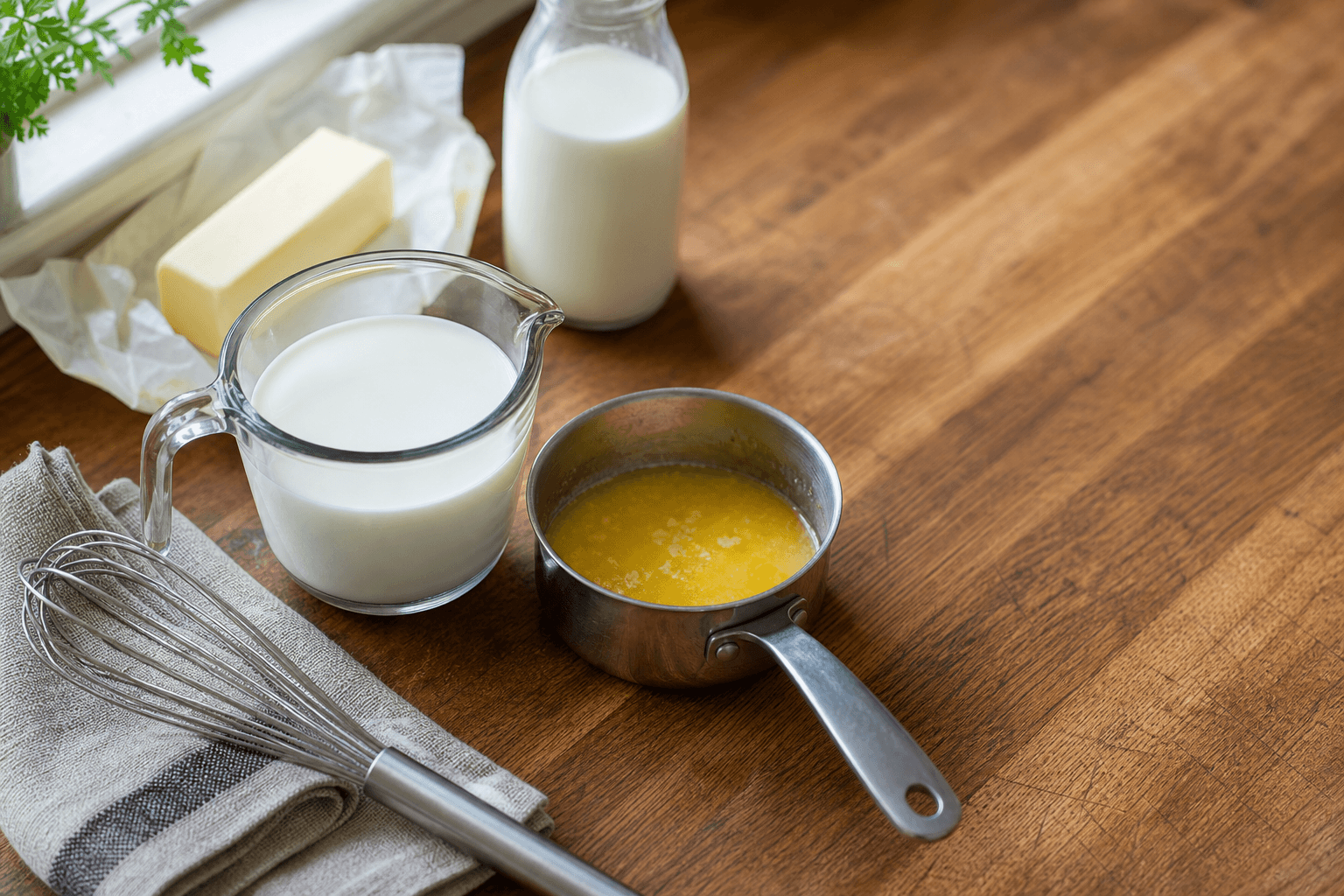
Melt 1/3 cup butter, let it cool for a minute, then whisk it into 3/4 cup whole milk. That makes 1 cup of heavy cream substitute for cooking and baking. It will not whip. If you want a lighter, more pourable result, use 1/4 cup butter instead.
The butter amount is the one thing sources argue about. Purdue and NDSU Extension publish 3/4 cup milk plus 1/3 cup butter in their substitution bulletin. A lot of recipe sites print 1/4 cup. The 1/3 cup version lands closer to the 36% milkfat floor the FDA sets for heavy cream in 21 CFR 131.150, so that's the headline number here. The lighter version is in the table below.
Milk and butter ratios for heavy cream and lighter creams
| Substitute | Ratio | Best for | Watch out |
|---|---|---|---|
| 3/4 cup milk + 1/3 cup melted butter | = 1 cup heavy cream, for cooking and baking | Sauces, soups, casseroles, quick breads, scones, mashed potatoes | Purdue/NDSU Extension's published figure, and the closest to heavy cream's 36% milkfat floor |
| 3/4 cup milk + 1/4 cup melted butter | = 1 cup heavy cream substitute | When you want less fat, or you are short on butter | Noticeably leaner than real cream. Fine in baking, thinner in a pan sauce |
| 2/3 cup buttermilk + 1/3 cup oil | = 1 cup heavy cream | Baking, where the extra tang is welcome | Adds acidity, which changes the leavening balance in a baking soda recipe |
| 14 Tbsp milk + 3 Tbsp butter | = 1 cup light cream, 18% to 20% fat | Coffee, pouring over desserts, delicate sauces | A different target. Do not use this row where a recipe wants heavy cream |
| 7/8 cup whole milk + 1/2 Tbsp butter | = 1 cup half-and-half | Coffee, creamy scrambled eggs, lighter sauces | Half-and-half is only 10.5% to 18% milkfat, so it needs very little butter |
| 3 Tbsp oil + milk to equal 1 cup | = 1 cup half-and-half | Dairy-light cooking, or when there is no butter | Oil does not solidify when chilled, so the mixture stays visibly separated. Whisk right before using |
Only the first three rows replace heavy cream. The light cream and half-and-half rows sit at a lower fat level on purpose, so skip them when a recipe calls for heavy cream.
How to make the milk and butter substitute for heavy cream
- Melt 1/3 cup unsalted butter in a small pan or the microwave.
- Let it sit off the heat for a minute. Butter straight off the burner hits cold milk and seizes into hard flecks. Warming the milk slightly instead works too.
- Measure 3/4 cup whole milk into a bowl or a large measuring cup.
- Pour the butter into the milk in a thin stream while you whisk, and keep whisking until the color is even.
- Use it right away, and whisk once more just before it goes into the pan or the batter.
Doubling is straightforward: 1 1/2 cups milk plus 2/3 cup butter gives you 2 cups.
What changes when you use milk and butter instead of heavy cream
The flavor lands close, because you are adding the same two things cream is made of. Texture is where you see the difference. Cream is an emulsion with its fat held in suspended globules; this is melted fat floating in milk, so it separates as it stands and it can bead on the surface in a hot pan. Keep the heat below a boil, whisk continuously, and it holds together well enough for a cream soup or a pan sauce.
In baking the gap mostly closes. Scones, quick breads, casseroles, and mashed potatoes take the swap without much complaint.
Plan for two things. Salted butter shifts the seasoning of the whole dish, so use unsalted or pull back on the recipe's salt. And lower-fat milk works but produces a thinner mixture that separates faster, so skim gives you a looser sauce than whole.
When not to substitute milk and butter for heavy cream
Skip it in anything that has to whip. Whipping needs at least 30% milkfat in suspended globule form, and melted butter stirred into milk does not have that structure. America's Test Kitchen whipped genuine light cream and half-and-half and reported both stayed liquid no matter how long they beat them. Your milk and butter mixture behaves the same way. For whipped topping, buy the cream.
The same goes for a sauce that will sit at a hard simmer while you do something else. Left alone at that heat, the butterfat pools on top.
Related heavy cream and dairy swaps
If your problem is a specific dish rather than a generic cup of cream, start with substitute for heavy cream in soup or substitute for heavy cream in pasta sauce. If there is no butter in the house either, can I use milk instead of heavy cream covers the plain-milk version. Out of buttermilk for the tangy row above? See the buttermilk substitute ratios. The printable ingredient substitution chart is the one worth taping inside a cabinet door.
Milk and butter substitute for heavy cream FAQ
What is the ratio of milk to butter for heavy cream?
3/4 cup milk to 1/3 cup melted butter makes 1 cup, per Purdue and NDSU Extension. A lighter version that many cooks use drops the butter to 1/4 cup.
Can you whip milk and butter into whipped cream?
No. Whipping requires at least 30% milkfat in suspended globule form, and melted butter in milk does not qualify.
Does the milk and butter substitute for heavy cream have to be whole milk?
Whole milk gives the closest result. Lower-fat milk works, but the substitute comes out thinner and separates more.
Can I make the milk and butter substitute for heavy cream ahead?
Make it just before you use it. It separates as it sits, and the butter re-solidifies once it goes in the fridge.
Let your kitchen pick the heavy cream swap
Well Stockd's substitution engine suggests swaps from what you already have when a recipe calls for something you are out of. Frozen and canned forms count as options, and you can reject any swap you do not want to see again. Pair it with an app to track food expiration dates or a pantry inventory app and the milk in the door gets used before it turns.
Sources: Purdue Extension / NDSU Extension, FN198, FDA 21 CFR 131.150 via Cornell LII, America's Test Kitchen on whipping light cream vs heavy cream.