What to cook when you have nothing in the house
The three-category method for turning a nearly bare kitchen into real dinner: one starch, one protein, and one fat plus seasoning, then cook. Includes ten ready-made combinations and a table showing how long pantry staples last.
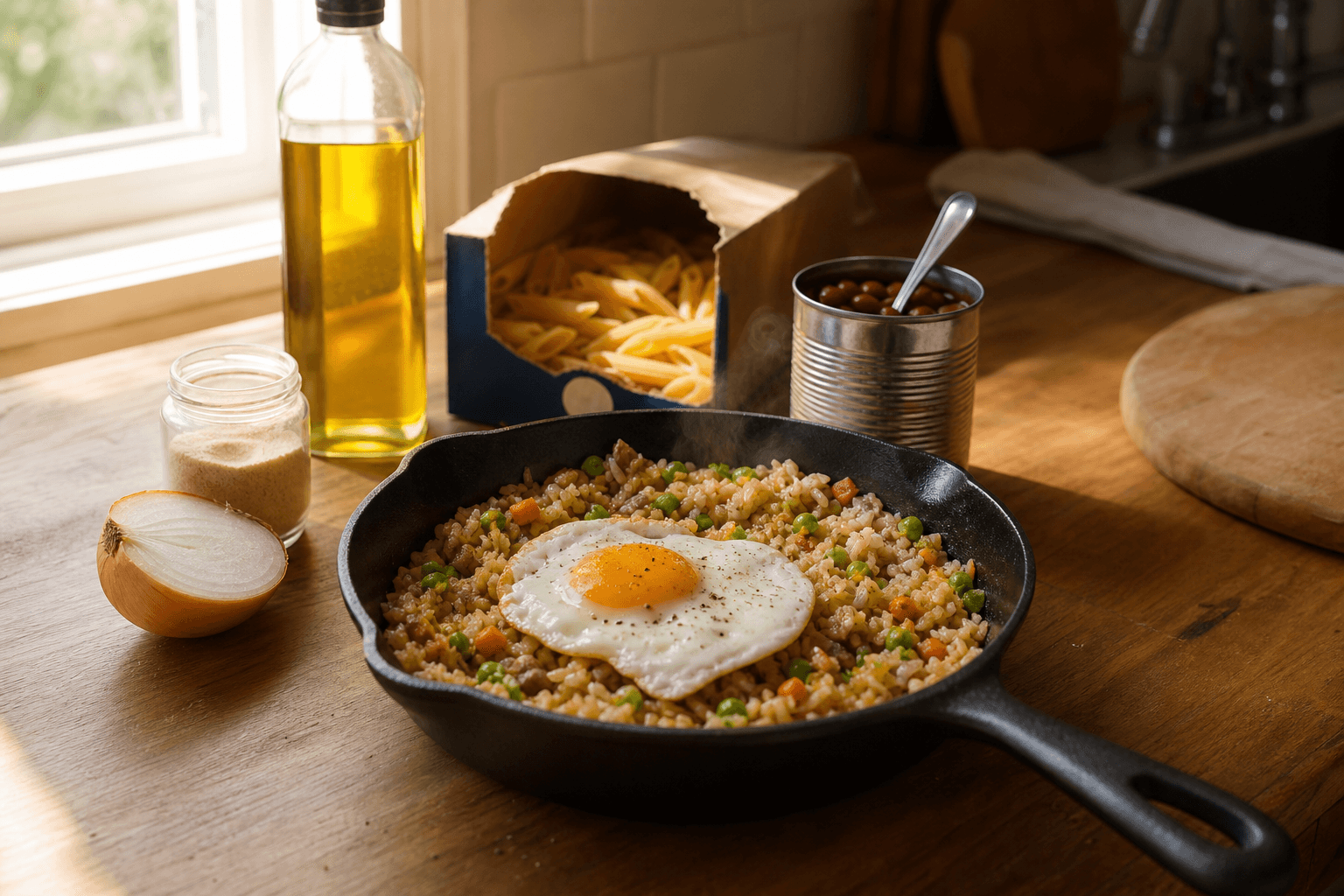
When the fridge looks bare, you almost always have enough for real dinner: one starch such as pasta or rice, one protein such as eggs or canned beans, and one fat plus seasoning such as oil and garlic powder. Combine those three and dinner is ready in under 30 minutes.
That formula works more often than it should. Most kitchens hold onto a few scoops of rice, a half-used box of pasta, a couple of eggs, or a can of something in the back of a cabinet, even on a week when a grocery run feels overdue. The trick is a mindset, not a specific recipe: seeing what you already have as the start of a meal instead of the reason you can't make one.
What can I make with almost nothing in the house?
Almost any kitchen, even a genuinely empty-feeling one, has three things hiding somewhere: a starch, a protein, and something to season with. Rice, pasta, bread, tortillas, or potatoes cover the starch. Eggs, canned beans, canned tuna, or a stray piece of cheese cover the protein. Oil, butter, soy sauce, hot sauce, garlic powder, or a shake of dried herbs cover the flavor. Once you've spotted one item in each category, you have a meal, not just leftovers waiting to happen.
This is the same logic behind our what to cook with what you have guide, and it holds up even on the emptiest weeks, because it doesn't depend on any single ingredient being in the house.
The three-category method for empty-fridge dinners
- Do a full sweep, not just a fridge check. Open the freezer, the pantry shelf, and the door compartments. Frozen vegetables, a heel of bread, or a forgotten can count just as much as anything fresh.
- Choose your starch first. This is the base of the plate: pasta, rice, tortillas, bread, or potatoes. Whatever cooks fastest with what's on hand wins.
- Choose your protein next. Eggs are the most reliable pantry protein because they cook in minutes and pair with almost anything. Canned beans, tuna, or leftover cheese work just as well.
- Add fat and flavor. A spoonful of oil or butter carries flavor and prevents sticking. Garlic powder, soy sauce, hot sauce, or dried herbs turn plain starch and protein into something you'd choose to eat.
- Cook the starch first, then build around it. Boil the pasta or rice, cook the protein in the same pan if you can, then toss everything together with the fat and seasoning at the end so nothing dries out.
Ten combinations that turn nothing into dinner
Use this as a starting menu. Swap in whatever you have in each column.
| Starch | Protein | Flavor boost | Becomes |
|---|---|---|---|
| Rice | Eggs | Soy sauce, garlic powder | Fried rice |
| Pasta | Canned tuna | Olive oil, lemon, red pepper flakes | Tuna pasta |
| Tortillas | Canned beans | Cumin, hot sauce, cheese | Bean quesadillas |
| Bread | Eggs | Butter, salt, pepper | Egg-in-a-hole toast |
| Rice | Canned beans | Chili powder, onion powder | Beans and rice bowl |
| Pasta | Eggs and cheese | Black pepper, garlic | Pantry carbonara |
| Tortillas | Cheese or peanut butter | Cinnamon or hot sauce | Skillet quesadilla |
| Instant noodles | Egg | Soy sauce, sesame oil, frozen vegetables | Doctored ramen |
| Bread | Canned tuna or beans | Mayo, mustard, celery salt | Sandwich |
| Potatoes | Eggs or cheese | Butter, paprika | Loaded mashed or baked potatoes |
None of these need a recipe card. Once you've made two or three, the pattern sticks and you stop needing the list at all.
What pantry staples are worth always keeping stocked?
A handful of shelf-stable items are what make the whole method work, and most of them last far longer than people assume. According to the USDA's Food Safety and Inspection Service and its FoodKeeper guidance, here's roughly how long the basics hold up at their best quality when stored in a cool, dry cabinet.
| Staple | Best-quality shelf life | Note |
|---|---|---|
| White rice | 2 years unopened, 1 year once opened | Keep in a sealed container once opened |
| Dried pasta | 2 years unopened | Keeps about a year once the box is open |
| Dried beans and lentils | 1 to 2 years for beans, about 1 year for lentils | Still safe after that, just slower to soften |
| Canned tomatoes and other high-acid cans | 12 to 18 months | Acid slowly reacts with the can over time |
| Canned beans, corn, tuna, and other low-acid cans | 2 to 5 years | The longest-lasting canned staple |
| Oil, garlic powder, dried herbs, hot sauce | Oil 6 to 12 months, hot sauce about 6 months, dried herbs 1 to 2 years, garlic powder 2 to 3 years | Loses potency before it becomes unsafe |
Keeping even three or four rows of that table stocked is usually enough to guarantee one real meal, any night, no matter what the fresh side of the fridge looks like. This matters beyond convenience, too. The USDA estimates that an average family of four loses roughly $1,500 a year to food that goes uneaten and gets tossed. A pantry that gets used regularly wastes less food, and less money along with it.
When your pantry really is empty
Sometimes the honest answer is that there's genuinely nothing, not even the basics above, and that's a different problem than feeling like there's nothing. If you're not sure what's left in your kitchen, tools like our fridge recipe finder walk through how to take real stock before you decide a grocery trip is unavoidable, and our piece on how to tell me what's in my fridge and get a recipe back covers the same idea from the other direction.
This is also where Well Stockd earns its keep. Once you've logged what's in your fridge, freezer, and pantry, our app that suggests recipes based on ingredients you have at home checks your real inventory against thousands of recipes and tells you what you can make right now, plus what a swap or two would unlock. It won't invent food you don't have, but it will stop you from staring at a cabinet full of options and seeing nothing.
Frequently asked questions
What's the fastest meal to make with almost nothing? Eggs on toast or fried rice, both usually ready in under 15 minutes. Eggs cook faster than almost any other protein, and if you have day-old rice in the freezer, fried rice comes together in one pan.
Do I need fresh vegetables to make a real meal? No. Canned tomatoes, canned corn, or a handful of frozen vegetables cover the vegetable side of a plate just fine on a night when nothing fresh is left. Fresh produce is nice to have, not required.
How often should I restock pantry staples so this always works? Check your rice, pasta, canned beans, and oil roughly once a month and replace whatever's running low. A running list of five or six items is enough to guarantee you're never starting from zero.
Sources: Shelf-Stable Food Safety, USDA Food Safety and Inspection Service; Food Loss and Waste, USDA
Track it in Well Stockd
Add what you have, see what you can cook tonight, and get a reminder before anything goes off.
