Pantry inventory spreadsheet vs. app: which one you'll actually use
A pantry spreadsheet is free, but it only works if you keep updating it. This compares spreadsheets and apps for tracking what's in your kitchen, plus a step-by-step setup for either one.
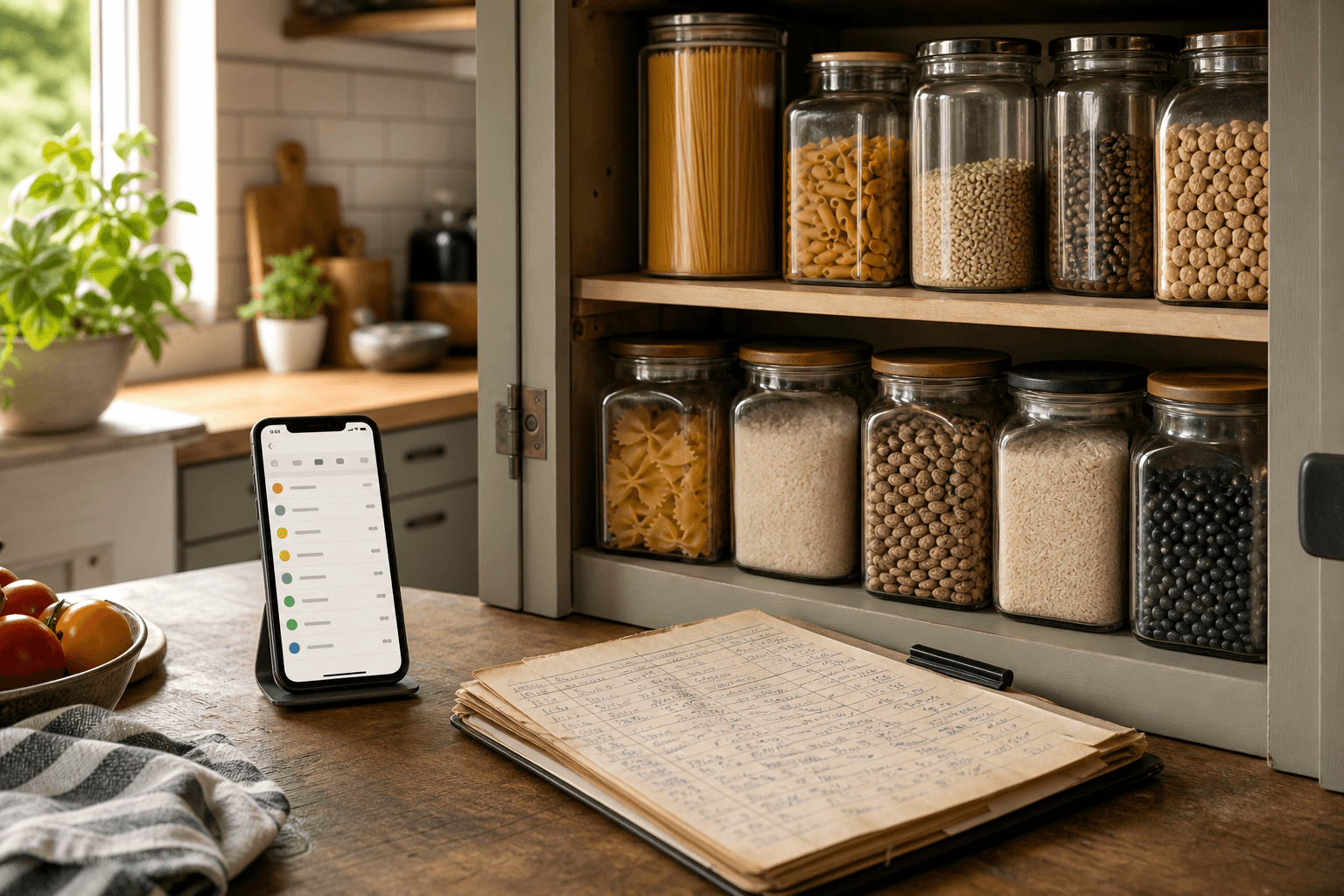
A spreadsheet works if you update it every time you shop and every time you cook, and most people stop doing that within a few weeks. An app works better for most households because it timestamps entries automatically, flags what's expiring, and matches your ingredients to recipes you can cook tonight without any extra typing.
What's different between a spreadsheet and an app
Both tools do the same basic job: they hold a running list of what's in your fridge, freezer, and pantry so you stop buying a third jar of cumin and stop finding a science experiment behind the milk. The difference shows up in maintenance, not features.
A spreadsheet is a blank page. You decide the columns, you type every entry, and you're responsible for remembering to open it. That's fine on day one, when your pantry is freshly organized and you're motivated. The trouble starts three weeks later, after a long day, when updating a spreadsheet is the last thing you want to do before dinner.
An app removes most of that friction. It timestamps what you add, calculates expiration windows for you, and puts the list in your pocket so you can check it standing in a store aisle instead of guessing whether you already have oats at home. For the basics of what to track and why it matters, our guide to how to keep a kitchen inventory covers the fundamentals either method builds on.
The EPA estimates that food waste costs the average American consumer about 728 dollars a year, or roughly 2,913 dollars for a household of four. Most of that loss happens quietly, one forgotten bag of spinach at a time, which is exactly the kind of thing a maintained inventory catches and a neglected one does not.
How to set up a pantry inventory spreadsheet
- Pick your columns. At minimum: item name, category, storage location, quantity, unit, expiration date, and date last updated.
- Do one full walkthrough. Go fridge, then freezer, then pantry shelf by shelf, and type in everything you find. Budget an hour for a typical kitchen.
- Sort by expiration date, not alphabetically, so the things you need to use first sit at the top every time you open the file.
- Set a recurring reminder. A weekly slot, ideally right after your grocery trip, is the realistic minimum. Anything less often and the list drifts from reality.
- Subtract as you cook. Update quantities the moment you use something, not from memory at the end of the week. Our guide on how to keep track of pantry inventory has a more detailed category breakdown if you want a fuller template.
How to set up a pantry inventory app
- Do the same one-time walkthrough, but scan barcodes or use search-as-you-type instead of hand-typing every item.
- Let the app date-stamp entries. Most estimate a shelf-stable expiration automatically so you're not looking up how long canned beans last.
- Check the expiring-soon view before you shop, so you buy around what's already there instead of duplicating it.
- Update from your phone in real time, while you're standing at the open fridge, not later from a notebook you'll forget about.
- Use the recipe match, if the app has one, to see what you can cook tonight without a special trip to the store.
Spreadsheet vs. app at a glance
| Factor | Spreadsheet | App |
|---|---|---|
| Setup time | An hour, plus building the template | An hour, template already built |
| Cost | Free | Free to a few dollars a month |
| Updating after a shop | Manual, easy to skip | Prompted, easier to keep up with |
| Expiration tracking | You calculate and enter dates yourself | Often auto-flagged for you |
| Recipe matching | None, you cross-reference by hand | Matches what you have to recipes |
| Access | Wherever the file lives | Phone, with you at the store or fridge |
| Best fit | Small, stable pantry; spreadsheet users who already have the habit | Active fridge and freezer, busy households, anyone who wants meal ideas from what's on hand |
Which one should you use
If your pantry is mostly shelf-stable goods you restock a few times a year, a spreadsheet is genuinely enough. Nothing is going bad fast, so a monthly glance keeps you accurate. If most of what you're tracking is perishable, our piece on how to keep track of food in your fridge goes deeper on timing for that faster-moving part of the kitchen.
For everyone else, the best system is simply the one you'll still be using in a month. Spreadsheets fail quietly: the file sits open in a browser tab, one update gets skipped, then another, and by week four it's more wrong than useful. Apps close that gap by cutting the number of steps between "I bought this" and "it's logged," which is where most people give up.
This is the gap Well Stockd is built to close. Log what you have once, and it timestamps expiration windows, flags what's about to turn, and shows you which of its recipes you can cook right now with what's already in your kitchen, including substitution suggestions when you're one ingredient short. If you're weighing whether a dedicated app is worth trying, our breakdown of the best pantry inventory app options compares what to look for beyond just barcode scanning.
Frequently asked questions
Is a spreadsheet or an app better for meal planning? An app has the edge here because it can match your actual inventory to recipes automatically. A spreadsheet only helps with meal planning if you're willing to cross-reference it against recipes by hand every time you plan a week.
Can I use a spreadsheet and an app at the same time? You can, but most households find it doubles the maintenance work for no real benefit. Pick one system as the source of truth and keep the other as a backup at most, like a printed spreadsheet taped inside a pantry door for power-outage moments.
How often do I need to update my pantry inventory to make it worth having? Weekly, at minimum, ideally right after you put groceries away and again after you cook. Less often than that and the list stops matching what's in your kitchen, which defeats the point of keeping one.
Sources: EPA, Estimating the Cost of Food Waste to American Consumers