What to Do With a Rotisserie Chicken Carcass
A rotisserie chicken carcass still has a pot of stock left in it. This piece walks through the method, how stovetop, slow cooker, and pressure cooker compare, and how long everything keeps.
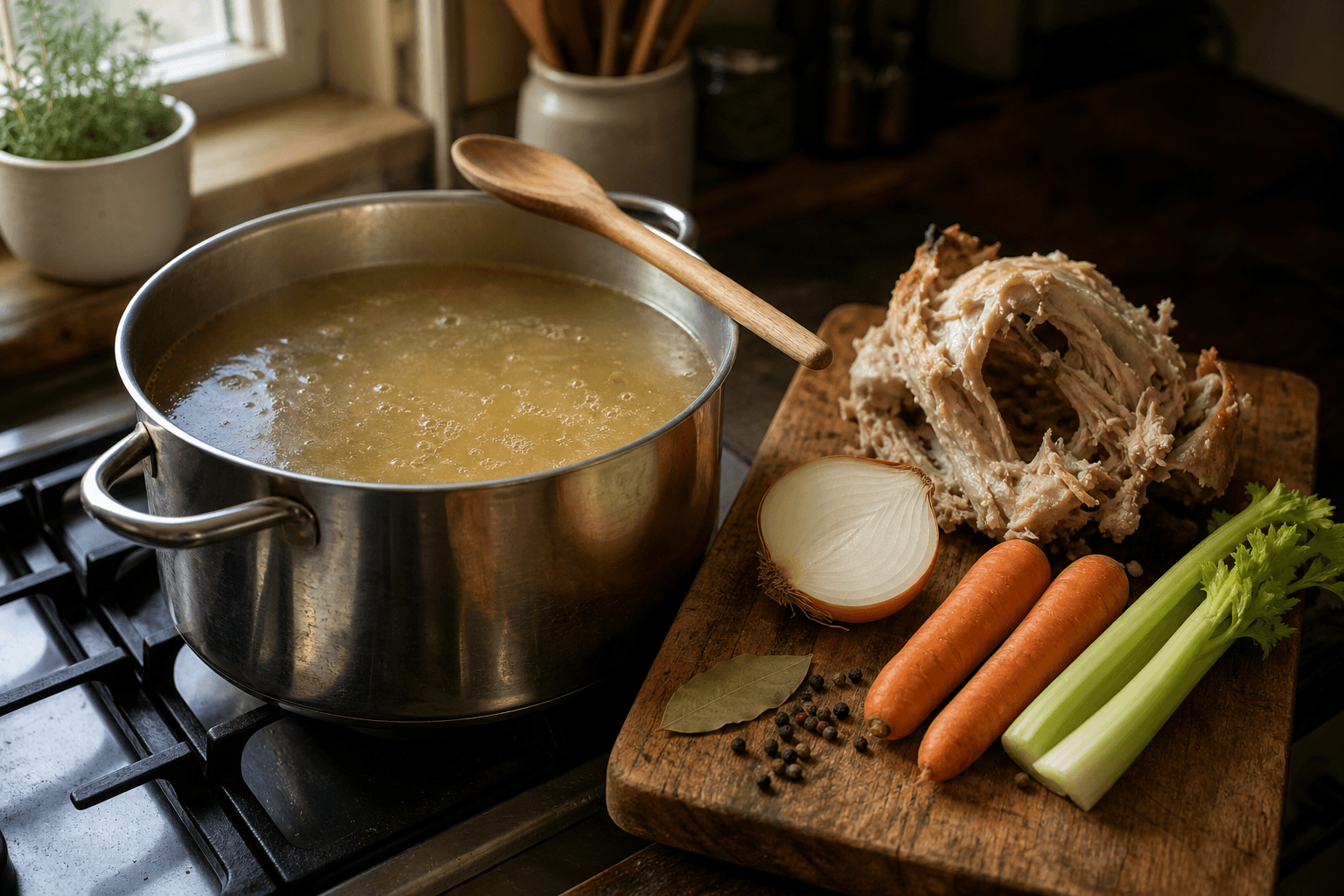
What to do with a rotisserie chicken carcass
The best use for a rotisserie chicken carcass is stock: simmer the bones with water, a few vegetable scraps, and a bay leaf for 3 to 4 hours on the stovetop, or about 90 minutes in a pressure cooker, to pull out flavor and collagen most people throw straight in the trash.
That carcass looks like garbage, but it's closer to a free ingredient. The bones still hold marrow, connective tissue, and bits of meat that turn into a thick, gelatinous stock with almost no effort beyond letting a pot simmer while you do something else. The rest of this walks through the method, how long everything keeps, and what to do with the stock once it's done.
What can you do with a rotisserie chicken carcass?
Once you've picked the meat off for sandwiches or a salad, the carcass really has three places it can go. Stock or broth is the classic move, and it gives you back the most food for the least work. If tonight isn't stock night, bag the carcass and freeze it for later. Compost or the trash works too, but only after you've pulled a batch of stock out of it first; bones that have already simmered are spent and safe to toss.
Skipping straight to the trash wastes the most food of the three, so it's worth the extra half hour if you've got a pot free.
How do you make stock from a chicken carcass?
- Break the carcass down. Pull off any big scraps of meat and set them aside, then snap or cut the carcass into two or three pieces so it fits your pot and cooks more evenly.
- Cover the bones with cold water. Put them in a stockpot, slow cooker, or pressure cooker and add just enough water to cover them by an inch or two.
- Add aromatics: a roughly chopped onion, a carrot or two, a celery stalk, a bay leaf, and a few peppercorns are all you need. Skip added salt, since rotisserie chicken is already seasoned and the stock will reduce.
- Simmer low and slow. Bring it to a bare simmer, not a rolling boil, and skim off any foam that rises in the first 15 minutes. A hard boil clouds the stock and can leave it greasy.
- Cook until it tastes like something, not just hot water. Check around the 3-hour mark; if it's still watery, give it more time.
- Strain, cool, and store. Pour through a fine mesh strainer, discard the solids, and cool the stock quickly in an ice bath before refrigerating or freezing.
Stovetop, slow cooker, or pressure cooker: which is best?
All three work. Which one makes sense for you depends on how much time you have and whether you want to babysit the pot.
| Method | Time | Water level | Notes |
|---|---|---|---|
| Stovetop | 3 to 4 hours | Cover bones by 1 to 2 inches | Easiest to skim and check on; needs occasional attention |
| Slow cooker | 8 to 10 hours, low | Cover bones by 1 to 2 inches | Set it before bed or before work and forget it |
| Pressure cooker (Instant Pot) | 45 to 90 minutes at high pressure, plus natural release | Cover bones, don't exceed the max fill line | Fastest route to a gelatinous stock loaded with collagen |
If you're short on time, the pressure cooker gets you most of the way to a good stock in under two hours. If you've got a slow afternoon or want to start it overnight, the stovetop or slow cooker will pull out more flavor with less hands-on work.
What if you cannot get to it right away?
Life happens, and stock doesn't have to happen the same night you eat the chicken. Wrap the picked-over carcass and refrigerate it, then plan to simmer it within a couple of days. If a couple of days feels optimistic, freeze the carcass in a bag or container instead. It'll keep well for a few months and thaws easily straight into the stockpot, so nothing is lost by waiting.
The same 2-hour rule that applies to any cooked food applies here: get the carcass into the fridge within 2 hours of the chicken coming off the counter (1 hour if your kitchen is above 90°F). Don't leave it out overnight.
How long is chicken stock or broth good for?
| Item | Refrigerator | Freezer |
|---|---|---|
| Leftover picked chicken meat | 3 to 4 days | 3 to 4 months |
| Unused carcass, wrapped | 1 to 2 days | 3 to 4 months |
| Finished stock or broth | 3 to 4 days | 2 to 3 months |
Freezer times are about quality, not a safety cutoff. Stock kept solidly frozen stays safe indefinitely, but it starts losing flavor and gets freezer burn after a few months, so label containers with the date and use the oldest ones first.
Other ways to use the carcass and leftover meat
Once you've got a jar of stock and whatever meat you picked off, a few easy places to put it:
- Chicken and rice soup, using the fresh stock and any scraps of meat left on the bones
- A quick ramen-style bowl with noodles, a soft egg, and the stock as the base
- Risotto or a pan sauce, where the stock does work plain water can't
- A pot pie filling, stretching a small amount of leftover meat much further
- Ice cube trays of stock, frozen flat so you can pull out just a cup at a time
For more ways to turn odds and ends into a real dinner, the what to cook with what you have hub has a broader roundup, and what's in my fridge recipe finder walks through matching random leftovers to full recipes rather than just soup.
A shortcut for what comes next
Simmering the carcass takes almost no real effort. The trickier part is remembering what else is sitting in the fridge that the stock could go with. If you log your stock, your picked chicken, and whatever vegetables are about to turn, Well Stockd can show you which of its 3,800-plus recipes you can already make with what's on hand, so that quart of homemade stock gets used before it's forgotten in the back of the freezer. You can read more about how it works on the app that suggests recipes based on ingredients you have page, or see the tell me what's in my fridge and I'll give you a recipe approach for a plainer version of the same idea.
Frequently asked questions
Can I freeze a rotisserie chicken carcass instead of making stock right away?
Yes. Bag it or wrap it well and freeze it for up to 3 to 4 months. You don't need to thaw it first: a frozen carcass can go straight into the stockpot, just with a little extra simmering time.
Is it safe to make stock from a rotisserie chicken that already has seasoning on it?
Yes, that seasoning is part of what makes rotisserie chicken stock taste so good. Just hold off on adding extra salt until the stock has reduced and you can taste how concentrated it already is.
Can I give the broth or bones to my dog?
Cooked chicken bones can splinter and aren't safe for dogs to chew. Plain broth without onion, garlic, or added salt can be an occasional treat, but skip anything made with the aromatics in this recipe unless you make a separate onion-free batch just for the dog.
Sources: FSIS, Leftovers and Food Safety, FoodSafety.gov, Cold Food Storage Chart
Track it in Well Stockd
Add what you have, see what you can cook tonight, and get a reminder before anything goes off.
