Can you freeze avocado? Yes, if you mash it first
Yes, you can freeze avocado, but only if you mash it first with a little lemon or lime juice. Whole or sliced avocado turns watery and stringy once it thaws. Below is the USDA-backed method, plus how long a batch keeps and how to thaw it.
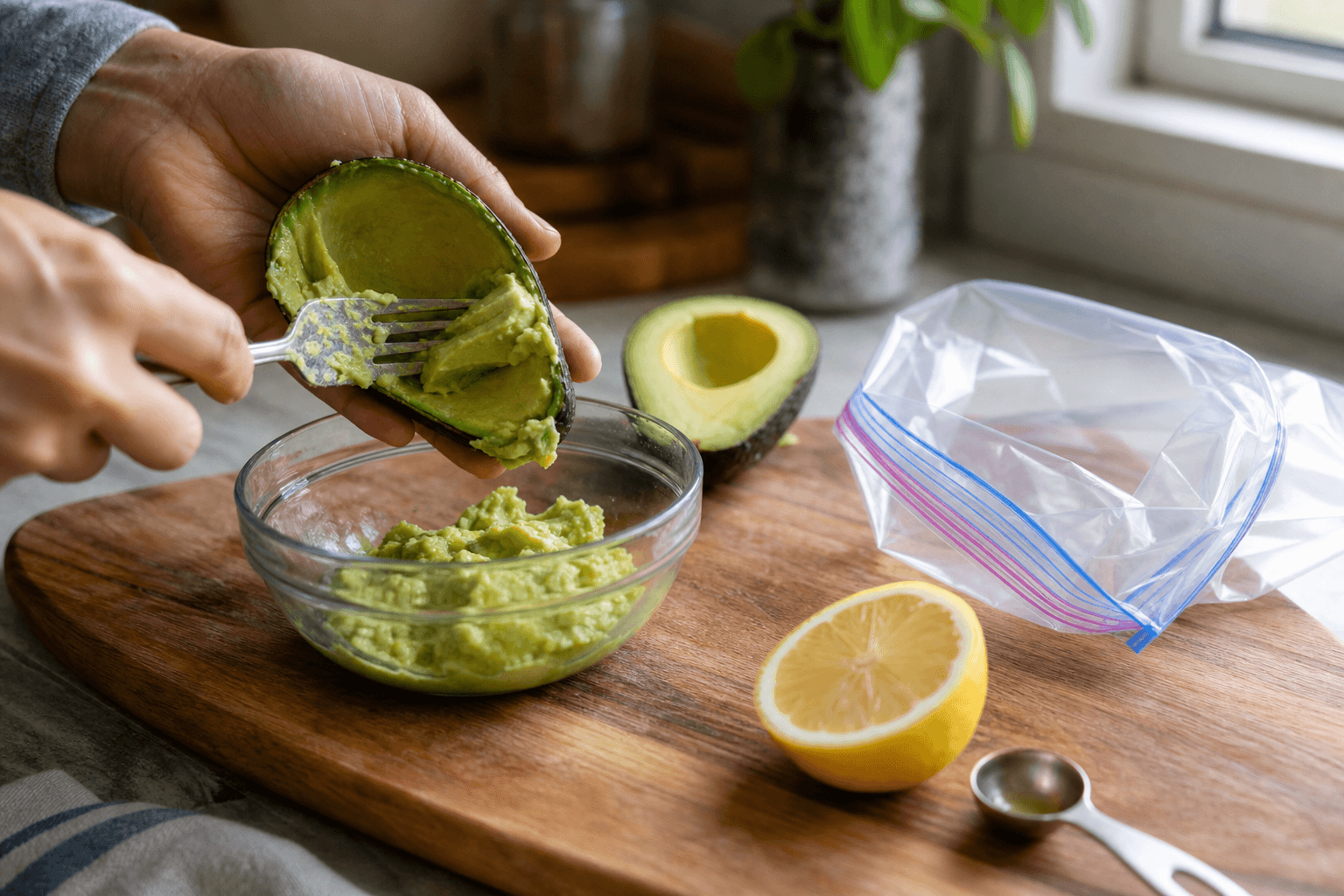
Yes, you can freeze avocado, but only if you mash or puree it first with a little lemon or lime juice. Whole or sliced avocado turns watery and stringy once it thaws, so skip that route. Frozen puree holds good quality for up to 12 months in a 0°F freezer, and it stays safe to eat indefinitely at that temperature.
Can you freeze avocado?
Yes, with one real catch: freeze it mashed, not whole and not sliced. The USDA FoodKeeper says freezing whole avocados isn't a good idea, because the flesh turns soft, watery, and stringy once it thaws. It's still safe to eat. It just won't look or feel like a fresh avocado anymore.
The fix is simple. Avocado freezes well as a smooth puree, and the National Center for Home Food Preservation, a USDA-backed resource, has a straightforward method for it. A splash of lemon or lime juice keeps the color from browning too fast, and a tight seal keeps freezer air out.
That's also why a bag of frozen sliced avocado from the grocery store looks nothing like what you'd get slicing a fresh one at home. Commercial processors use flash-freezing and additives that a home freezer can't match, which is why puree is the reliable route for home cooks.
How to freeze avocado
- Pick ripe avocados without bruises or soft spots. Overripe or bruised fruit won't improve once it's frozen.
- Halve and pit them, then scoop the flesh into a bowl.
- Mash it until smooth with a fork, or blend it. A few small lumps are fine if you're planning to use it for guacamole later.
- Add something acidic to slow browning: 1 tablespoon of lemon or lime juice for every 2 avocados, or 1/4 teaspoon (about 750 mg) of ascorbic acid per quart of puree.
- Pack it into freezer bags or rigid containers, pressing out as much air as you can. Leave a little headspace, since the puree expands slightly as it freezes.
- Label it with the date and freeze at 0°F or colder. That's the temperature the USDA recommends for keeping frozen food safe and at its best quality.
If you're freezing it as a guacamole base, stop at the puree stage and add the onion, tomato, cilantro, and salt after it thaws. Those ingredients hold a lot of water and turn mushy in the freezer.
How long avocado keeps frozen and how to thaw it
| Form | Where to store | How long | Notes |
|---|---|---|---|
| Whole, unripe | Counter | 3 to 5 days to ripen | Don't refrigerate until ripe |
| Whole, ripe | Refrigerator (40°F) | 3 to 4 days | Slows further ripening |
| Cut, with lemon juice, wrapped tightly | Refrigerator | 3 to 4 days | Best used quickly |
| Mashed puree, with lemon juice or ascorbic acid | Freezer (0°F) | Up to 12 months for best quality | Safe indefinitely if kept frozen |
| Whole or sliced | Freezer | Not recommended | Texture breaks down badly |
Kept at a steady 0°F, avocado puree stays safe to eat well past 12 months. The 12-month mark is about quality, not safety, since flavor, color, and texture start to fade after that. If you're unsure about something you've had in the freezer much longer, or it smells off or shows mold once thawed, throw it out rather than risk it.
To thaw, move the container to the refrigerator overnight, or leave it at room temperature for 30 to 60 minutes if you're in a hurry. You can also drop a frozen chunk straight into a blender for a smoothie or dressing without thawing it first. Once it's thawed, treat it like any perishable food: use it within a day or two and don't refreeze it.
What changes (texture and quality) and what to use avocado for after
Freezing ruptures the cell walls in avocado flesh, so thawed puree is noticeably softer and looser than fresh, sometimes a little watery if you skipped the acid step. That's expected, not a sign it's gone bad. It won't slice cleanly or hold its shape on toast anymore, but it still tastes like avocado and purees smoothly.
Thawed avocado puree works well in smoothies, guacamole (once you've stirred in the fresh add-ins), avocado toast spread, salad dressings, dips, and even as a butter or oil substitute in baking. It's not a good fit for anything where you want firm, sliceable avocado, like a garnish on a salad or a burger.
If you freeze avocado often, it helps to know what's already ripening on your counter before you buy more. Well Stockd's food expiration tracker app can remind you when avocados hit peak ripeness for freezing, so they don't go soft and get tossed before you get around to it.
For more on which foods handle a deep freeze well, see our full guide to freezing food safely, plus our notes on freezing cream cheese and freezing heavy cream. Both need a specific technique to freeze well too.
Frequently asked questions
Can you freeze a whole avocado? It's not recommended. The flesh turns mushy and watery once thawed, since a whole avocado has too much water and structure to survive freezing intact. Mash or puree it first instead.
Can you freeze guacamole? Best results come from freezing the plain mashed avocado base with lemon or lime juice, and leaving out watery mix-ins like tomato and onion until after it thaws. That plain base keeps for up to 12 months at 0°F, per NCHFP guidance. If you freeze already-mixed guacamole instead, USDA FoodKeeper lists it as best quality for 3 to 4 months, since the extra ingredients don't hold up as well.
Will frozen avocado turn brown? Some darkening can happen even with acid added, especially near the surface or if air got into the container. That's an oxidation and quality issue, not a safety one. If the puree also smells off or has mold on it, throw it out.
Sources: USDA FoodKeeper (via FoodSafety.gov), National Center for Home Food Preservation, USDA Food Safety and Inspection Service ("Freezing and Food Safety").
Track it in Well Stockd
Add what you have, see what you can cook tonight, and get a reminder before anything goes off.
