Can you freeze chopped onions and garlic?
Chopped onions and garlic freeze easily, and neither one needs blanching first. This guide covers how long each keeps, how to thaw them, and the best ways to use them once frozen.
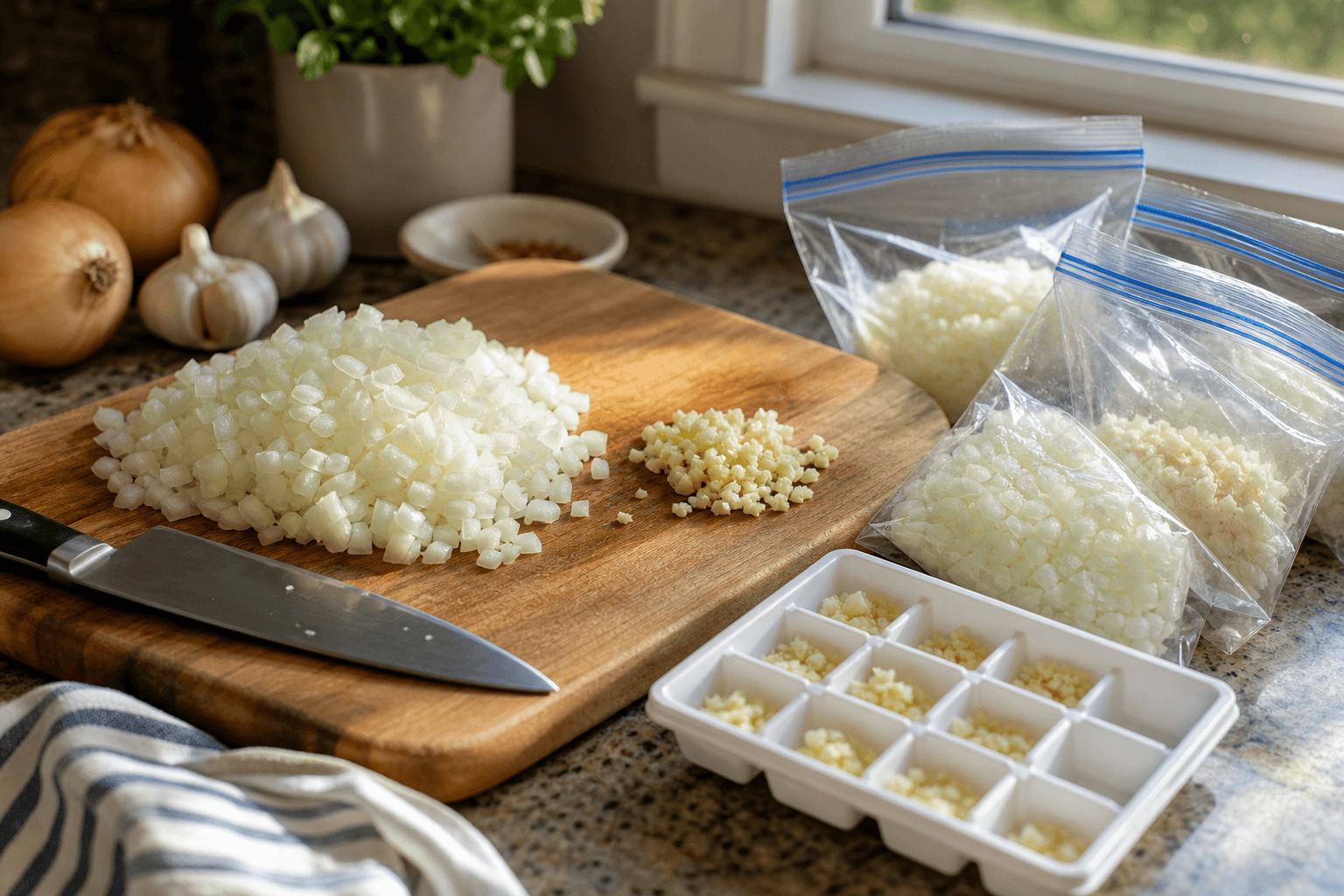
Yes, you can freeze both chopped onions and garlic, and neither one needs blanching first. Chop them, spread the pieces on a tray to flash freeze, then pack into airtight bags. Onions hold good quality for about 6 to 8 months, garlic for about 1 month, and both stay safe indefinitely once frozen at 0°F.
Can you freeze chopped onions and garlic?
Yes on both counts. Onions and garlic are two of the easiest things to freeze because you almost never blanch them first, unlike green beans or broccoli, which need a quick scald to hold their color and stop enzyme activity. You just prep them the way you'd use them in a recipe, freeze in usable portions, and pull from the freezer straight into a hot pan.
The one thing to know upfront: freezing changes the texture. Both onions and garlic soften and turn a little watery once thawed, so they work better in cooked dishes than as a raw topping. More on that below.
How to freeze chopped onions and garlic
Freezing chopped onions
- Peel the onion and scrub off any papery bits.
- Chop or dice to the size you'd normally cook with. About 1/4 to 1/2 inch pieces works well for most recipes.
- Skip the blanching. It's not needed for onions going into the freezer.
- Spread the pieces in a single layer on a parchment-lined baking sheet and freeze for 1 to 2 hours, until solid. This flash-freeze step keeps the pieces from clumping into one giant block.
- Transfer the frozen pieces to a freezer bag or airtight container, press out as much air as you can, and label with the date.
- Store at 0°F or colder.
If you're short on time, skip the tray step and go straight into a bag. The onions will freeze into a solid clump instead of loose pieces, which is fine if you're using the whole bag at once for soup or stock.
Freezing chopped garlic
- Peel the cloves.
- Mince, chop, or leave them whole, depending on how you'll use them later.
- Skip blanching here too.
- Spread minced garlic in a thin layer on a parchment-lined tray, or portion it into an ice cube tray with a small splash of water or broth, and freeze until solid.
- Pop the frozen pieces or cubes into a freezer bag, squeeze out the air, and label it.
- Store at 0°F or colder.
One caution: don't freeze garlic mixed into oil and then let the jar sit out, or hold it in the fridge for more than a few days unfrozen. Garlic is a low-acid food, and oil creates an oxygen-free environment where Clostridium botulinum, the bacteria behind botulism, can grow at room temperature or during extended fridge storage. Freezing stops that growth, but only if the mixture goes straight into the freezer and stays there. Don't rely on smell or taste to judge whether it's safe: the toxin that causes botulism doesn't change how garlic-in-oil looks, smells, or tastes, so keeping it frozen, or refrigerated for no more than about 4 days, the whole time is the only real protection.
How long chopped onions and garlic keep frozen and how to thaw them
| Food | Best quality in the freezer | Blanch first? | Thaw before cooking? |
|---|---|---|---|
| Chopped onions | 6 to 8 months | No | No, add frozen to a hot pan |
| Chopped or minced garlic | About 1 month | No | No, add frozen to a hot pan |
These are quality windows, not safety cutoffs. Food kept at a constant 0°F stays safe to eat indefinitely. Freezing just slows the flavor and texture loss over time; it doesn't stop it completely. Past the times above, your onions and garlic are still fine to eat. They'll just taste a bit flatter and may pick up some freezer burn.
You don't need to thaw either one before cooking. Add frozen onions or garlic directly to a hot pan, soup pot, or slow cooker; they'll cook through in about the same time it takes to sauté fresh, though they may release a bit more liquid as they thaw. If you do need to thaw first, say for a dip you're mixing cold, move what you need to the fridge for a few hours instead of leaving it out on the counter.
What changes (texture and quality) and what to use chopped onions and garlic for after
Freezing breaks down the cell walls in onions and garlic, so both lose their crunch and turn soft, almost translucent, once thawed. Onions can also release extra water as they defrost. Neither one works well as a raw garnish, in a fresh salsa, or on a sandwich after freezing.
Where they still work well: soups, stews, chilis, braises, sauces, stir-fries, casseroles, and anything else that starts with a sautéed base or simmers for a while. The flavor holds up fine; you're just trading crisp texture for convenience. Plenty of home cooks keep a bag of each in the freezer just for weeknight cooking, so they skip the chopping board and the watery eyes on a Tuesday.
Onions and garlic aren't the only freezer-prep staples worth having on hand. Green onions freeze too, see can you freeze green onions. Cream cheese and heavy cream both freeze too, with their own quirks around texture. For the general rules that apply to freezing any food, including safe temperatures, packaging, and how long things really last, see our full guide on freezing food.
If you're freezing in batches, it helps to label each bag with the date and use the oldest ones first. A fridge and freezer tracker like Well Stockd can flag bags that have been sitting a while, so a forgotten bag of onions doesn't end up buried behind the ice cream for a year.
Frequently asked questions
Do onions and garlic need to be blanched before freezing? No. Unlike most vegetables, onions and garlic don't need blanching before freezing. Just chop, flash freeze, and bag them up. Asparagus is another vegetable people ask about, see can you freeze asparagus without blanching.
Can you freeze garlic in oil? Yes, but only if you freeze it right away and keep it frozen until you use it. Garlic in oil left at room temperature, or stored in the fridge for more than a few days, can grow the bacteria that causes botulism, and you can't tell it's contaminated by how it looks, smells, or tastes. Freezing stops that growth, but only if the mixture goes straight into the freezer and stays there.
Can you freeze a whole onion or a whole head of garlic? You can freeze a whole peeled onion, though it takes longer to thaw and is easier to use once chopped first. Whole peeled garlic cloves freeze well, and freezing an entire unpeeled head works too, though the papery skin gets harder to peel once frozen. Keeping whole onions out of the freezer? See potatoes and onions in one bin.
Sources: USDA FSIS, Freezing and Food Safety, University of Nebraska-Lincoln Extension, Freezing Onions, National Center for Home Food Preservation, Freezing Garlic-In-Oil
Quick planning number: see the Garlic fridge shelf-life reference.
Track it in Well Stockd
Add what you have, see what you can cook tonight, and get a reminder before anything goes off.
