How to freeze fresh herbs so they still taste like something
Yes, you can freeze fresh herbs, and it's one of the easiest ways to save a bunch before it wilts. This guide covers freezing basil, parsley, and rosemary in ice cube trays or oil, how long they keep, and how to thaw them for cooking.
How to freeze fresh herbs so they still taste like something
Yes, you can freeze almost any fresh herb, and it's one of the easiest ways to save basil or cilantro before it wilts. Chop the leaves, pack into ice cube trays with water or oil, freeze solid, then bag. Flavor holds about one to two months at zero degrees.
Can you freeze fresh herbs?
Nearly every fresh herb can go straight into the freezer: soft ones like basil, parsley, cilantro, dill, and mint, and sturdier ones like rosemary, thyme, sage, and oregano. Freezing is one of the best ways to use up a whole bunch before it turns to mush in the crisper drawer, and for herbs where you care about fresh flavor, it beats drying by a wide margin.
The catch is texture, not safety. Freezing ruptures the water-filled cells inside herb leaves, so once they thaw they go soft and a bit watery. That's a non-issue for a soup, sauce, or a pan of scrambled eggs, since you'd chop and cook the herbs anyway. It does mean frozen herbs aren't a good stand-in for a fresh garnish or a raw salad topping. To keep a bunch fresh instead, see keeping a cilantro bunch fresh.
If you're new to freezing in general, our guide to what foods freeze well is a good place to start before you tackle herbs specifically.
How to freeze fresh herbs
Start by rinsing the herbs and drying them thoroughly, a salad spinner works well, or pat them dry with a towel. Wet herbs form ice crystals that make for soggier results. From there, pick a method based on what you have and how tender the herb is.
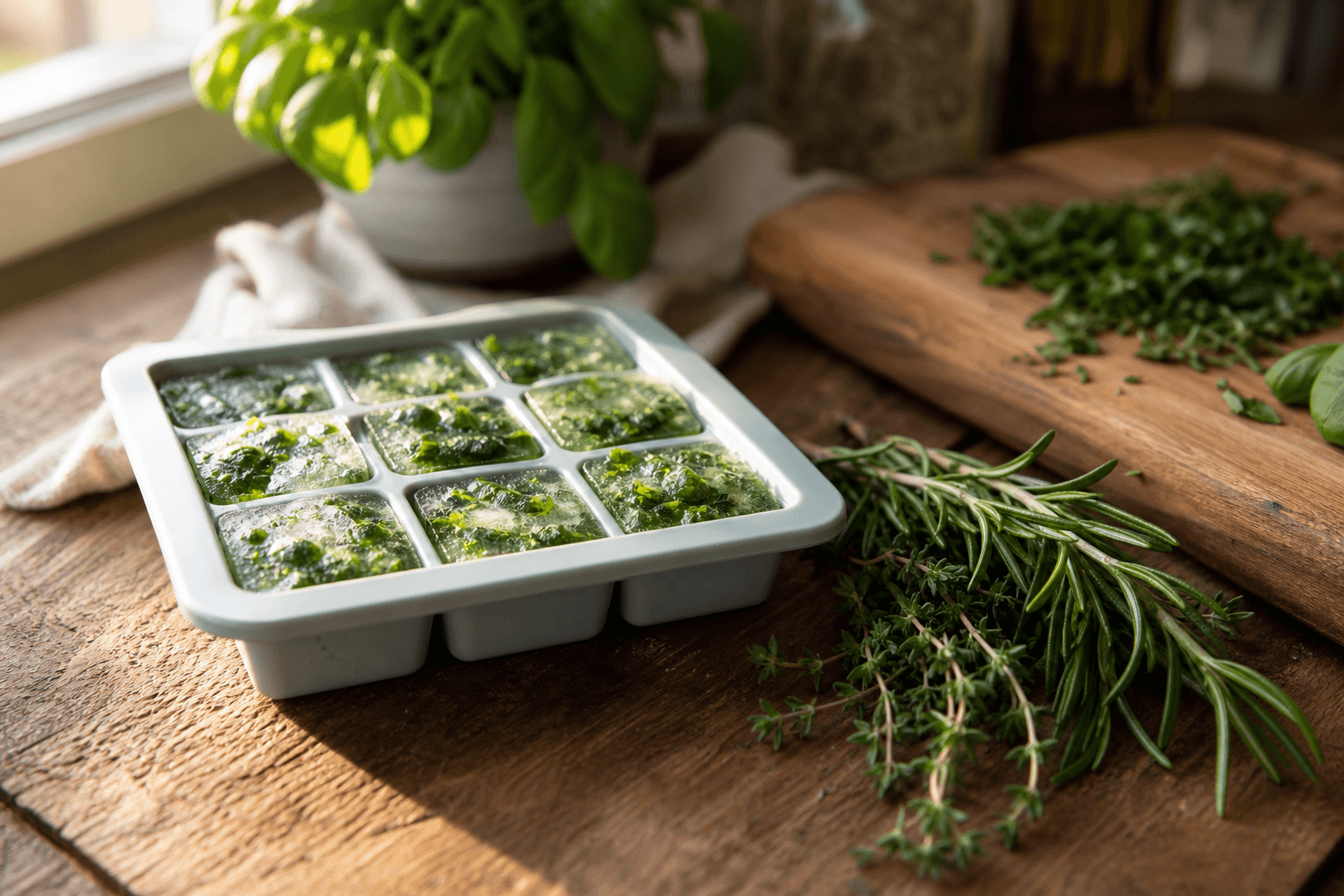
- Water ice cubes (all-purpose). Chop the herbs and pack about a tablespoon into each section of an ice cube tray. Fill with water, freeze until solid, then pop the cubes into a labeled freezer bag. These are built for soups, stews, and sauces.
- Oil ice cubes (best for color and flavor). Mix about 2 cups of chopped herbs with a third to a half cup of a neutral oil like canola, or olive oil if it fits the dish. Pack the mixture into an ice cube tray or a small jar and freeze solid. This method holds color better than water, especially for basil.
- Flash-freeze whole or chopped (best for hardy herbs). Spread rosemary, thyme, sage, or oregano in a single layer on a baking sheet and freeze for about two hours until solid, then transfer to a freezer bag or container, pressing out as much air as possible.
A couple of extra notes worth knowing. Basil blackens faster than most herbs once frozen because of an enzyme reaction in the leaves, so a quick 15-second dip in boiling water followed by an ice bath before freezing helps it hold its color, or you can skip that step and freeze it in oil instead. Strong-smelling herbs like rosemary and dill are also worth double-wrapping or keeping in their own container, because they can pass their smell to other food in the freezer. Always label bags with the herb and the date.
| Herb type | Examples | Best method |
|---|---|---|
| Tender, leafy | Basil, parsley, cilantro, mint, dill | Oil or water ice cubes; blanch basil briefly first |
| Hardy, woody | Rosemary, thyme, sage, oregano | Flash-freeze whole or chopped, no blanching needed |
| Chives | Chives | Chop fine and freeze dry in a bag, or in water cubes |
How long fresh herbs keep frozen and how to thaw them
At 0 degrees Fahrenheit, the standard home freezer temperature recommended by the USDA, herbs stay safe to eat indefinitely. Quality is a separate question. USDA FoodKeeper lists fresh herbs at one to two months in the freezer for the best color, aroma, and flavor before they start to fade.
| Method | Best-quality window | Freezer temp |
|---|---|---|
| Water ice cubes | 1 to 2 months | 0°F or below |
| Oil ice cubes | 1 to 2 months | 0°F or below |
| Flash-frozen whole or chopped | 1 to 2 months | 0°F or below |
Do not thaw frozen herbs before cooking with them. Drop the cubes or chopped leaves straight into a hot pan, a simmering soup, or a sauce, and they'll thaw in seconds as part of the dish. If a recipe calls for something like softened herb butter, thaw a small amount in the refrigerator rather than leaving it on the counter.
One safety note that matters here: an herb-and-oil mixture is only safe when it's kept cold, and refrigeration alone is a short-term fix, not long-term storage. Garlic or herb-in-oil mixtures left at room temperature, or refrigerated for more than 4 days, can let Clostridium botulinum grow, because the oil blocks oxygen much the way a sealed can does, without changing the taste or smell of the oil. For anything you won't use within a few days, keep the mixture in the freezer instead and thaw only what you plan to use right away. When in doubt about how long an oil and herb mix has been sitting out, throw it out.
What changes (texture and quality) and what to use fresh herbs for after
Expect softer, slightly watery herbs once they thaw, because ice crystals break down the cell walls that give fresh leaves their snap. Tender herbs like basil can also darken without blanching or the protection of oil, while hardy herbs like rosemary and thyme hold their color and structure much better through the freeze and thaw cycle. Aroma generally survives well, sometimes even seeming stronger right after thawing, since the ruptured cells release their oils faster.
Because of the texture change, frozen herbs are best saved for dishes where you were going to cook them anyway: soups, braises, pan sauces, marinades, scrambled eggs, roasted vegetables, and compound herb butter all work well. An oil cube of basil or parsley melts straight into a warm pan sauce or a pot of pasta with almost no extra step. If you're building out a fuller herb-and-cream sauce with what you have thawed, it helps to know that heavy cream freezes differently than you might expect, and the same goes for cream cheese if you're stirring herbs into a spread.
Freezing is a solid backstop for a bunch of herbs you know you won't get to in time. An app that tracks food expiration dates can help even more upstream, by flagging that bunch of cilantro or dill while it's still good to use fresh, so freezing becomes the backup plan rather than the only plan.
Frequently asked questions
Do I need to blanch herbs before freezing? No, not for most of them. Hardy herbs like rosemary, thyme, and sage freeze fine raw. Basil is the main exception, since a quick 15-second dip in boiling water followed by an ice bath helps it hold its color, though freezing it in oil instead works too.
Can I freeze herbs still on the stem? Hardy herbs like rosemary and thyme can go into the freezer whole, stems and all, and you can strip the frozen leaves off with your fingers when you need them. Soft herbs like basil and cilantro are easier to use later if you strip the leaves from the stems before freezing.
Is it safe to freeze herbs in oil? Yes, and it's the safest way to store herbs mixed with oil for more than a few days. Never leave a garlic or herb-in-oil mixture at room temperature, and don't keep it in the refrigerator longer than 4 days, since Clostridium botulinum can grow in that low-oxygen environment without any obvious sign. For longer storage, freeze the mixture and thaw only what you need.
Sources: National Center for Home Food Preservation, freezing fresh herbs, Penn State Extension, freezing herbs, University of Minnesota Extension, preserving herbs by freezing or drying, Ohio State University Extension, preserving herbs, USDA, can you get botulism from garlic in oil
Track it in Well Stockd
Add what you have, see what you can cook tonight, and get a reminder before anything goes off.
