Can you freeze raw potatoes? Blanching steps and freezer times
Raw potatoes freeze fine once you blanch them first. Skip that step and they turn dark, watery, and grainy after thawing. Blanch, pack, and freeze them right and they'll hold good quality for eight to twelve months.
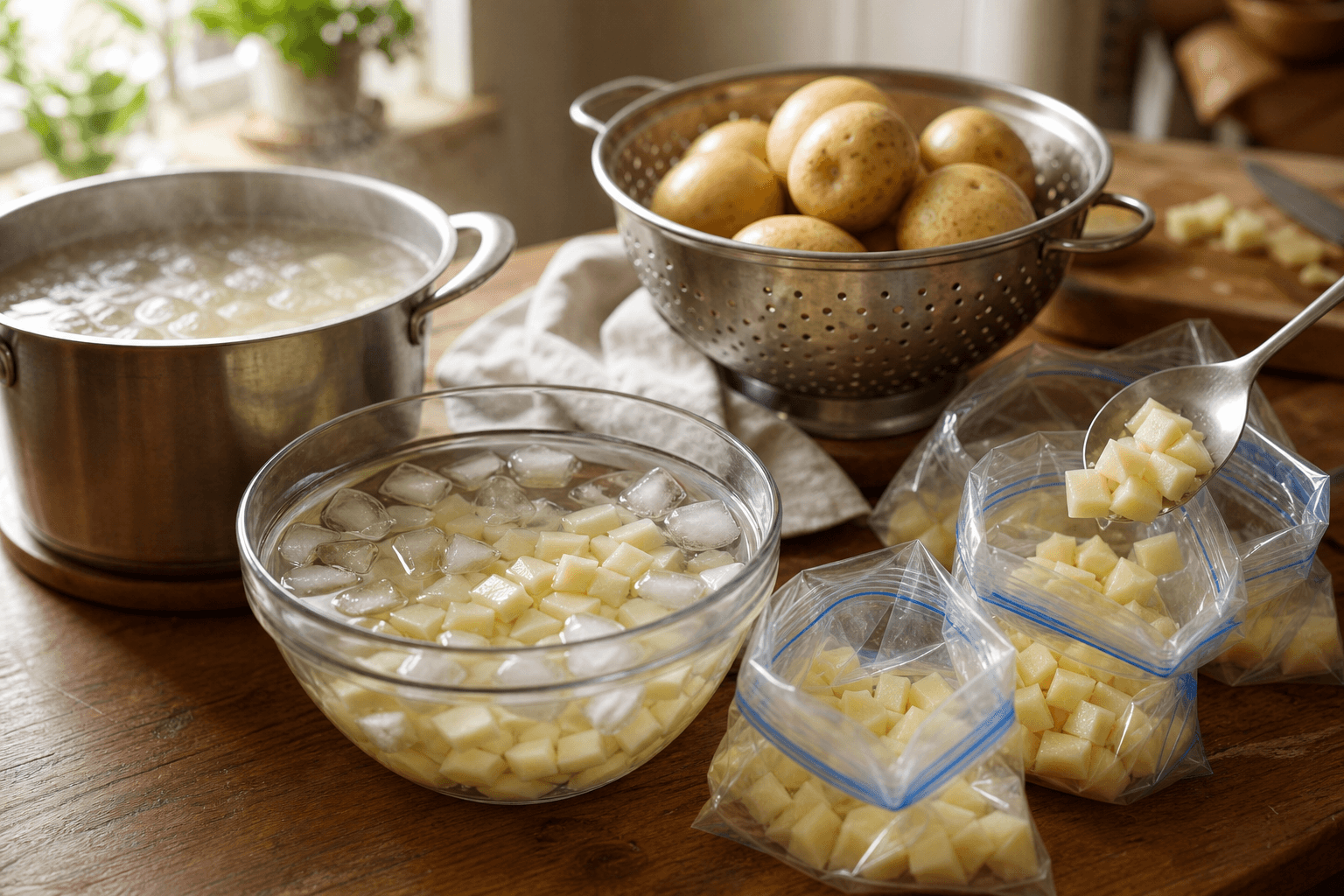
Yes, but only after blanching. Raw, unblanched potatoes turn dark, watery, and grainy once thawed, because ice crystals rupture their cells and separate the starch from the water. Blanch and cool them first and they will keep their texture in the freezer for eight to twelve months.
Can you freeze raw potatoes?
Technically you can put raw potatoes in the freezer, but if you skip blanching you will not like the result. Potatoes are mostly water held together by starch. When that water freezes, the ice crystals tear through the cell walls, and as the potato thaws the starch and water separate. What comes out is soft, weeping, and often gray or black in the center, according to Penn State Extension. To keep them fresh instead, see whether potatoes and onions can share storage.
Blanching, a quick dunk in boiling water followed by an ice bath, stops the enzyme activity that causes that discoloration and mushiness. It's the same reason blanching comes first for almost every vegetable you freeze at home, and it's the step that turns "can you freeze raw potatoes" from no into yes, provided you're willing to do a little prep first. If you only need cut raw potatoes to hold in the freezer for a couple of days before a specific recipe, skipping the blanch will not make them unsafe. For real freezer storage, though, always blanch first.
How to freeze raw potatoes
The National Center for Home Food Preservation and Penn State Extension recommend this method for freezing raw potatoes at home.
- Wash and prep. Scrub the potatoes. Peel if you like, then cut into cubes, wedges, or shreds, or leave small new potatoes whole.
- Blanch in boiling water. Cut or diced pieces need about 3 to 5 minutes in a full rolling boil. Small whole new potatoes (under about 1.5 inches) need 4 to 6 minutes, and larger whole potatoes need 8 to 10 minutes, so the center heats through completely. An undercooked center is what turns dark later.
- Cool immediately. Plunge the potatoes into a bowl of ice water for the same amount of time you blanched them, to stop the cooking.
- Drain and dry well. Shake off excess water and pat dry with a clean towel. Extra water means extra ice crystals and a mushier texture.
- Flash freeze, if you want loose pieces. Spread cubes, wedges, or shreds on a tray in a single layer and freeze until solid, about 1 to 2 hours, so they do not clump into one block.
- Pack and label. Transfer to freezer bags or rigid containers, pressing out as much air as possible. Leave about half an inch of headspace in rigid containers. Label with the date.
- Freeze at 0°F or below right away for the best texture.
How long raw potatoes keep frozen and how to thaw them
Properly blanched and packed, potatoes hold good quality for a solid stretch of freezer time. Because a freezer set to 0°F keeps food safe indefinitely, per the USDA Food Safety and Inspection Service, these numbers are about taste and texture, not safety.
| Form | Freezer time for best quality |
|---|---|
| Blanched cubes, wedges, or shredded raw potatoes | 8 to 12 months |
| Cooked or mashed potatoes | A few weeks for best flavor and texture |
| Stuffed baked potatoes | 2 to 4 weeks |
| Homemade French fries (par-cooked, then frozen) | 3 to 6 months |
You do not need to thaw frozen potatoes before cooking. Drop cubed or whole small blanched potatoes straight into boiling water or soup and simmer about 15 minutes, or bake frozen fries and hash browns straight from the freezer at a high heat until golden. If a recipe does call for thawed potatoes, use one of the three methods the USDA considers safe for any frozen food: in the refrigerator, submerged in cold water that you change every 30 minutes, or in the microwave if you are cooking immediately after. Never thaw potatoes on the counter at room temperature.
What changes (texture and quality) and what to use raw potatoes for after
Even with a good blanch, frozen and thawed potatoes are never quite like fresh ones. The texture softens and turns slightly grainy, since some of the cell structure that gave a raw potato its firm bite is gone for good. That makes them a poor match for dishes where a crisp, sliceable potato matters, like scalloped potatoes, potato salad, or thin roasted rounds.
Frozen potatoes work best anywhere they get simmered, mashed, or fried afterward. Soups, stews, chowders, hash, shepherd's pie filling, and homemade fries or hash browns all hide the softer texture well, and you skip the peeling and chopping later too. Mashed potatoes, especially versions loaded with butter or cream, tend to freeze and reheat better than plain boiled or roasted potatoes because the fat helps mask the texture change. If you freeze a batch enriched with dairy, see our guides on whether you can freeze heavy cream and whether you can freeze cream cheese for how those specific ingredients hold up. Already-baked potatoes have their own uses, see leftover baked potato ideas.
For the full rundown on which foods freeze well and which do not, start with our guide to freezing food. If dairy add-ins are part of your potato dish, check out can you freeze heavy cream and can you freeze cream cheese before you portion things into the freezer. And once those blanched cubes or fries are labeled and stacked in the freezer, an app that tracks food expiration dates like Well Stockd can log the freeze date for you, so you know at a glance when that eight to twelve month quality window is closing.
Frequently asked questions
Can you freeze raw potatoes without blanching? You can, but they will not hold up well over real freezer storage time. Skipping the blanch leaves the enzymes active, so the potatoes are more likely to darken, turn grainy, and lose flavor by the time you use them. A quick blanch and ice bath first solves this.
Why did my frozen potatoes turn black or gray? It usually means you did not blanch them long enough, or a whole potato did not heat all the way through to the center before freezing. The enzyme responsible for browning was still active when the potatoes went into the freezer.
Can you freeze mashed or cooked potatoes? Yes. Mashed potatoes, especially ones made with butter or cream, generally freeze and reheat better than plain boiled potatoes because the added fat helps smooth out the texture change. Cool them fully before packing and freezing.
Sources: National Center for Home Food Preservation, Freezing New Irish Potatoes, Penn State Extension, Freezing Potatoes, USDA Food Safety and Inspection Service, Freezing and Food Safety
Quick planning number: see the Potatoes fridge shelf-life reference.
Track it in Well Stockd
Add what you have, see what you can cook tonight, and get a reminder before anything goes off.
