How long do sun-dried tomatoes in oil last after opening?
Opened sun-dried tomatoes in oil last 3 to 6 months in the refrigerator, according to USDA guidance, as long as the tomatoes stay fully covered in oil. This guide covers safe storage, how to spot spoilage, and when to toss the jar.
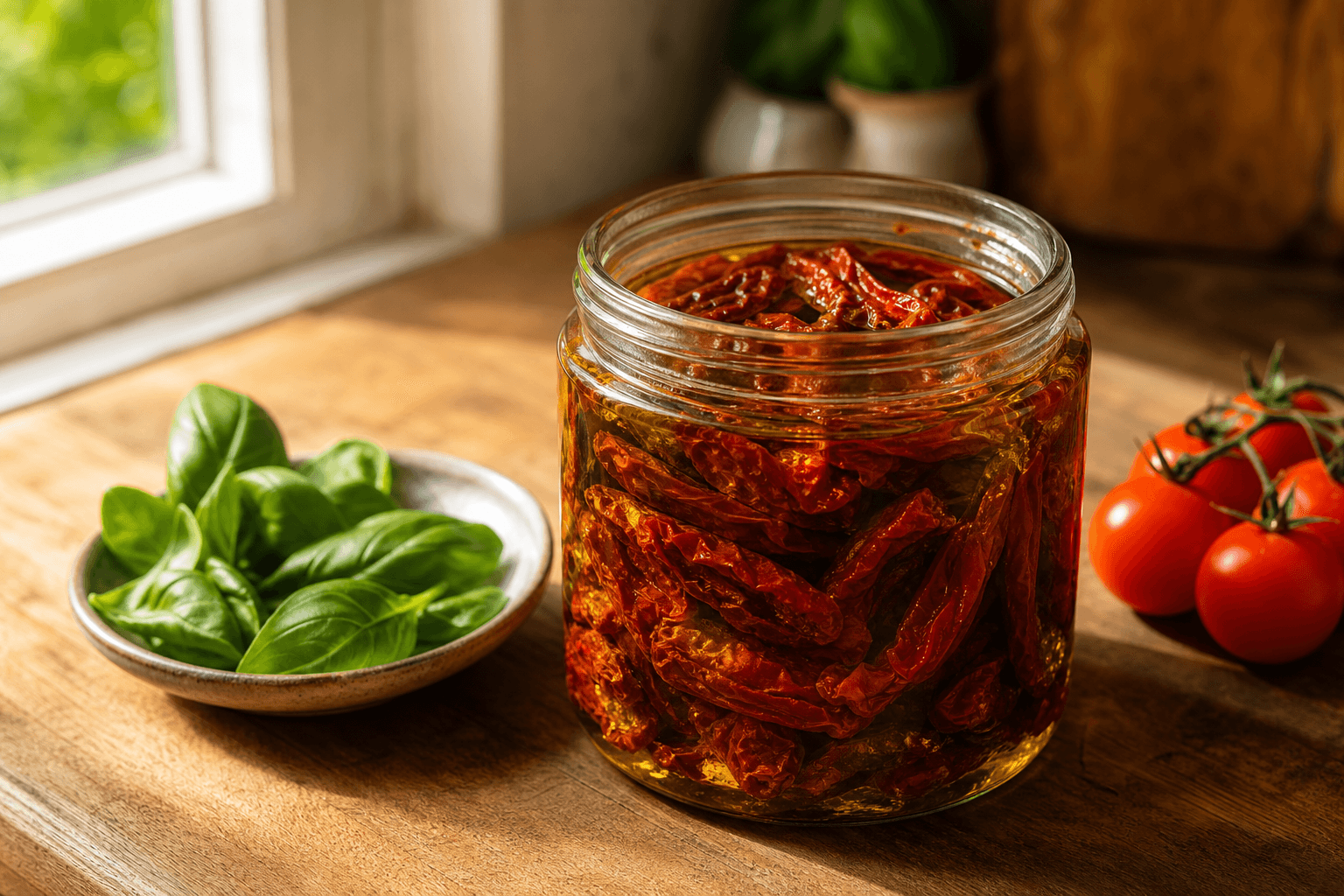
Once you open a jar of sun-dried tomatoes packed in oil, USDA's FoodKeeper guidelines say they keep for 3 to 6 months in the refrigerator, as long as every tomato stays fully submerged under the oil. Unopened, the same jar is good for about a year in the pantry.
Leave the jar out on the counter, or let tomatoes poke above the oil line, and that window shrinks fast.
How long do sun-dried tomatoes in oil last after opening?
The exact number depends on whether the jar is store-bought or something you put together yourself at home. Commercial jars go through processing that makes them shelf-stable while sealed. Homemade versions do not have that same safety margin, so the rules are stricter.
| Sun-dried tomatoes in oil | How long it lasts |
|---|---|
| Unopened jar, in the pantry | About 1 year, or the date on the label |
| Opened jar, refrigerated, tomatoes fully submerged in oil | 3 to 6 months |
| Opened jar, left at room temperature | Not recommended. Refrigerate right after opening for safety and quality |
| Homemade tomatoes packed in oil, skins removed, without added garlic or herbs | Up to 4 days, refrigerated |
That last row surprises people. If you slice fresh tomatoes, dry them yourself, and cover them in oil at home, you are working with a different food safety profile than a factory-sealed jar. Extension food safety specialists warn that oil creates a low-oxygen environment where Clostridium botulinum, the bacteria behind botulism, can grow and produce toxin, especially once fresh garlic or herbs are added to the mix. A homemade jar needs to be refrigerated and used within days, not months, unless you follow a tested, properly acidified recipe.
How to tell if sun-dried tomatoes in oil have gone bad
Check for these signs before you use a jar that has been open a while:
- Mold, which can look fuzzy, white, black, or greenish on the tomatoes or the surface of the oil
- A sour, rancid, or otherwise off smell when you open the jar
- Sliminess or a noticeable change in texture on the tomatoes
- Bubbling, fizzing, or a swollen lid, any of which can signal gas from bacterial growth
- Tomatoes that have dried out or darkened where they sat exposed above the oil line
One important caveat: some spoilage, including the toxin that causes botulism, does not always smell or look wrong. That is why the time-based guidance matters more than a sniff test here. If a jar has been open longer than 6 months, treat it as done even if nothing looks off.
How to store sun-dried tomatoes in oil so they last
- Refrigerate the jar as soon as you open it, even though the unopened product is shelf-stable at room temperature
- Keep every tomato fully submerged under the oil. Anything poking above the surface is exposed to air and more likely to grow mold
- Top the jar off with a little fresh olive oil if the level drops below the tomatoes
- Use a clean fork or spoon each time you dip into the jar, and avoid letting it touch other foods first
- Do not add fresh garlic or herbs to a store-bought jar. That turns a shelf-stable product into a homemade one with a much shorter, refrigerator-only window
- Expect the oil to turn cloudy or solidify in the fridge. That is normal; olive oil firms up below about 40 degrees Fahrenheit and turns liquid again once it warms
For a broader look at how long other opened jars, staples, and leftovers hold up, our guide to how long food lasts in the fridge and pantry covers the full range. Sun-dried tomatoes in oil outlast a lot of what shares fridge space with them. Cooked rice, for comparison, only holds up about three to four days, and raw chicken needs to be used within a day or two of opening the package.
Can you freeze sun-dried tomatoes in oil?
You can, though most people do not need to since an opened jar already lasts 3 to 6 months in the fridge. If you do want to freeze sun-dried tomatoes in oil, drain the tomatoes out first and pat them dry. Oil does not freeze solid, and freezing it in the jar can cause separation and a grainy texture once thawed. Freeze the drained tomatoes in a small container or freezer bag instead, and expect them to soften further after thawing, so they work best stirred into a cooked dish rather than served straight from the freezer.
When in doubt
USDA food safety guidance boils down to one rule for cases like this: when in doubt, throw it out. If a jar has been open longer than 6 months, if tomatoes were left exposed above the oil for an extended stretch, or if anything about the color, smell, or texture seems off, do not taste it to check. The organisms behind the most serious illness linked to oil-packed foods do not reliably announce themselves with a bad smell.
If keeping track of open dates on jars like this feels like one more thing to remember, an app like Well Stockd can log when you opened it and remind you before the window closes.
Same fridge shelf, same rules: opened pesto follows a near-identical oil-jar clock.
Frequently asked questions
Do you have to refrigerate sun-dried tomatoes in oil after opening?
Yes. Even though an unopened jar can sit in the pantry for about a year, opening it breaks the seal that keeps it shelf-stable. Refrigerate it right away and keep the tomatoes submerged in oil.
Is it safe to add fresh garlic or herbs to a jar of sun-dried tomatoes in oil?
No, not without a tested, properly acidified recipe. Fresh garlic and herbs added to oil at home create the kind of low-oxygen, low-acid environment where botulism-causing bacteria can grow. If you want that flavor, add fresh garlic or herbs to the dish when you cook, not to the storage jar.
Why did the oil turn cloudy or solid in the fridge?
That is normal. Olive oil solidifies at refrigerator temperatures, usually below about 40 degrees Fahrenheit, and turns clear again once it warms up. It is not a sign the jar has gone bad.
Sources: USDA FoodKeeper app, FoodSafety.gov; Oregon State University Extension Service via Ask Extension, "Packing dried tomatoes in oil".