Foods you didn't know you could freeze
Turns out you can freeze cracked eggs, milk, butter, hard cheese, fresh herbs, ginger, bananas, cooked rice and pasta, and even whipped topping. Here is how long each one lasts frozen and how to thaw it, straight from USDA FoodKeeper data.
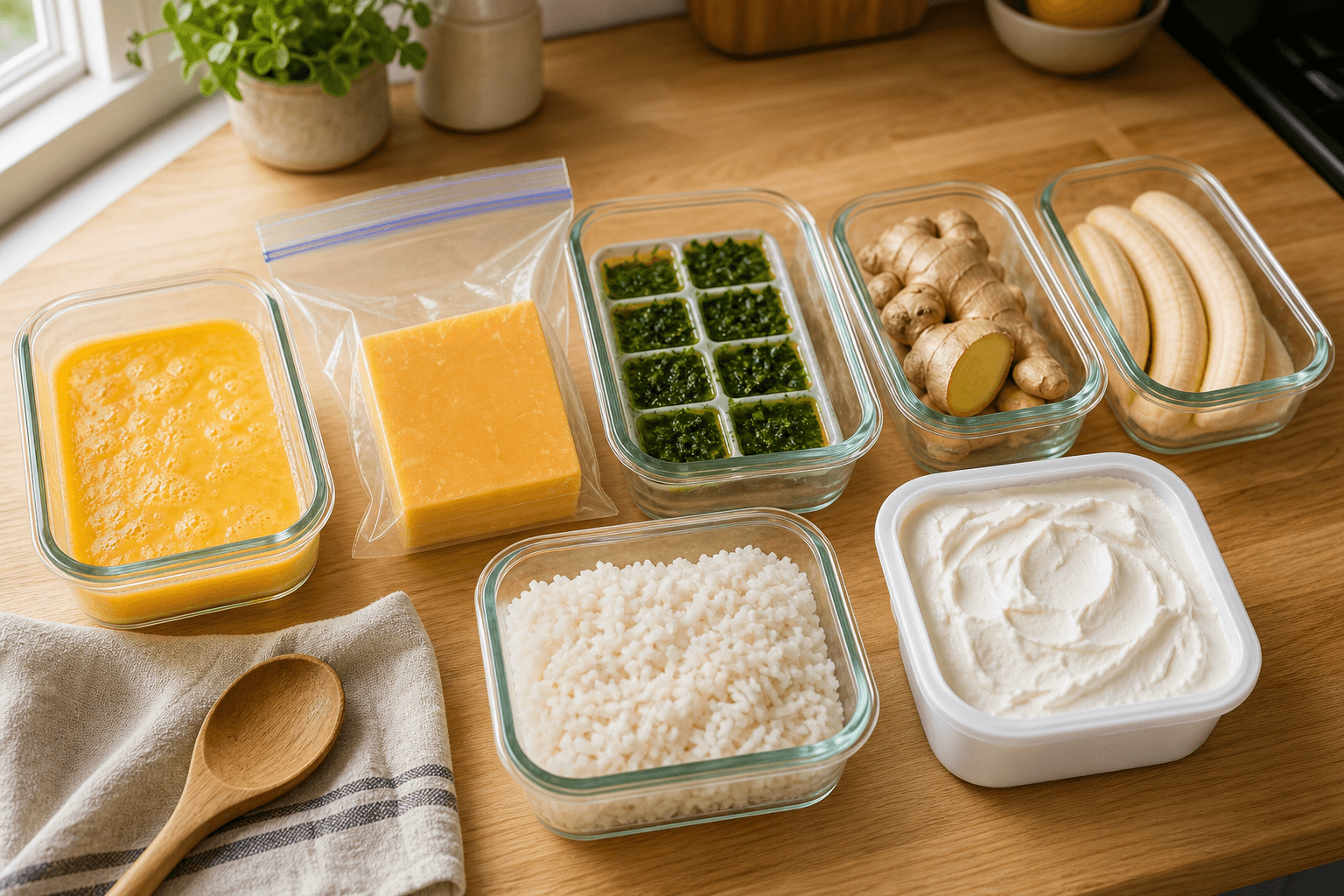
Yes. Dozens of foods most people write off as freezer failures hold up just fine, including cracked eggs, milk, butter, hard cheese, fresh herbs, ginger, bananas, cooked rice and pasta, and even tubs of whipped topping. Prep each one the right way, and you can buy yourself months of extra time before any of it goes to waste.
Can you really freeze all these foods?
Yes, and the list is longer than most people expect. Freezing works by slowing the growth of bacteria, yeast, and mold, and by pausing the enzyme activity that makes food break down over time. That protection does not care whether a food "seems" freezable. According to the USDA FoodKeeper, foods like whisked eggs, milk, hard and soft cheese, fresh herbs, ginger, bananas, cooked rice, and cooked pasta all freeze safely for weeks to months.
The confusion usually comes from a small group of foods that genuinely struggle in the freezer, and those get turned into blanket advice that "nothing freezes well." Cream cheese is a good example. It is safe to freeze, but the USDA FoodKeeper lists it as a food that does not freeze well, because it turns grainy and watery once thawed. Our full guide on freezing cream cheese covers how to get a usable result anyway. Whole eggs still in the shell, mayonnaise, and watery vegetables like lettuce and cucumber fall into that same do-not-freeze category. Everything else on this list is a genuine freezer win. For a broader breakdown of what freezes well and what does not, see our guide to freezing food.
How to freeze these foods
The prep is a little different for each food, but the same basic steps apply across the board.
- Cool it down first. Never put warm food straight into the freezer. It raises the temperature around it and can start to thaw whatever is stored nearby.
- Portion it out. Freeze in amounts you will use, whether that is a tablespoon of chopped herbs or a single cup of cooked rice.
- Pack out the air. Air causes freezer burn. Press plastic wrap directly onto soft foods, or use a freezer bag with the air squeezed out.
- Leave room for liquids to expand. Milk and buttermilk grow as they freeze, so leave about an inch of headspace in the container.
- Label it. Write the food and the date on the container or bag, and use the oldest items first.
- Freeze it fast, at 0°F or below. A quick, cold freeze keeps ice crystals small, which protects texture better than a slow freeze.
Here is how to prep each food before it goes in the freezer.
| Food | How to prep it for the freezer |
|---|---|
| Eggs, cracked out of the shell | Whisk the whole egg together (never freeze eggs still in the shell), then pour into a freezer container or ice cube tray |
| Butter | Leave it in its original wrapper, or overwrap in foil or a freezer bag |
| Milk | Pour into a freezer-safe container, leaving about an inch of headspace |
| Buttermilk | Freeze in a freezer container, or in ice cube trays for smaller, recipe-ready portions |
| Hard cheese (cheddar, swiss, parmesan) | Shred it first, or wrap the block tightly in freezer paper or a freezer bag |
| Soft cheese (brie, goat cheese, fresh mozzarella) | Wrap tightly in plastic wrap, then a layer of foil or a freezer bag |
| Fresh herbs | Chop and freeze in olive oil in an ice cube tray, or freeze whole leaves on a tray before bagging |
| Fresh ginger | Freeze the whole root unpeeled in a freezer bag |
| Bananas | Peel first, then freeze whole, sliced, or mashed in a freezer bag |
| Cooked rice | Spread it on a tray to cool quickly, then pack it flat in sealed freezer bags |
| Cooked pasta | Cook it slightly firmer than usual, toss with a little oil, then freeze in portions |
| Hummus | Skip it: USDA FoodKeeper does not recommend freezing hummus |
| Whipped topping (tub) | Freeze right in its original tub, or portion it into a smaller freezer container |
How long these foods keep frozen and how to thaw them
These times come from the USDA FoodKeeper and reflect best quality, not a safety cutoff. Food held at 0°F or below stays safe to eat indefinitely, but it slowly loses texture and flavor the longer it sits.
| Food | Freezer time (USDA FoodKeeper) | Best way to thaw |
|---|---|---|
| Eggs, cracked and whisked | 12 months | Thaw overnight in the refrigerator |
| Butter | 6 to 9 months | Thaw in the refrigerator or at room temperature |
| Milk | 3 months | Thaw in the refrigerator, then shake or stir well |
| Buttermilk | 3 months | Thaw in the refrigerator, then stir before using |
| Hard cheese (cheddar, swiss, parmesan) | 3 to 6 months | Thaw in the refrigerator |
| Soft cheese (brie, goat cheese, fresh mozzarella) | 6 months | Thaw in the refrigerator |
| Fresh herbs | 1 to 2 months | Use straight from frozen, no need to thaw |
| Fresh ginger | 6 months | Grate or slice straight from frozen |
| Bananas, peeled | 2 to 3 months | Thaw in the refrigerator, or blend straight from frozen |
| Cooked rice | 6 months | Reheat straight from frozen with a splash of water |
| Cooked pasta | 1 to 2 months | Reheat straight from frozen in sauce or boiling water |
| Hummus, plain and pasteurized | Not recommended by USDA FoodKeeper | Not applicable |
| Whipped topping (tub) | 14 months | Thaw in the refrigerator |
Once any of these thaw, treat them like fresh, perishable food. Reheat cooked items like rice and pasta until they are steaming hot throughout, use the rest within a few days, keep everything refrigerated in the meantime, and never thaw on the counter at room temperature. If a thawed item smells off or looks strange, throw it out.
What changes (texture and quality) and what to use these foods for after
Freezing does not ruin these foods, but it does change some of them. Here is what to expect once they thaw, and where each one works best.
Dairy and eggs hold up well overall. Milk and buttermilk separate and look grainy after thawing, which is normal and mostly fixes itself with a good shake or stir. Save them for cooking, baking, or smoothies rather than drinking straight from the glass. Cracked eggs freeze beautifully and scramble, bake, and whisk into batters just like fresh ones. Hard and soft cheeses turn a little crumbly or mealy, so they work better melted into sauces or grated over a hot dish than sliced for a cheese board. Whipped topping softens slightly but still works fine spooned over dessert or folded into a no-bake recipe. Heavy cream freezes too, though it takes a bit more care. Our guide on freezing heavy cream walks through the details.
Herbs, ginger, and produce lose their fresh, crisp look in the freezer, so plan to cook with them rather than use them as a garnish. Ginger gets more convenient once frozen, since you can grate it straight from the freezer without peeling first. Bananas turn dark and soft, so they're perfect for banana bread or a smoothie, not for slicing over cereal. Cut fruit softens the same way and is best blended, baked, or simmered into a sauce after it thaws.
Grains and pasta travel well. Cooked rice and pasta hold their shape and reheat quickly for a fast bowl, stir-fry, or casserole filler. If a sheet of pastry is in your freezer, see what to make with puff pastry.
If your freezer is already filling up with odds and ends like this, an app that tracks food expiration dates can help you keep tabs on what went in and when, so nothing sits forgotten until it's past its best.
Frequently asked questions
Is it safe to freeze eggs, milk, and other dairy? Yes. Freezing does not make these foods unsafe, it just changes their texture. As long as they were fresh and handled properly before they went into the freezer, they are fine to freeze and use later.
Does freezing kill bacteria or make old food safe again? No. Freezing at 0°F or below stops bacteria from multiplying, but it does not kill it, and it will not undo spoilage that already started. Only freeze food that was fresh and stored safely to begin with.
What foods should you avoid freezing? Whole eggs still in the shell, mayonnaise, cream cheese, sour cream, and watery produce like lettuce and cucumber do not hold up well. For cucumbers, see can you freeze cucumbers. Freezing turns them watery or grainy, so they are better used fresh.
Sources: USDA FoodKeeper, FSIS: Freezing and Food Safety, FoodSafety.gov: Cold Food Storage Chart.
Track it in Well Stockd
Add what you have, see what you can cook tonight, and get a reminder before anything goes off.
