How long do hard boiled eggs last in the fridge?
Hard boiled eggs last about a week in the fridge, peeled or in the shell, according to USDA guidance. Here's how to store them properly, spot the signs they've gone bad, and know when it's time to toss them.
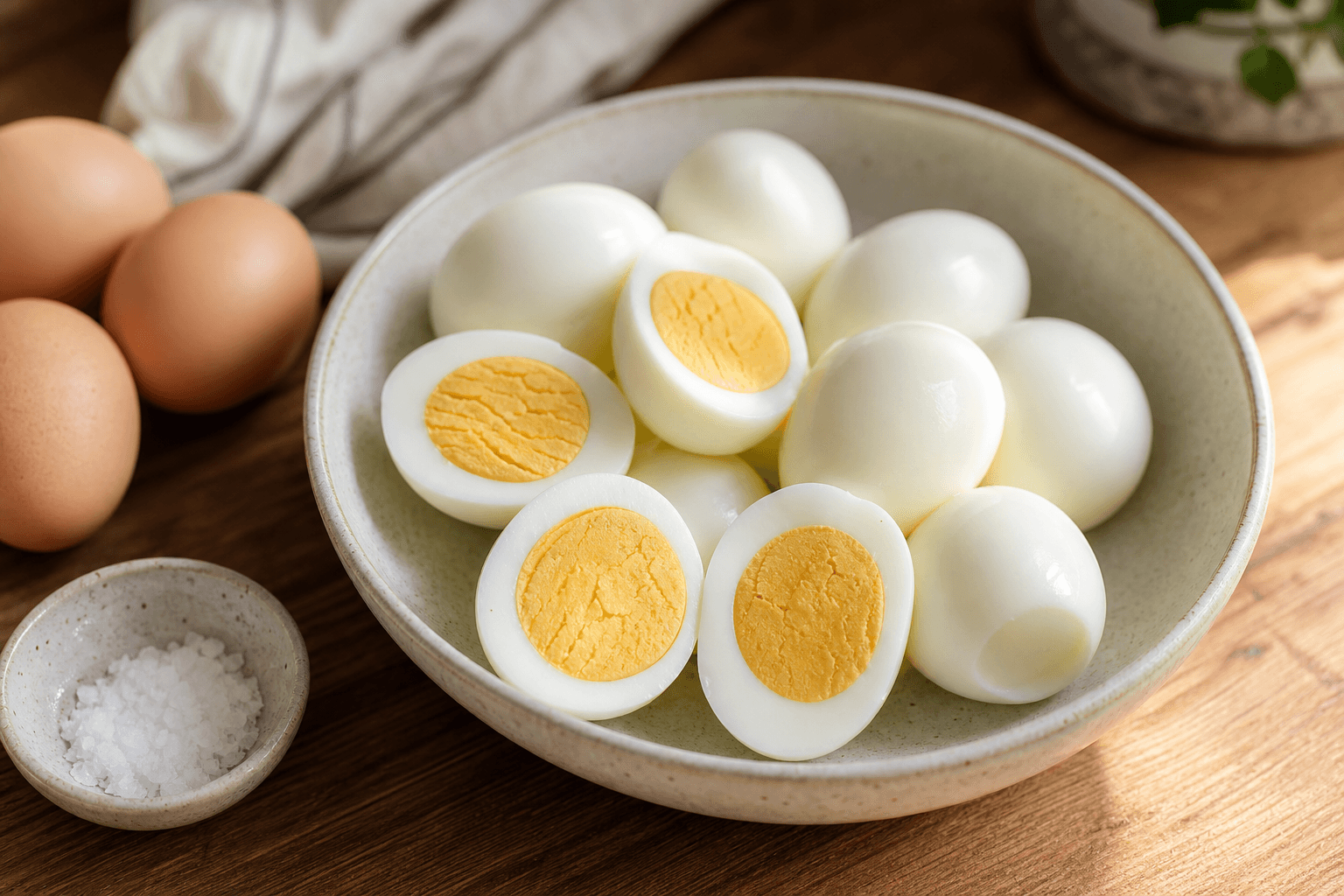
Hard boiled eggs last about one week in the fridge, whether you leave the shell on or peel them, according to USDA guidance. Store them at 40°F or below within two hours of cooking, and hold off on peeling until right before you eat them if you want the best texture.
How long do hard boiled eggs last in the fridge?
The federal cold storage guidance is the same whether your eggs are still in the shell or already peeled: use them within a week. After that point, the USDA no longer considers them safe to eat, even if they still look and smell normal.
| Egg form | Refrigerator (40°F or below) | Freezer |
|---|---|---|
| Hard boiled, in the shell | 1 week | Not recommended |
| Hard boiled, peeled | 1 week | Not recommended |
| Egg salad or deviled eggs | 3 to 4 days | Not recommended |
| Raw eggs, in the shell | 3 to 5 weeks | Not recommended |
| Raw egg whites or yolks (separated) | 2 to 4 days | Up to 1 year |
Egg salad and deviled eggs have a shorter window than plain hard boiled eggs. Mayonnaise and other mix-ins spoil faster, so treat those dishes like any mayo-based salad rather than a plain boiled egg.
How to tell if hard boiled eggs have gone bad
A few signs point to a hard boiled egg that's past its prime:
- A strong, sulfur-like smell that's more intense than the usual mild egg scent
- A slimy or chalky film on the shell or the surface of a peeled egg
- Gray, green, pink, or black discoloration, especially around the yolk, beyond the harmless thin gray-green ring that sometimes forms from overcooking
- A powdery or unusually soft, mushy texture when you cut into it
Bacteria like salmonella that cause food poisoning don't reliably change how an egg looks, smells, or tastes. An egg can carry enough bacteria to make you sick and still seem completely fine. That's why the one-week rule matters more than a sniff test. If you're unsure how long an egg has been sitting in your fridge, our guide on how long food lasts in the fridge walks through the same logic for dozens of everyday foods.
How to store hard boiled eggs so they last
- Refrigerate hard boiled eggs within two hours of cooking, or within one hour if your kitchen is above 90°F
- Keep your fridge at 40°F or below, and store eggs on an inside shelf rather than in the door, where the temperature swings more
- Store them in a covered container to limit moisture loss and keep them from picking up other odors from the fridge
- Leave the shell on until you're ready to eat if you can. It acts as a barrier and helps peeled eggs stay fresher a little longer
- Jot down or track the date you boiled them. A week goes by fast, and it's easy to lose count when eggs are sitting in a bowl next to raw chicken or last night's rice
That last habit is where a lot of batch cookers slip up: hard boiled eggs, cooked rice, and raw proteins like raw chicken each run on their own clock. If you tend to lose track of when things went into the fridge, an app like Well Stockd's food expiration tracker can log the date and remind you before the week runs out.
Can you freeze hard boiled eggs?
No, freezing isn't recommended for whole hard boiled eggs or the whites. As they freeze, ice crystals push water out of the egg white's protein structure, and once thawed, the whites turn rubbery and watery instead of tender. There isn't a reliable way to fix that texture once it happens.
Cooked yolks hold up a bit better because they're denser and higher in fat. You can freeze just the yolks and use them crumbled or mashed into dressings and fillings later, though the texture will still be a little different from fresh. If you go this route, note that USDA's FoodKeeper lists hard-cooked eggs as not recommended for freezing and gives no freezer time for cooked yolks. For most home cooks, it's simpler to just boil a fresh batch each week than to freeze eggs at all.
When in doubt
USDA food safety guidance boils down to one rule: when in doubt, throw it out. Harmful bacteria don't always cause a noticeable change in smell, taste, or appearance, so you can't count on your senses alone to catch a problem. If a hard boiled egg is older than a week, was left out of the fridge for more than two hours, or was stored above 40°F for any stretch of time, it's not worth the risk of eating it.
Frequently asked questions
Do hard boiled eggs last longer with the shell left on? They carry the same one-week safe window either way, but leaving the shell on can help peeled eggs stay firmer and avoid picking up fridge odors, so it's worth peeling only what you plan to eat soon.
Can I still eat hard boiled eggs after 10 days in the fridge? No. USDA guidance caps hard-cooked eggs at one week even if they look and smell fine, since bacteria growth isn't always visible or detectable by smell. Once you're past seven days, it's time to toss them.
Is the gray-green ring around a hard boiled yolk a sign it has gone bad? No, that ring is a harmless reaction between iron in the yolk and sulfur in the white, more common in overcooked or slightly older eggs. It doesn't mean the egg is unsafe, and the same one-week storage rule still applies.
Sources: USDA (ask.usda.gov), FDA egg safety guidance, and the FoodSafety.gov Cold Food Storage Chart.
Track it in Well Stockd
Add what you have, see what you can cook tonight, and get a reminder before anything goes off.
