How long to keep leftovers: the full storage chart
USDA guidance says most cooked leftovers are good in the fridge for 3 to 4 days and hold their quality in the freezer for 3 to 4 months. The chart below breaks it down by food type, plus how to tell if leftovers have gone bad.
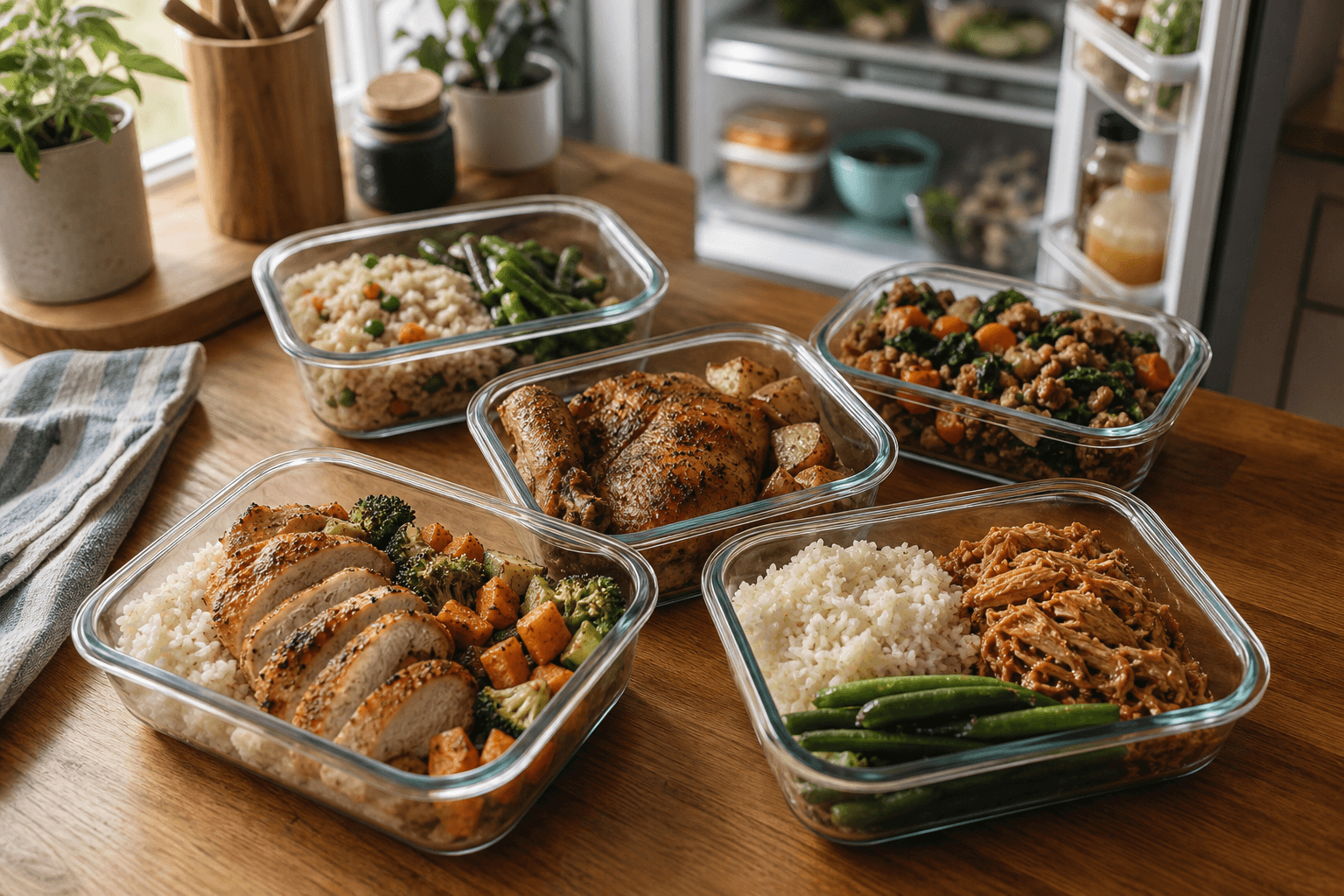
The USDA says most cooked leftovers are safe in the refrigerator for 3 to 4 days, and hold their quality in the freezer for 3 to 4 months. Get them into the fridge within 2 hours of cooking (1 hour if it's above 90 degrees out), and reheat to 165 degrees Fahrenheit before eating.
That single rule covers a lot of ground, but not every leftover behaves the same way. Cooked poultry keeps a little longer in the freezer than cooked fish. Egg dishes keep 3 to 4 days in the fridge, like other leftovers. The full breakdown below follows USDA guidance.
This page is the reference table. For the short answer and its exceptions, see how long leftovers last in the fridge. If your question is about a specific age, leftovers at day 5, day 6 or day 7, is it safe to eat leftovers after 7 days walks through that judgment call day by day.
How long do leftovers last in the fridge and freezer
This chart uses USDA FoodKeeper data and FSIS storage guidance. Refrigerator times assume 40°F or below; freezer times assume 0°F or below and reflect best quality, not a safety cutoff, since food held continuously at 0°F stays safe indefinitely.
The same refrigerator windows for 24 everyday foods are on the printable refrigerator shelf-life chart, as a PDF and a PNG you can stick on the fridge door.
| Leftover | Refrigerator (40°F or below) | Freezer (0°F, for best quality) |
|---|---|---|
| General leftovers (meat, poultry, fish, egg dishes) | 3 to 4 days | 2 to 3 months |
| Cooked beef, pork, or other meat dishes | 3 to 4 days | 2 to 3 months |
| Cooked chicken or turkey dishes | 3 to 4 days | 4 to 6 months |
| Cooked fish | 3 to 4 days | 1 to 2 months |
| Cooked shrimp, crab, and other shellfish | 3 to 4 days | 1 to 3 months |
| Soups and stews | 3 to 4 days | 2 to 3 months |
| Pizza | 3 to 4 days | 1 to 2 months |
| Casseroles baked with egg | 3 to 4 days | 2 to 3 months |
| Egg dishes and quiche | 3 to 4 days | 2 to 3 months |
| Cooked rice, pasta, or potatoes | 3 to 4 days | 1 to 2 months |
| Cooked vegetables | 3 to 4 days | 1 to 2 months |
| Meat covered in gravy or broth | 3 to 4 days | 6 months |
Cooked rice needs separate handling, since it can carry a bacterium that survives cooking. If that's what's in your fridge right now, see how long does cooked rice last in the fridge for the full rundown. And keep in mind this chart is for cooked leftovers only. Raw chicken follows a much shorter, stricter clock; check how long does raw chicken last in the fridge before that part of dinner even hits the pan.
How to tell if leftovers have gone bad
Trust your senses first. A sour or off smell, a slimy or tacky texture, visible mold, or a change in color are all reasonable signs to toss something. If a lid is bulging or a container smells sharp the moment you open it, don't taste it to check, just throw it out.
Some of the bacteria that cause food poisoning, including listeria and salmonella, don't change how food looks, smells, or tastes at all. A container of chicken and rice can be perfectly appetizing on day 6 and still be unsafe, which is why the time limits in the chart above matter more than a sniff test.
How to store leftovers so they last
Get leftovers into the fridge within 2 hours of cooking, or within 1 hour if the room is above 90°F, since bacteria multiply fastest in what the USDA calls the danger zone between 40°F and 140°F. Splitting a big pot of soup or chili into smaller, shallow containers before refrigerating helps it cool through faster instead of sitting warm in the middle for hours, and there is no need to let hot food cool on the counter first. Holiday dessert leftovers: do you have to refrigerate apple pie.
A few other habits make a real difference:
- Use airtight containers or wrap food tightly to keep bacteria out and prevent it from drying out or picking up other odors.
- Label containers with the date you cooked or stored the food, so you're not guessing later, especially with meal prep cooked days ahead.
- Keep your fridge at 40°F or below and your freezer at 0°F or below, and check both with an appliance thermometer if you're not sure.
- Don't crowd the fridge so full that air can't circulate around containers.
- Only reheat the portion you plan to eat, rather than reheating and re-chilling the whole batch repeatedly. Chicken has its own answer: how many times you can reheat chicken.
If you're the type who forgets what's in the back of the fridge until it's too late, an app like Well Stockd can log the date leftovers went in and remind you before the 4-day window closes.
Can you freeze leftovers?
Yes, and it's a good move if you know you won't get to something within 3 to 4 days. Freezing stops bacterial growth entirely, so leftovers held continuously at 0°F stay safe to eat indefinitely. What changes over time is quality: texture, moisture, and flavor gradually decline, which is why the chart above gives a "best by" window for the freezer rather than a hard safety cutoff. How long leftovers last in the freezer covers wrapping, freezer burn, and reheating from frozen. For a roast, see leftover prime rib ideas.
Thaw frozen leftovers in the refrigerator, in cold water that you change every 30 minutes, or in the microwave, never on the counter. Once thawed, treat the food the same as any fresh leftover and use it within 3 to 4 days.
When in doubt
The USDA's own advice is blunt: when in doubt, throw it out. You can't see, smell, or taste the bacteria that cause foodborne illness, so if a leftover has passed the time limit in the chart, sat out longer than 2 hours (or 1 hour in hot weather), or you simply can't remember when it went into the fridge, don't taste it to find out. Toss it. For how storage times vary elsewhere in your kitchen, see our guide to how long does food last or the refrigerator and freezer food storage chart.
Frequently asked questions
Is it safe to eat leftovers after 5 days? For most cooked leftovers, no. USDA guidance caps refrigerator storage at 3 to 4 days at 40°F or below. After that window, discard the food even if it still looks, smells, and tastes fine, since the risk comes from bacteria you can't detect.
Can you refreeze leftovers that were frozen and then thawed? Yes, if they were thawed in the refrigerator and are still cold. Quality may drop slightly, but it's safe. If food was thawed on the counter or sat out at room temperature, cook it first before refreezing, or don't refreeze it at all.
Do restaurant or takeout leftovers follow the same rule? Yes. Treat a takeout box exactly like your own cooking: get it into the fridge within 2 hours of the food being served, and use it within 3 to 4 days. For takeout Chinese, see what to do with leftover Chinese food.
Sources: USDA Food Safety and Inspection Service, Leftovers and Food Safety; FSIS, Danger Zone (40°F - 140°F); FoodSafety.gov, Cold Food Storage Chart and the USDA FoodKeeper App.
Track it in Well Stockd
Add what you have, see what you can cook tonight, and get a reminder before anything goes off.
