Can you refreeze thawed vegetables? Yes, with caveats
Yes, you can refreeze thawed vegetables if they thawed in the refrigerator and are still cold, though the texture softens. This covers the safe method, timing windows, and what to cook with them after.
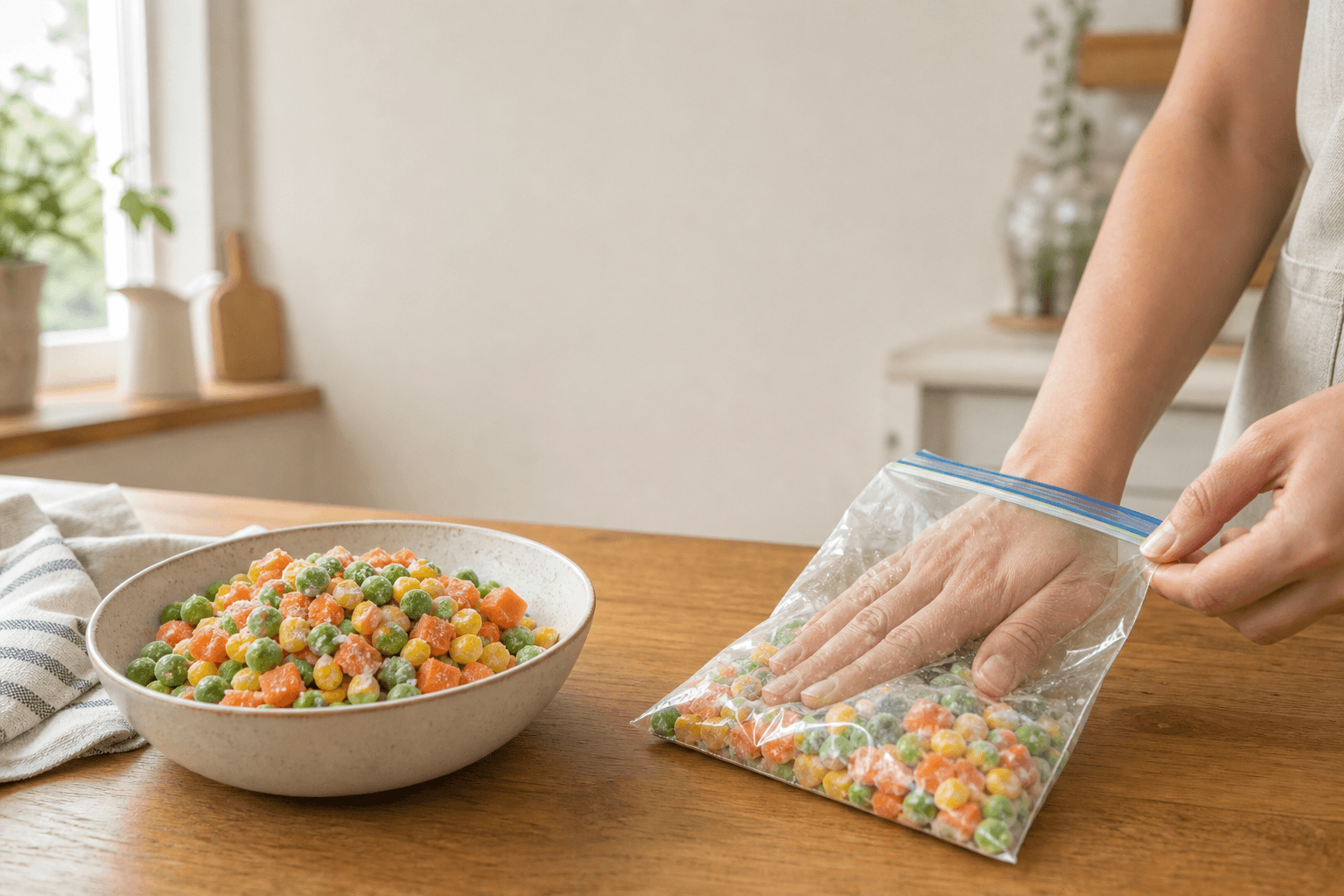
Yes, you can refreeze thawed vegetables, but there is a catch: it is only fully safe without extra cooking if they thawed in the refrigerator and are still cold, 40 degrees Fahrenheit or below, or still have ice crystals in the bag. Vegetables thawed on the counter, in cold water, or in the microwave need to be cooked before they go back in the freezer. Either way, this is a texture question more than a safety one.
Can you refreeze thawed vegetables?
Yes, in most cases. The United States Department of Agriculture's Food Safety and Inspection Service (FSIS) says that once food is thawed in the refrigerator, it is safe to refreeze without cooking, even though quality drops from the moisture lost during thawing. The same guidance applies if the vegetables are still partly frozen, still icy, or as cold as they would be sitting in the fridge.
The exception is anything thawed by faster methods. Food thawed using the cold water method or in the microwave should be cooked before it goes back in the freezer, because those methods can leave parts of the food sitting in the temperature danger zone (above 40 degrees Fahrenheit) long enough for bacteria to start multiplying, even though the food never fully warmed to room temperature.
There is also a general clock on any perishable food once it has thawed. FSIS guidance on leftovers notes that thawed food should be used within 3 to 4 days, or refrozen within that window. And if vegetables sat out on the counter, the standard rule applies: do not refreeze anything left above 40 degrees Fahrenheit for more than 2 hours, or 1 hour if the room was above 90 degrees Fahrenheit. When in doubt about how long something sat out, throw it out rather than risk it.
If you are building out a fuller picture of what can and cannot go back in the freezer, our guide to freezing food safely covers the general rules, and it is worth comparing how differently other foods behave. Cream cheese and heavy cream, for instance, separate and need a good whisking after thawing, while vegetables mostly just go soft.
How to freeze thawed vegetables
If your vegetables meet the safe-to-refreeze condition above (still cold or still icy, thawed in the fridge), here is how to get the best result on the second freeze.
- Confirm the vegetables are still at or below 40 degrees Fahrenheit, or still have visible ice crystals.
- Drain off any liquid that has pooled in the bag or container. Thawed vegetables release a lot of water, and freezing them wet leads to a solid ice block and mushier results later.
- Pat the vegetables dry with a clean towel if they feel wet.
- Pack them into a freezer bag or airtight container, pressing out as much air as you can to limit freezer burn.
- Label the bag with the date so you know how long it has been in the freezer.
- Freeze quickly at 0 degrees Fahrenheit or below. Laying the bag flat in a single layer helps it chill faster, which limits the size of new ice crystals and keeps a bit more texture.
If your vegetables thawed at room temperature, in cold water, or in the microwave, skip straight to cooking them through to a safe temperature. Once cooked, whatever you make (soup, stew, a quick saute) can be cooled and frozen as a finished dish.
How long thawed vegetables keep frozen and how to thaw them
Once refrozen, vegetables are safe to keep frozen indefinitely at 0 degrees Fahrenheit, but quality declines the longer they sit. Commercially frozen and home-frozen vegetables generally hold their best flavor and texture for about 8 to 12 months, per USDA FoodKeeper guidance, and refrozen vegetables tend to sit at the shorter end of that range since they have already lost some structure.
| Thawing method | Safe to refreeze without cooking? | What to do |
|---|---|---|
| Refrigerator, still cold or icy | Yes, within 3 to 4 days | Drain, pack, and refreeze directly |
| Cold water thawing | No | Cook fully first, then freeze the cooked dish |
| Microwave thawing | No | Cook to a safe temperature first, then freeze |
| Countertop, under 2 hours (1 hour if above 90°F) | Best to cook first | Cook, or refreeze only if still cold throughout |
| Countertop, over 2 hours (1 hour if above 90°F) | No | Discard |
When you are ready to use the vegetables again, thaw them in the refrigerator overnight, or skip thawing altogether and cook them straight from frozen in soups, stir-fries, or roasting pans. Cooking from frozen is the easiest option and usually gives a better texture than a slow refrigerator thaw, since the vegetables spend less time sitting wet.
What changes and what to use thawed vegetables for after
Vegetables are mostly water, and freezing forms ice crystals that puncture cell walls. The first freeze does some of this damage already; a second freeze does more. Expect softer, sometimes mushy texture, a duller color, and a bit less flavor compared to vegetables frozen only once. None of that makes them unsafe, just less suited to dishes where crispness matters.
Skip refrozen vegetables in raw dishes like salads or veggie trays, and in dishes where you want a firm bite, such as a quick stir-fry. They do best cooked into something where soft texture is not a downside: soups, stews, casseroles, purees, pasta sauces, or a simple mashed side. Blending them into a sauce or soup base is often the best move if the texture has gone noticeably soft.
Keeping track of when vegetables first went into the freezer, and when they got thawed, is the easiest way to know whether you are still inside a safe window. An app that tracks food expiration dates can log freezer dates automatically, so you don't have to rely on memory for how long that bag of peas has been sitting in there.
Frequently asked questions
Can you refreeze vegetables that thawed overnight in the fridge? Yes. As long as they are still cold, 40 degrees Fahrenheit or below, they are safe to refreeze without cooking. Try to do it within 3 to 4 days of when they first thawed, and expect a softer texture than the original bag.
Do frozen vegetables need to be blanched again before refreezing? No. Blanching is a step for freezing fresh, raw vegetables the first time. Vegetables that were already frozen and commercially or home blanched do not need to be reblanched before going back in the freezer. Freezing fresh kale for the first time is covered in can you freeze kale without blanching.
Is it safe to eat vegetables that were left out on the counter overnight? No. Discard vegetables, or any perishable food, left above 40 degrees Fahrenheit for more than 2 hours (1 hour if the room was above 90 degrees Fahrenheit). When in doubt, throw it out.
Sources: FSIS: Freezing and Food Safety, USDA: Is it safe to refreeze food that has thawed?, FSIS: Leftovers and Food Safety, FoodSafety.gov: FoodKeeper App
Track it in Well Stockd
Add what you have, see what you can cook tonight, and get a reminder before anything goes off.
