Can you tell if leftovers are bad by smell?
USDA guidance says you can't judge leftovers by smell alone. The bacteria and toxins that cause food poisoning are often odorless, so the rule runs on time, not smell: refrigerate within 2 hours, eat within 3 to 4 days.
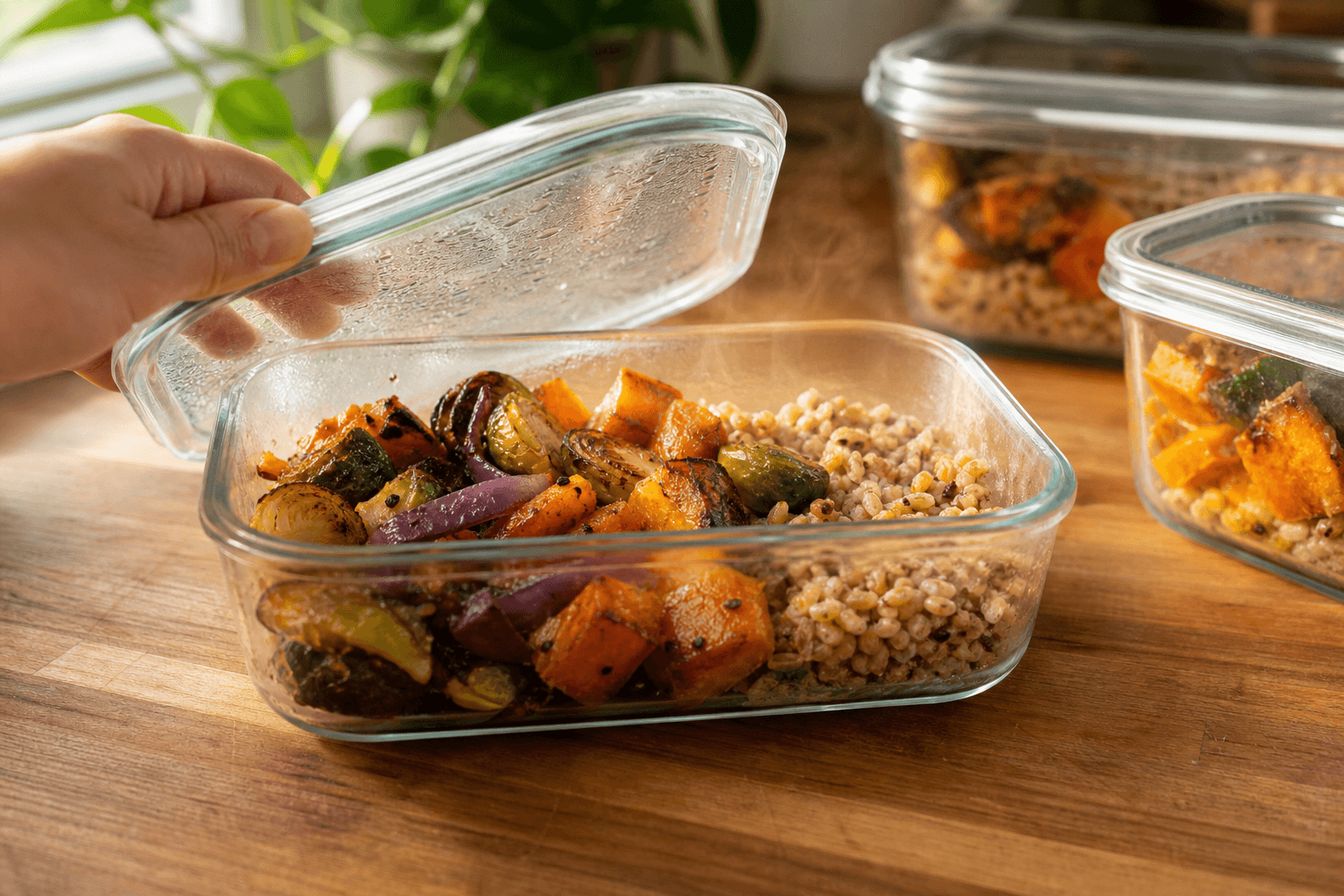
No. USDA guidance is clear: you can't rely on smell, taste, or looks to judge whether leftovers are safe, because the bacteria and toxins behind food poisoning are often invisible and odorless. USDA's rule: refrigerate leftovers within 2 hours, then eat them within 3 to 4 days, no matter how they smell.
That surprises a lot of people, since a sniff test feels like it should work. It works fine for judging freshness and quality. It doesn't work for judging safety, and those are two different questions: freshness is about taste and texture, safety is about whether the food will make you sick.
How long do leftovers last?
Time and temperature set the safe window, not how the food seems. Once cooked food is in the refrigerator at 40°F or below, the safety clock starts, separate from whatever your senses report.
| Leftover type | Refrigerator (40°F or below) | Freezer (0°F) |
|---|---|---|
| Most cooked leftovers (meat, poultry, fish, pasta, rice, vegetables, soups, casseroles) | 3 to 4 days | 3 to 4 months for best quality |
| Egg, chicken, ham, tuna, or macaroni salad | 3 to 4 days | Does not freeze well |
| Opened deli lunch meat | 3 to 5 days | 1 to 2 months |
| Unopened deli lunch meat | 2 weeks | 1 to 2 months |
That 3 to 4 day window applies whether you're dealing with last night's roast chicken or a pot of soup. For specifics on a particular staple, our guide to how long cooked rice lasts in the fridge covers a food that spoils fast and quietly. Raw ingredients run on a different clock entirely: see how long raw chicken lasts in the fridge before it's even cooked.
When you reheat leftovers, bring them to 165°F, checked with a food thermometer, before eating.
Which smells and signs you can trust
Some signs are real and worth trusting. Toss the food if you see or smell any of these:
- Mold, including fuzzy spots or a dusty film, even a small patch
- A sour, sulfurous, or ammonia-like odor
- A slimy or sticky film on meat, poultry, or cooked grains
- An unusual color change, like grayish or greenish meat
- A bulging or leaking container, which can signal gas-producing bacteria
The bigger caveat: not seeing any of those signs doesn't mean the food is safe. Disease-causing bacteria such as Salmonella, E. coli, and Listeria usually don't change how food looks, smells, or tastes. Botulism is the starkest example: food contaminated with the toxin that causes it can look, smell, and taste completely normal. That's why you should never taste a suspect food to check it, even in a tiny amount.
Sensory checks work one way, not the other. For a whole melon, see signs a watermelon has gone bad. A bad smell is a reliable warning. A normal smell doesn't mean the food is safe. Once leftovers pass their 3 to 4 day window, USDA guidance says to throw them out even if they still seem fine. The clock, not your nose, is tracking the risk.
Storing leftovers so you never need the sniff test
- Get leftovers into the refrigerator within 2 hours of cooking, or within 1 hour if the room is above 90°F, like at an outdoor gathering.
- Split large batches of soup, chili, or rice into shallow containers so they cool quickly instead of sitting warm in the danger zone.
- Keep your refrigerator at 40°F or below and check it with an appliance thermometer if you're not sure.
- Cover or seal containers tightly to keep bacteria out and stop leftovers from picking up other odors.
- Label containers with the date you cooked or stored them. This one habit replaces guesswork, and it's the whole idea behind an app like Well Stockd, which tracks expiration dates on everything in your fridge so you're working from a real countdown instead of a guess.
Can you freeze leftovers to stop the clock?
Yes. Freezing at 0°F stops bacterial growth, so frozen leftovers stay safe indefinitely. Quality is different: texture and flavor fade over time, so for most cooked leftovers, plan to use them within 3 to 4 months for best quality. Cool the food first, portion it into airtight containers or freezer bags, and label each one with the date so you're not guessing later.
Never taste-test a leftover
USDA and FDA guidance comes down to one line: when in doubt, throw it out. Never taste food to decide if it's safe. The toxins behind the worst foodborne illness don't warn you first. Discard any perishable food left out more than 2 hours (1 hour above 90°F), and discard leftovers once they pass their fridge window, regardless of how fresh they still smell.
Common questions about smelling leftovers
Does a sour or off smell always mean the food is spoiled?
Usually, yes. Sour, ammonia-like, or rotten odors are a reliable sign of spoilage bacteria, so toss the food. But this only works one way: a bad smell means toss it, while a normal smell doesn't confirm the food is safe, since the bacteria most likely to make you sick often don't smell like anything at all.
Can you get food poisoning from leftovers that smell and look completely normal?
Yes. This is the whole reason USDA uses a time-based rule instead of a sensory one. Salmonella, E. coli, Listeria, and the toxin that causes botulism can all show up in food that looks, smells, and tastes normal, which is why the 3 to 4 day refrigerator window matters even when everything seems fine.
How long can cooked leftovers sit out at room temperature before they are unsafe?
No more than 2 hours, or 1 hour if it's above 90°F, like a picnic or a car on a warm day. After that window, bacteria can multiply to unsafe levels even though the food may still look and smell normal, so it should go in the trash rather than back in the fridge.
If you'd rather not do this math from memory every week, our full breakdown of how long food lasts rounds up safe storage times for the foods you keep in your kitchen.
Sources: FSIS, Leftovers and Food Safety, FoodSafety.gov, Cold Food Storage Chart, USDA, the 2-Hour Rule, CDC, Botulism Prevention, FSIS, Clostridium botulinum and Botulism
Track it in Well Stockd
Add what you have, see what you can cook tonight, and get a reminder before anything goes off.
