How long do leftovers last in the freezer?
USDA FSIS says most cooked leftovers hold their best quality in the freezer for 2 to 3 months, with cooked poultry lasting about 4 months. This guide has the full storage chart, how to tell if leftovers have gone bad, and how to freeze them so they last.
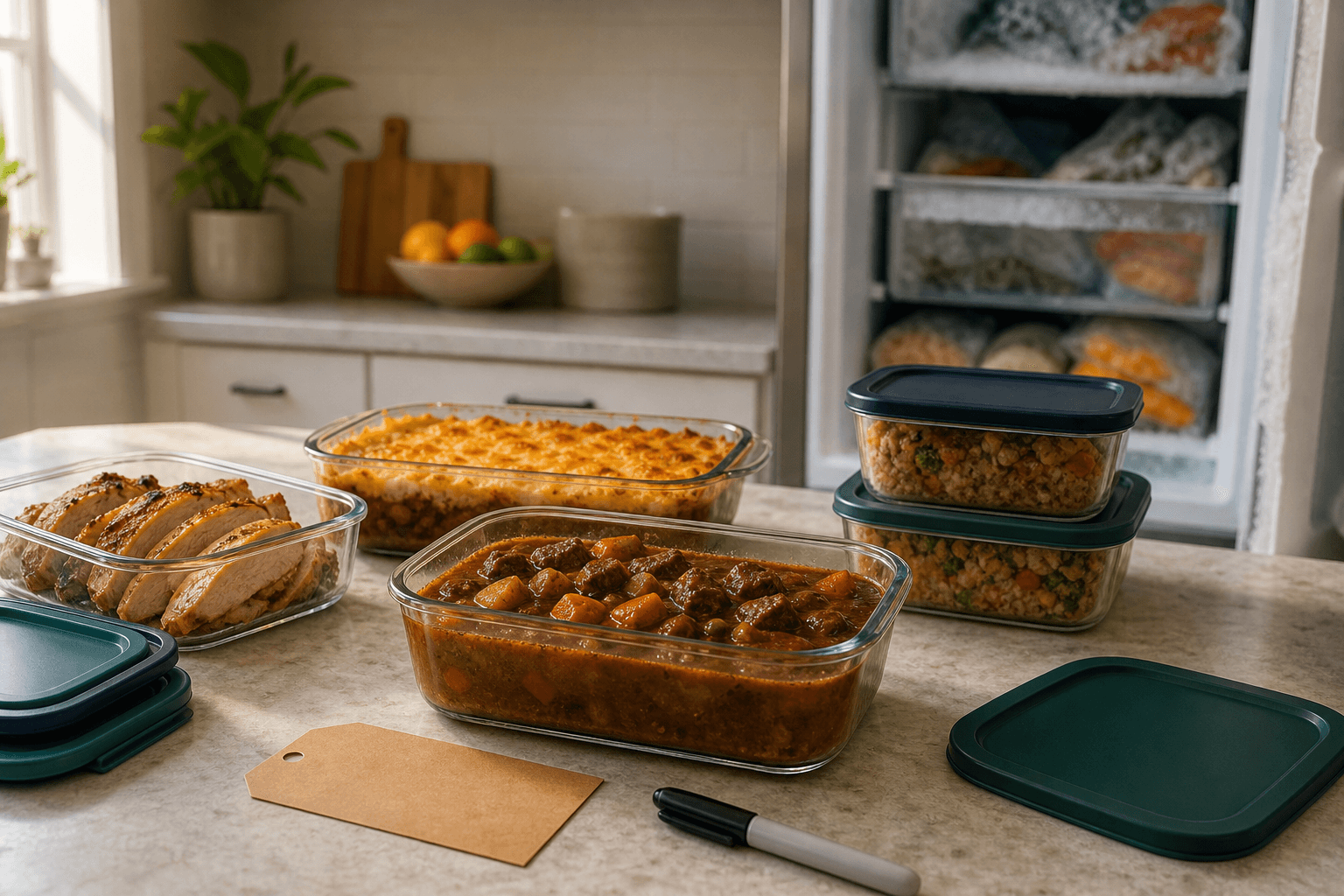
Most cooked leftovers hold their best quality in the freezer for 2 to 3 months, per the USDA's Food Safety and Inspection Service, with cooked poultry lasting about 4 months. Held at a steady 0°F, they stay safe to eat well beyond that; only flavor and texture fade.
That distinction matters. The USDA is explicit that freezer storage times are a quality guideline, not a safety cutoff. A freezer running at 0°F or colder stops bacterial growth entirely, so food frozen continuously at that temperature stays safe indefinitely. Over months in the freezer, moisture, texture, and taste change; safety does not. For a broader look at fridge and freezer timelines across other foods, see our guide to how long food lasts.
How long do leftovers last in the freezer?
The table below breaks down USDA Food Safety and Inspection Service freezer timelines by food type, all measured at a constant 0°F. They show best quality, not a safety deadline.
| Leftover type | Best-quality freezer time (0°F) |
|---|---|
| Soups and stews | 2 to 3 months |
| Casseroles | 2 to 3 months |
| Cooked meat (beef, pork, ham) | 2 to 3 months |
| Gravy (meat or poultry) | 2 to 3 months |
| Cooked poultry (chicken, turkey) | About 4 months |
| Frozen dinners and prepared entrees | 3 to 4 months |
For comparison, the same leftovers only last 3 to 4 days in the refrigerator, which is why the freezer is the better call anytime you know you will not finish a dish within a few days.
How to tell if frozen leftovers have gone bad
Before you reheat anything, check for the usual sensory red flags: a sour or off smell, a slimy or tacky texture, any visible mold, or grayish-brown dry patches known as freezer burn. Heavy ice buildup inside the container is also a sign the food went through temperature swings, which speeds up quality loss.
Some spoilage, and some of the pathogens that cause foodborne illness, do not change how food looks, smells, or tastes at all. That is why the storage windows above matter more than a sniff test. Use the date on the container, not your nose, to decide whether something is still worth eating. If you can't remember how long a package has been in the freezer, default to the ranges above.
Prefer it on one page? The full leftovers storage chart covers fridge and freezer side by side.
How to freeze leftovers so they keep their quality
- Get leftovers into the fridge or freezer within 2 hours of cooking, or within 1 hour if the room is above 90°F, like a hot kitchen or a summer cookout. Bacteria multiply fastest in the 40°F to 140°F "danger zone," so the clock starts the moment food leaves the heat.
- Use shallow containers. FSIS recommends dividing large amounts of food into shallow containers so it chills through quickly instead of sitting in that danger zone.
- Wrap food airtight. Freezer bags with the air pressed out, rigid freezer containers, or heavy-duty foil all work. Thin deli tubs and loose plastic wrap let in air and invite freezer burn.
- Portion and label everything. Freeze in meal-sized amounts and mark the date, so you reheat only what you'll eat and always know how long something has been in there. If keeping track in your head is not realistic, an app like Well Stockd can log freezer dates and flag items before quality drops.
- Give food room to freeze. A 2-inch-thick portion should freeze solid in about 2 hours in a home freezer. Spread new packages in a single layer instead of stacking them until each one is frozen through.
- Keep the freezer at 0°F. An appliance thermometer is the only reliable way to confirm this, since the dial setting can drift over time.
Which leftovers freeze well, and which do not?
Almost any cooked leftover can go in the freezer, but a few things lose too much quality to bother. Mayonnaise and other egg-based sauces tend to separate, cream-based soups can turn grainy, and raw lettuce or other watery greens turn to mush. Fried foods usually go soggy on reheating, though they remain safe to eat. For whole meals that hold up, see meals that freeze and reheat well.
Cooked rice and pasta both freeze well when cooled and packaged promptly; see how long cooked rice lasts in the fridge for the fridge-side numbers on that one. Cooked chicken freezes just as well as other cooked poultry, and if you are timing things from the grocery bag to the plate, our guide to how long raw chicken lasts in the fridge covers the handling window before it is cooked.
Once something is frozen, you do not need to thaw it before reheating. Soups and stews can go straight into a saucepan or microwave, and casseroles can go straight into the oven or microwave, though it takes roughly one and a half times the usual cooking time from frozen. Either way, reheat leftovers to 165°F, or until they are hot and steaming all the way through.
When to throw frozen leftovers out
USDA's own advice on this is blunt: when in doubt, throw it out. That applies if leftovers sat out longer than the 2-hour window before they got cold, if a freezer outage let food sit above 40°F for more than 2 hours, or if a package has been buried so long you genuinely cannot recall when it went in. Freezing does not undo a food-safety mistake made before the food got cold; it only pauses the clock from that point forward.
Common questions about freezing leftovers
Can you refreeze leftovers after thawing them?
Yes, as long as they were thawed in the refrigerator rather than on the counter. You will lose some moisture and texture, but it is safe to refreeze without recooking first.
Is it safe to eat leftovers with freezer burn?
Yes. Freezer burn is dehydration from air exposure, not spoilage. Cut away the dry, grayish-brown patches before or after cooking and eat the rest.
Do frozen leftovers ever become unsafe just from sitting in the freezer?
Not if your freezer stays at 0°F or below. FSIS says food frozen continuously at that temperature stays safe indefinitely. The month ranges above are about quality, not safety.
Sources: USDA Food Safety and Inspection Service, "Freezing and Food Safety"; USDA Food Safety and Inspection Service, "Leftovers and Food Safety"; USDA Food Safety and Inspection Service, "Danger Zone (40°F - 140°F)".
Track it in Well Stockd
Add what you have, see what you can cook tonight, and get a reminder before anything goes off.
