How long can butter sit out of the fridge?
USDA FoodKeeper says butter is safe on the counter for 1 to 2 days. Here's how long it lasts in the fridge and freezer, and how to tell when it's gone bad.
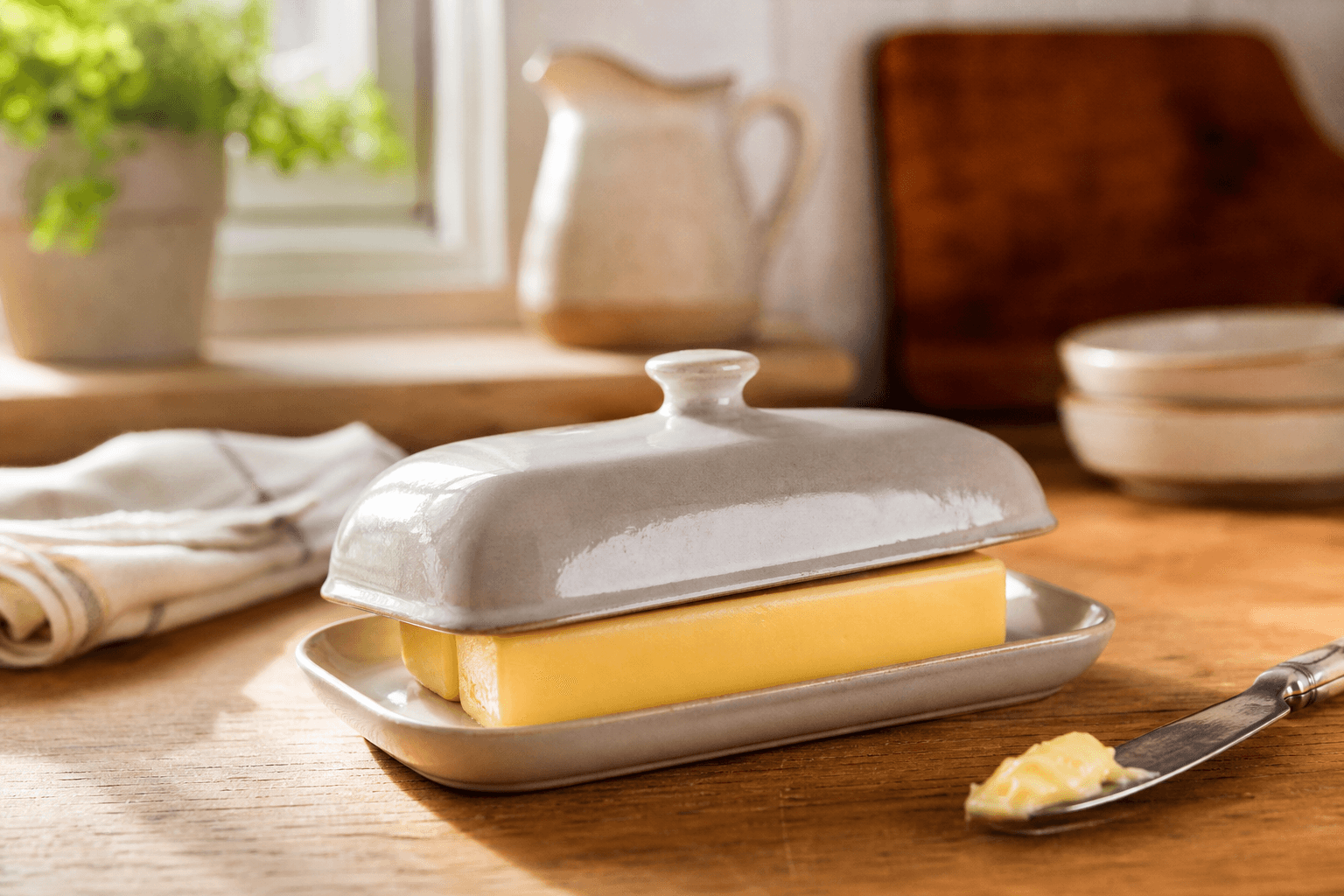
Butter can sit safely at room temperature for 1 to 2 days, according to USDA FoodKeeper guidance. It's high in fat and low in water, which makes it far more stable than meat or milk. Past that window, the real risk is rancid flavor, not foodborne illness.
How long can butter sit out at room temperature?
USDA FoodKeeper lists butter as safe at room temperature for 1 to 2 days, as long as it's covered. That's the number to plan around, whether you keep a stick on a plate, under a dome, or in a butter crock. Move it back into the fridge and the clock resets.
| Storage method | How long it lasts |
|---|---|
| Countertop, covered, room temperature | 1 to 2 days |
| Refrigerator, wrapped or in original packaging | 1 to 2 months |
| Freezer, tightly wrapped or in an airtight container | 6 to 9 months |
Salted butter has a slight edge over unsalted. Salt pulls out moisture, which makes the surface less friendly to bacteria. USDA guidance doesn't split the room-temperature window by type, though, so treat both as good for 1 to 2 days and lean toward the shorter end for unsalted. A hot kitchen, direct sun on the counter, or a spot next to the stove will shrink that window in practice, even when the official number doesn't change.
For the full picture of how these timelines play out across your kitchen, see our guide to how long food lasts.
How to tell if butter has gone bad
Butter spoils differently than most foods in your fridge. Instead of growing dangerous bacteria, it goes rancid through oxidation, a chemical reaction rather than a microbial one. Signs to watch for:
- A sour, sharp, or "cheesy" smell that wasn't there before
- A taste that turns soapy, waxy, or paint-like
- Deepening yellow color, graying, or a greasy sheen
- Water pooling or separating from the fat
Rancidity can shift the flavor before the smell turns obviously off, so you can't always taste your way to a safe answer. That's why the 1 to 2 day window matters even when a stick still looks and smells fine. Raw chicken is a different story: bacteria multiply fast in its moisture, so it can turn dangerous within hours at room temperature. You can compare the two in our guide to how long raw chicken lasts in the fridge.
How to store butter so it lasts longer
A few habits stretch both the counter window and the fridge life:
- Keep it covered. A butter dish with a lid, or a French-style butter crock that seals the stick under a small water bath, blocks air and light.
- Cut off only what you need for a few days and leave that portion out. Keep the rest refrigerated or frozen.
- Store it away from the stove, a sunny window, or any other heat source.
- In the fridge, keep butter wrapped tightly or in its original packaging so it doesn't pick up odors from onions, garlic, or leftovers nearby.
If you're juggling a few sticks between the counter, the fridge, and the freezer, an app that tracks food expiration dates can log when each one came out of cold storage. That way you're not relying on memory to know which one is on day one and which is on day three.
Can you freeze butter?
Yes. Butter freezes well and holds its quality for 6 to 9 months per USDA FoodKeeper. Wrap it tightly in its original packaging plus a layer of foil or a freezer bag, which keeps out freezer burn and stray odors. Thaw it in the fridge overnight for the best texture, though leaving it on the counter for an hour or two to soften for baking works fine too.
When in doubt
USDA's general rule for perishable food is to toss anything left in the Danger Zone, between 40 and 140 degrees Fahrenheit, for more than 2 hours, or more than 1 hour if the room is above 90 degrees, and the general guide to food left out overnight has the long version. Butter is more forgiving than most foods in that range because of its low moisture. That's why FoodKeeper gives it a 1 to 2 day window instead of a 2-hour one. Cooked rice is the opposite case: surviving Bacillus cereus spores can multiply quickly at room temperature, so it needs refrigeration within about 2 hours. You can read more in our guide to how long cooked rice lasts in the fridge.
The same rule applies to butter as to everything else in the kitchen: when in doubt, throw it out. If a stick sat out well past 2 days, rode out a heat wave on the counter, or got cross-contaminated by a knife that touched raw meat or eggs, it's not worth keeping.
Frequently asked questions
Does salted butter last longer at room temperature than unsalted? Yes, slightly. Salt pulls out moisture and makes the surface less friendly to bacteria, so salted butter holds up a touch better. USDA FoodKeeper still lists 1 to 2 days as the safe window for butter in general, so use that as your guide and lean shorter for unsalted.
Can you leave butter out overnight? Yes. One overnight stay on the counter is well within the 1 to 2 day window, as long as it's covered and the kitchen isn't unusually warm.
Is rancid butter dangerous to eat, or just unpleasant? Rancidity is usually a quality problem, not a safety one, since it comes from oxidation rather than bacterial growth. That said, the sour or waxy flavor is unappetizing enough that most people won't want to eat it. If you're ever unsure, throw it out.
Sources: USDA FoodKeeper data, Food Safety and Inspection Service; FSIS: keep food out of the Danger Zone; Michigan State University Extension: the science behind butter storage.
Quick planning number: see the Butter fridge shelf-life reference.
Track it in Well Stockd
Add what you have, see what you can cook tonight, and get a reminder before anything goes off.
