How to tell if cheese is bad
USDA guidance says unopened hard cheese keeps about 6 months in the fridge and 3 to 4 weeks once opened, while soft cheese lasts about a week. Mold, smell, and texture tell you the rest, and whether moldy cheese is safe to eat depends on the type.
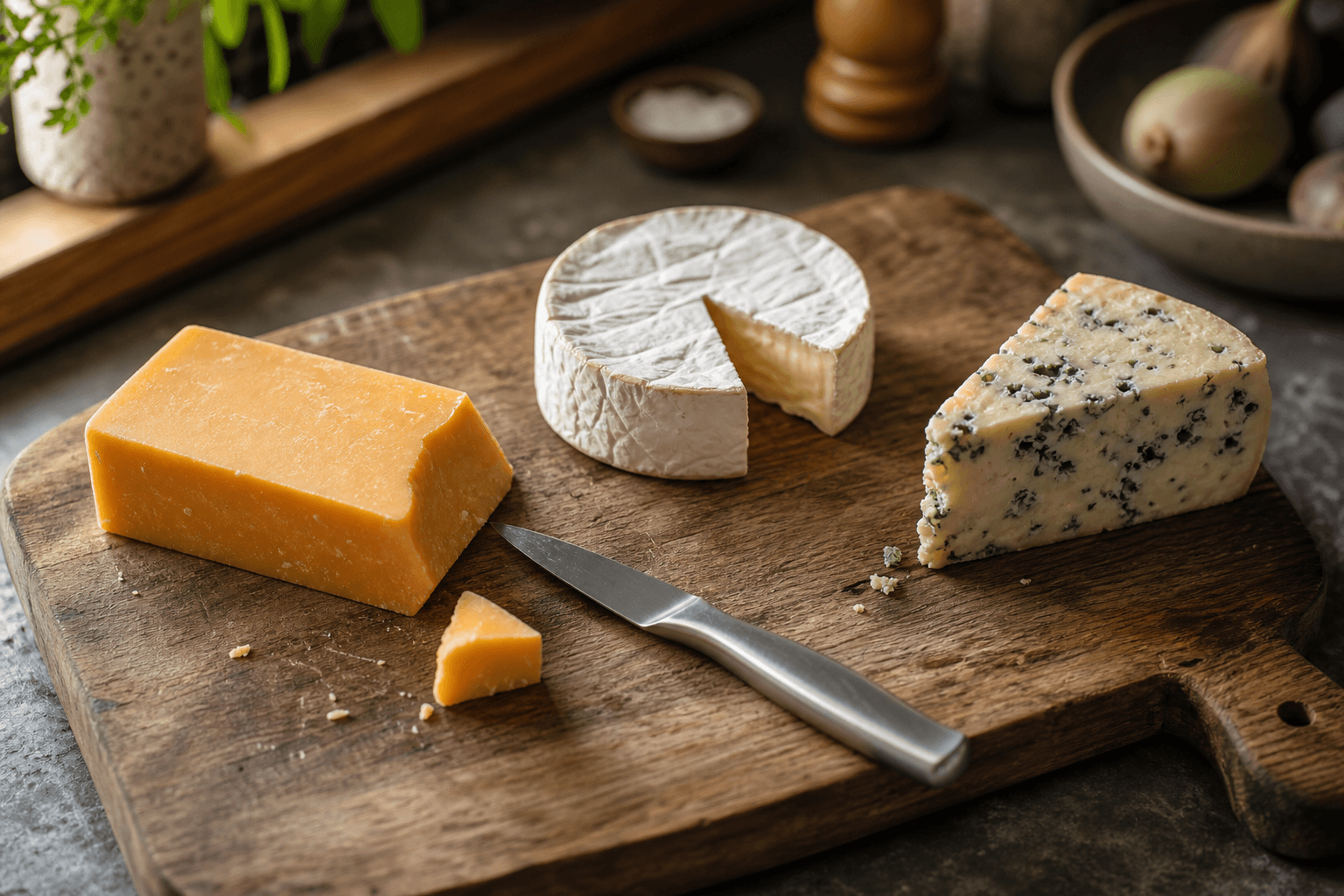
Cheese usually tells you when it has gone bad: mold that should not be there, a sour or ammonia smell, sliminess, or new discoloration all mean toss it. Unopened hard cheese like cheddar keeps about 6 months refrigerated; opened, about 3 to 4 weeks. Soft cheese lasts roughly 1 week.
Nora Ellison, Well Stockd Kitchen Editor
Cheese is one of the more forgiving foods in the fridge, which is exactly why it confuses people. A little surface mold on a block of cheddar is not automatically a disaster the way it would be on bread, but the same fuzzy spot on a wedge of brie means the whole wedge goes in the trash. The difference comes down to how hard the cheese is and how much moisture it holds, which is also why the timelines below vary so much by type.
How long does cheese last in the fridge?
The table below reflects USDA guidance on refrigerated dairy storage. Unopened times assume the package stays sealed and cold; once you break the seal, the clock resets to the shorter window.
| Cheese type | Unopened, in the fridge | After opening, in the fridge | In the freezer |
|---|---|---|---|
| Hard cheese (cheddar, Swiss, Parmesan, Gouda) | About 6 months, or by the package date | 3 to 4 weeks | Up to 6 months, texture turns crumbly |
| Shredded hard cheese | By the package date | About 1 month | 3 to 4 months |
| Soft cheese (brie, camembert, queso fresco) | By the package date | About 1 week | Not recommended |
| Cream cheese | By the package date | About 2 weeks | Not recommended, texture separates |
| Cottage cheese or ricotta | By the package date | About 1 week | Not recommended |
The harder and drier the cheese, the longer it holds. Soft, high-moisture cheeses spoil fastest because bacteria and mold both need water to grow, and soft cheese has plenty of it.
How to tell if cheese has gone bad
Trust your senses first, in this order.
- Look. Unwanted mold shows up as fuzzy or powdery spots in white, green, black, or pink, and it looks different from any mold the cheese was made with. Discoloration, dark edges, or a slimy sheen on the surface are also warning signs.
- Smell. A sharp, sour, ammonia-like, or plain rotten smell that is stronger than the cheese's normal aroma means it has gone bad. Some cheeses (washed-rind, blue-veined) smell strong on a good day, so judge against what that specific cheese usually smells like, not against a mild cheddar.
- Feel. Hard cheese that has gone from firm to sticky or slimy on the cut surface, or soft cheese that has turned watery or unusually mushy, has gone bad. Toss it.
- Taste. If it looks and smells fine but tastes sour, bitter, or "off" in a way that is not typical for that cheese, stop eating it.
None of those checks are foolproof. Some spoilage and contamination do not announce themselves at all. Bacteria like Listeria can grow in cheese, especially soft and soft-ripened varieties, without changing the smell, taste, or appearance. That is why the time guidelines in the table above matter even when a cheese still looks perfectly fine, and why pregnant people, older adults, young children, and anyone with a weakened immune system should be extra cautious with soft cheeses like queso fresco, brie, and soft ricotta.
How to store cheese so it lasts
- Wrapping. Skip tight plastic wrap, which traps moisture against the surface and can add an odd flavor. Wax paper or parchment, then a loose layer of plastic or a reusable bag on top, lets the cheese breathe without drying out.
- Temperature. Store cheese in the coldest, most stable part of the fridge, ideally the dedicated dairy or produce drawer, at or below 40°F.
- Separation. Keep different cheeses apart so mold spores from one wedge do not jump to another.
- Cut edges. Re-wrap after every use instead of leaving a cut edge exposed to air.
- Opened dates. The opened-shelf-life clock is much shorter than the unopened one, so jotting down when you opened a package makes the call a lot easier later. This is the kind of small habit an app to track food expiration dates can handle automatically. It flags cheese before it slides past its window.
Can you freeze cheese?
Hard and semi-hard cheeses like cheddar, Swiss, and Parmesan freeze reasonably well for up to 6 months, though the texture turns crumbly and is best suited for cooking or shredding rather than a cheese board after thawing. Shredded hard cheese holds its quality for about 3 to 4 months frozen. Soft, high-moisture cheeses, including cream cheese, cottage cheese, and ricotta, do not freeze well: the water separates out on thawing and leaves a grainy, watery texture.
We walk through the exact steps, containers, and thaw times in our guide to freezing cheese.
When in doubt
USDA guidance is blunt on this point: when in doubt, throw it out. Cheese is inexpensive enough, relative to the risk of foodborne illness, that a moldy soft cheese or a hard cheese with an off smell is not worth gambling on. If you are unsure whether a cheese is still safe, use the storage times above together with the sensory checks. Neither one is reliable on its own.
For the tub in the same drawer, see is expired sour cream safe to eat if unopened.
Frequently asked questions
Is it safe to cut mold off cheese and eat the rest? For hard and semi-hard cheeses like cheddar, Colby, Parmesan, and Swiss, yes. Cut away at least 1 inch around and below the moldy spot, keeping the knife out of the mold itself so it does not spread to the rest of the wedge. Toss soft cheeses, shredded cheese, and crumbled or sliced cheese entirely if unwanted mold appears, because the mold's threads can penetrate deep into moist cheese where you cannot see them.
Does cheese with mold built into it, like blue cheese or brie, need to be tossed? No. The mold in blue cheese, Roquefort, Gorgonzola, and the white rind on brie and camembert is intentional and safe to eat. Only new mold that looks different from that cheese's normal appearance, such as fuzzy black or green spots on a brie rind, is a sign to discard it.
Why does my cheese smell strong but seem otherwise fine? Some cheeses, particularly washed-rind and blue-veined varieties, are naturally pungent as part of how they are made. Judge the smell against what that specific cheese normally smells like rather than against a mild cheese, and rely on the storage-time table above as a backstop.
If you are also trying to pin down other everyday shelf-life questions, see how long cooked rice lasts in the fridge and how long raw chicken lasts in the fridge, or start from our full guide to how long food lasts. And if keeping track of open dates and expiration windows across a whole fridge sounds tedious, that is exactly what our app to track food expiration dates is built to do.
Sources: USDA FSIS: How long can you keep dairy products like yogurt, milk, and cheese in the refrigerator, USDA FSIS: Molds on food, are they dangerous, FDA: Listeria, food safety for moms-to-be, FoodSafety.gov: FoodKeeper app.
Track it in Well Stockd
Add what you have, see what you can cook tonight, and get a reminder before anything goes off.
