Is food left out overnight safe to eat?
USDA's rule is clear: throw out perishable food left at room temperature more than 2 hours, or more than 1 hour above 90°F. An overnight stretch blows past that every time, no matter how the food looks or smells.
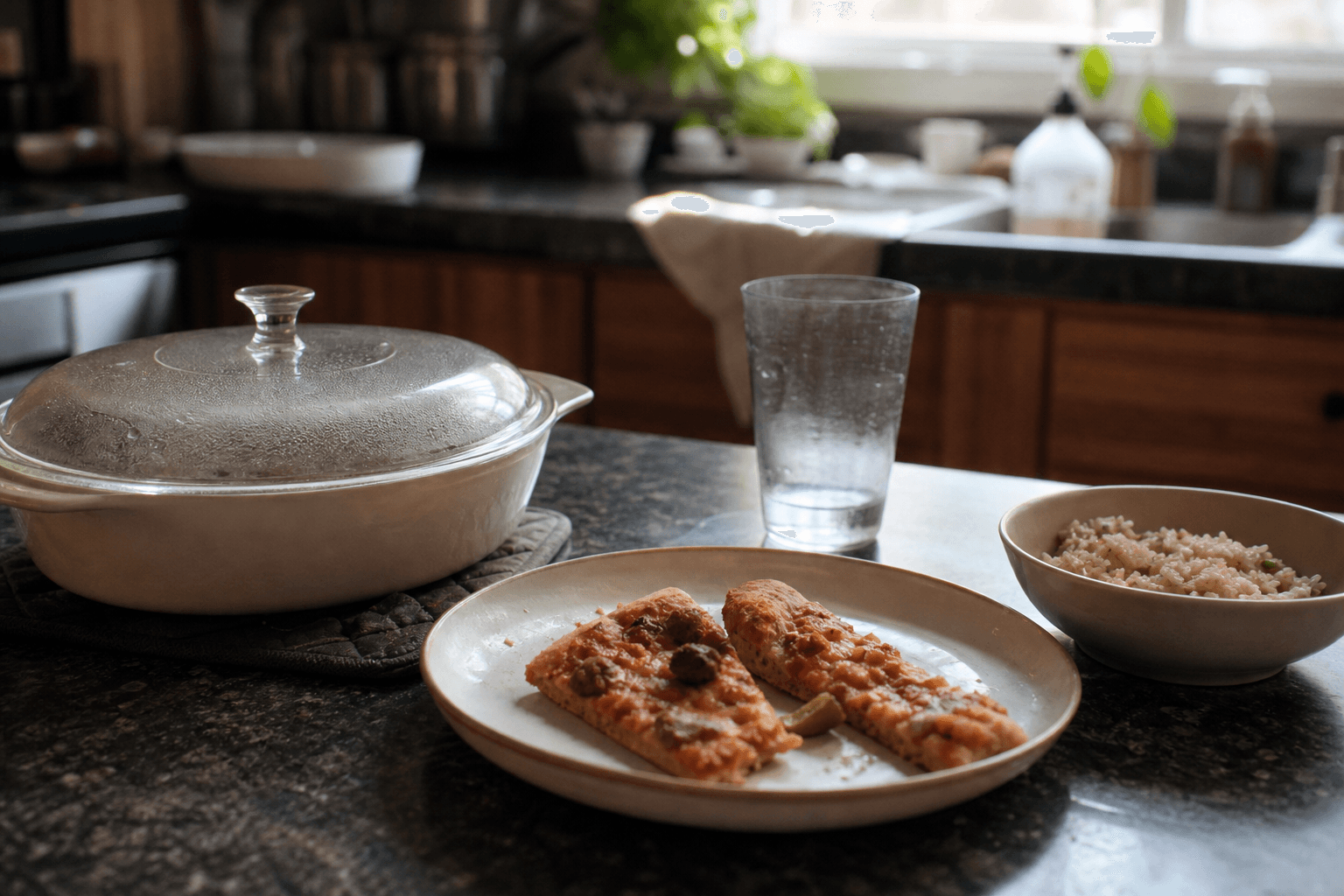
No, food left out overnight is not safe to eat. The USDA's rule is firm: throw away perishable food left at room temperature for more than 2 hours, or more than 1 hour if the temperature is above 90 degrees Fahrenheit. Overnight blows past both limits, so the food belongs in the trash rather than back in the fridge.
This isn't about how the food looks or smells. Bacteria that cause food poisoning, including Salmonella and Staphylococcus aureus, don't change the color, texture, or taste of food at the levels that make people sick. The only reliable rule is the clock.
How long can food sit out before it's unsafe?
USDA's Food Safety and Inspection Service calls the range between 40 and 140 degrees Fahrenheit the "danger zone," the temperature window where bacteria multiply fastest, doubling in number in as little as 20 minutes. Throw out perishable food that sits in that zone for more than 2 hours, or more than 1 hour above 90°F (a hot car, a summer patio, an un-air-conditioned kitchen). An overnight countertop stay, typically six hours or more, blows past either limit no matter what the food is.
| Food | Safe at room temperature | Above 90°F |
|---|---|---|
| Raw or cooked meat, poultry, and seafood, including cooked chicken and cooked turkey | Up to 2 hours | Up to 1 hour |
| Eggs and egg dishes | Up to 2 hours | Up to 1 hour |
| Milk, cheese, and other dairy (for butter, see how long butter can sit out) | Up to 2 hours | Up to 1 hour |
| Cooked rice, pasta, and other grains, including mac and cheese | Up to 2 hours | Up to 1 hour |
| Cut fruit and vegetables | Up to 2 hours | Up to 1 hour |
| Casseroles, soups, and other cooked leftovers, including chili, chicken broth, and mashed potatoes | Up to 2 hours | Up to 1 hour |
| Pizza with meat or cheese toppings | Up to 2 hours | Up to 1 hour |
| Whole, uncut fruits and vegetables | Fine at room temperature | Fine at room temperature |
| Bread and other dry baked goods | Fine at room temperature | Fine at room temperature |
| Unopened canned or shelf stable food | Fine at room temperature | Fine at room temperature |
For a full breakdown of how long specific foods keep once they're back in the fridge, see our guide to how long food lasts.
How to tell if food left out overnight has gone bad
Sour or off smells, a slimy or tacky texture, mold, unusual discoloration, or fizzing are all real warning signs, and any one of them means the food should go straight in the trash. The bacteria responsible for the worst food poisoning, including Salmonella, E. coli, Listeria, and Staphylococcus aureus, usually leave no smell, taste, or visible trace at the levels that make people sick. Food that sat out overnight can look and smell completely normal and still be dangerous. Once the safe window has passed, the 2-hour rule overrides the sniff test.
Cooked rice deserves extra caution. Bacillus cereus spores survive cooking, and if rice sits out, those spores can germinate and produce a heat-stable toxin that reheating won't destroy. A pot of rice left out overnight can taste and smell fine while still carrying that toxin. See how long does cooked rice last in the fridge for how quickly that clock runs.
How to store food so it lasts
- Refrigerate leftovers within 2 hours of cooking, or 1 hour in a hot kitchen. Don't let food "cool down first" on the counter; that cooling period is what eats up the safe window.
- Split large batches of soup, rice, or casserole into shallow containers so they chill quickly instead of staying warm in the center for hours.
- Keep the fridge at 40 degrees Fahrenheit or below, checked with an actual thermometer rather than the dial's guess.
- Raw meat and poultry need their own handling once they're back in the fridge. See how long does raw chicken last in the fridge for safe timing from thaw to leftovers.
- Label containers with the date they went in. An app like Well Stockd's food expiration tracker can log the time something hit the fridge, so you're working from a date instead of a guess.
Can you freeze food left out overnight?
Not if it already sat out too long. Freezing only pauses bacteria; USDA is clear that freezing doesn't kill them, it just slows their growth until the food thaws again. Worse, some bacteria produce toxins while food sits in the danger zone, and those toxins survive both freezing and reheating. Freezing works for food that's still within its safe window, such as leftovers refrigerated promptly that you want to keep longer. It can't rescue something that already sat out overnight.
When in doubt
USDA's own advice for borderline food-safety calls is straightforward: when in doubt, throw it out. In this case there isn't much doubt. Food left out overnight has already passed the 2-hour or 1-hour limit by a wide margin, so it goes in the trash without a taste test. Skipping one meal costs far less than a case of food poisoning.
Pizza is the most-asked version of this question — is pizza left out overnight safe to eat has the specific answer.
Frequently asked questions
Is it safe to eat pizza that sat out overnight? No. Pizza topped with cheese or meat is a perishable food and follows the same 2-hour rule as any other cooked dish. A night on the counter puts it well past that limit, so it goes in the trash even if it still looks and smells fine.
Does reheating overnight food make it safe again? No. Reheating can kill some bacteria, but it doesn't destroy toxins that bacteria like Staphylococcus aureus or Bacillus cereus may have already produced while the food sat in the danger zone. Once that window has passed, cooking won't undo the risk.
What if the food was in a covered pot or a closed oven overnight? It still counts as left out. A lid or a closed oven that isn't actively heating doesn't keep food below 40°F, so the same 2-hour and 1-hour rules apply regardless of what's covering it.
Sources: USDA FSIS, "Danger Zone" (40°F - 140°F), USDA FSIS, Leftovers and Food Safety, USDA, What is the 2-Hour Rule with leaving food out, USDA FSIS, Freezing and Food Safety, FDA, What You Need to Know About Egg Safety.
Track it in Well Stockd
Add what you have, see what you can cook tonight, and get a reminder before anything goes off.
