How long do leftovers last in the fridge?
USDA guidance says cooked leftovers keep 3 to 4 days in a fridge at 40°F or below, with a couple of exceptions. This covers spoilage signs, storage tips, and freezing rules.
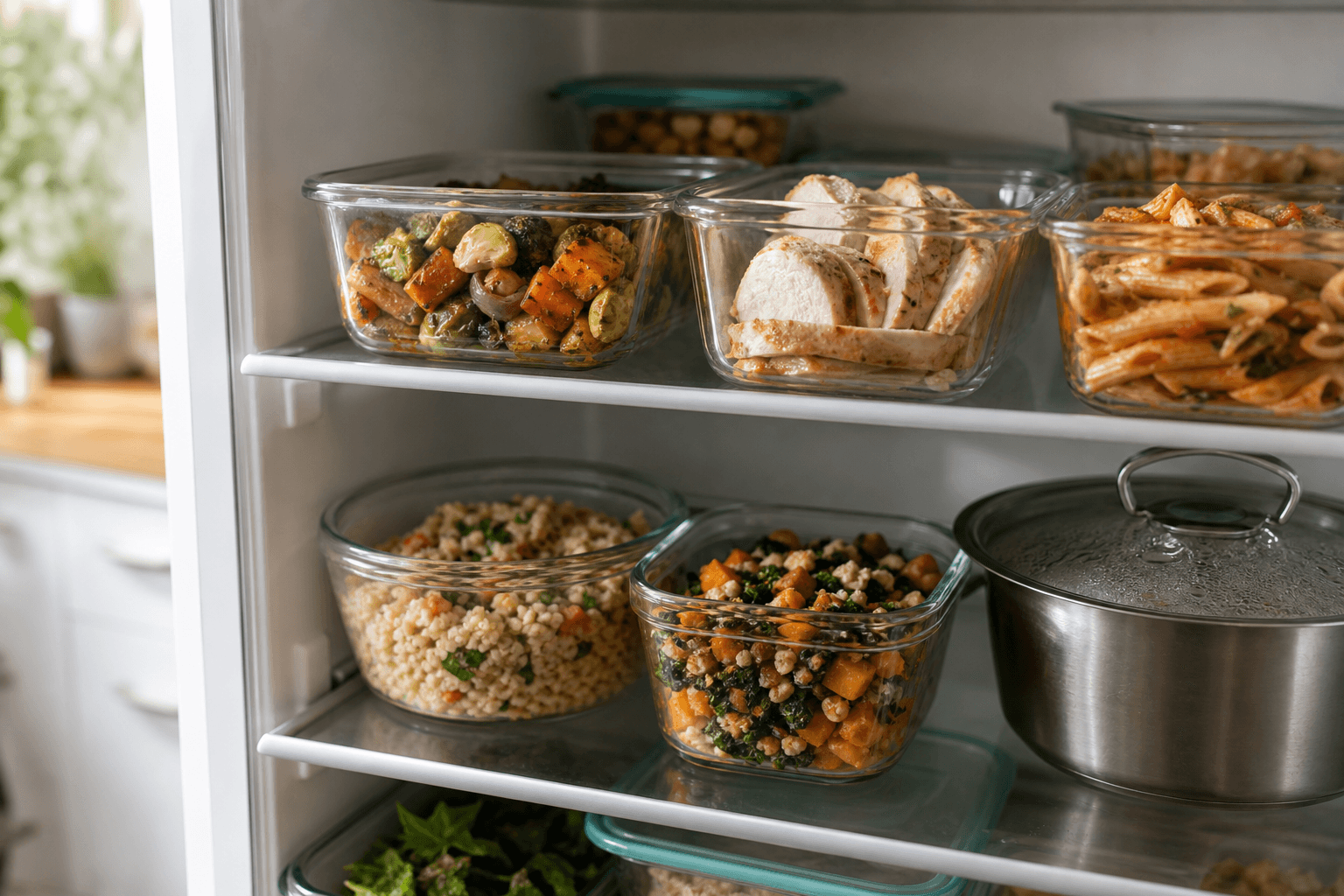
Most cooked leftovers stay safe in the refrigerator for 3 to 4 days, according to the USDA, as long as your fridge holds 40°F or below. Cooked meat and poultry hold for up to 4 days, and opened deli or lunch meat can stretch to 5, though egg salad and other mayo-based dishes are safest within that same 3 to 4 day window. After that, toss it.
That short window surprises a lot of people, especially with a pot of soup or a casserole that still looks and smells perfectly fine on day six. The USDA's Food Safety and Inspection Service (FSIS) sets the 3 to 4 day rule because refrigeration slows bacterial growth rather than stopping it, and the bacteria that make you sick are not the same ones that make food smell bad.
How long do leftovers last in the fridge
The 3 to 4 day rule covers most cooked leftovers: pasta, rice, soup, stew, casseroles, cooked vegetables, and pizza. A couple of categories run slightly longer or need extra caution. The table below breaks down USDA guidance by food type.
| Leftover type | Refrigerator (40°F or below) | Freezer (0°F or below) |
|---|---|---|
| Most cooked leftovers (pasta, rice, soup, stew, casseroles, pizza, vegetables) | 3 to 4 days | 1 to 3 months for best quality |
| Cooked meat and poultry | Up to 4 days | 2 to 6 months for best quality |
| Egg dishes and mayo-based salads (egg salad, chicken salad, ham salad) | 3 to 4 days | Not recommended, the texture separates once thawed |
| Lunch meat and deli meat, opened package | Up to 5 days | 1 to 2 months for best quality |
If cooked rice is what you are trying to use up, our guide to how long cooked rice lasts in the fridge covers a few rice-specific handling notes worth knowing, since rice carries its own bacteria risk before it is even cooked. And if you are wondering about the raw ingredient rather than the finished dish, how long raw chicken lasts in the fridge runs on a much shorter clock than a cooked chicken leftover does.
How to tell if leftovers have gone bad
Trust your senses for the obvious stuff. Mold, a sour or ammonia-like smell, a slimy or sticky texture, and noticeable discoloration all mean the food goes in the trash, and there is no need to taste it first.
The bacteria that cause food poisoning, like Salmonella, Listeria, and Clostridium perfringens, usually do not change how food looks, smells, or tastes. Spoilage bacteria give off an obvious smell or texture change; pathogenic bacteria typically do not. That is why FSIS bases its guidance on a fixed time limit instead of a smell test. If a leftover has been in the fridge longer than 3 to 4 days, the time limit still applies, even if the dish seems fine.
How to store leftovers so they last
A few habits make the difference between leftovers that make it to day 4 safely and leftovers that spoil early:
- Get food into the fridge within 2 hours of cooking, or within 1 hour if the room is above 90°F, such as a hot car or an outdoor picnic.
- Do not wait for a big pot to cool on the counter first. Split it into smaller, shallow containers so it chills quickly all the way through.
- Cover leftovers tightly or seal them in airtight containers to keep out air and other food odors.
- Keep your refrigerator thermometer at 40°F or below. A fridge that runs warm shortens every storage window on this page.
- Label containers with the date you cooked the food, not the date you're putting it away for the second time, so you know when the 3 to 4 day clock runs out.
That clock is easy to lose track of once a container gets pushed to the back of the shelf, so logging leftovers when you put them away is one of the simplest ways to remember when the clock runs out. It is the same problem an app like Well Stockd is built to solve: it tracks use-by dates on everything in your fridge so you don't lose track of what's inside.
A week-old batch is a different question — see is it safe to eat leftovers after 7 days.
Can you freeze leftovers?
Yes, and freezing is the right move if you know you will not finish a leftover within 3 to 4 days. Food held continuously at 0°F is safe to eat indefinitely, but quality drops the longer it sits, so most leftovers taste best within 1 to 3 months, and cooked meat or poultry within 2 to 6 months.
A couple of practical notes: freeze leftovers before the 3 to 4 day fridge window closes, not after. Thaw them in the refrigerator, not on the counter, so they never sit in the temperature danger zone while defrosting. And mayonnaise-based dishes like egg salad or macaroni salad do not freeze well. The texture separates and turns watery once thawed, though that is a texture problem, not a food safety one, and it does not change the fridge clock above.
When in doubt
FSIS puts it plainly: "When in doubt, throw it out." Never taste a leftover to check if it is still good, since the bacteria that cause illness will not give you any warning through flavor. If you cannot remember when you cooked something, or it has been sitting in the fridge longer than 4 days, the safest choice is to let it go. For a wider look at how storage times work across your whole kitchen, our hub guide on how long food lasts is a good next stop.
Reheating rules matter too: is it safe to reheat leftovers twice covers the 165°F standard.
Frequently asked questions
Can you eat leftovers after 4 days if they still smell and look fine? No. The bacteria most likely to cause food poisoning do not change a food's smell, taste, or appearance, so a leftover can seem completely normal and still be unsafe. Follow the 3 to 4 day limit rather than a sensory check.
How long do restaurant or takeout leftovers last in the fridge? The same 3 to 4 day rule applies. The 2-hour clock for getting food refrigerated starts as soon as it is no longer hot, whether that is at the restaurant, in the car, or at your table, so pack up takeout and get it into the fridge promptly.
Do you need to let leftovers cool before refrigerating them? No. You can refrigerate hot food right away. Just use smaller, shallow containers so the food cools evenly and quickly instead of sitting warm in the danger zone inside one large pot.
Batch-cooking on Sunday? How long meal prep lasts in the fridge applies the same windows to planned meals.
Sources: USDA FSIS, Leftovers and Food Safety, Ask USDA, How long can you keep leftovers in the refrigerator, Ask FSIS, How long will cooked food stay safe in the refrigerator, FSIS, 10 Smart Tips to Keep Your Restaurant Leftovers Safe, FoodSafety.gov, Cold Food Storage Chart, USDA FoodKeeper